
Lashmanrao Upadhyayula
The hymn attributed to the sage Vāmadeva in the Triṣṭubh metre of the Ṛgveda unfolds as a profound spiritual dialogue between humanity and Indra, the guardian of strength, righteousness, and divine protection. Every question raised in the hymn is not merely a request for material prosperity but an inquiry into the eternal relationship between the worshipper and the cosmic ruler who sustains the moral and natural order. The Vedic sages understood that prayer acquires its true power only when it arises from purity of thought, disciplined conduct, and unwavering faith. Thus, every hymn becomes a living bridge between human aspiration and divine grace.
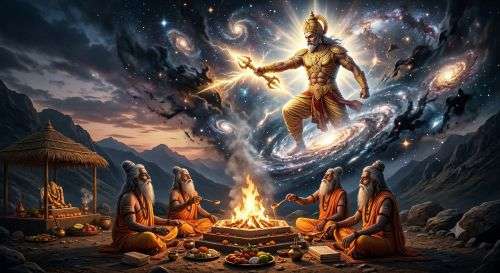
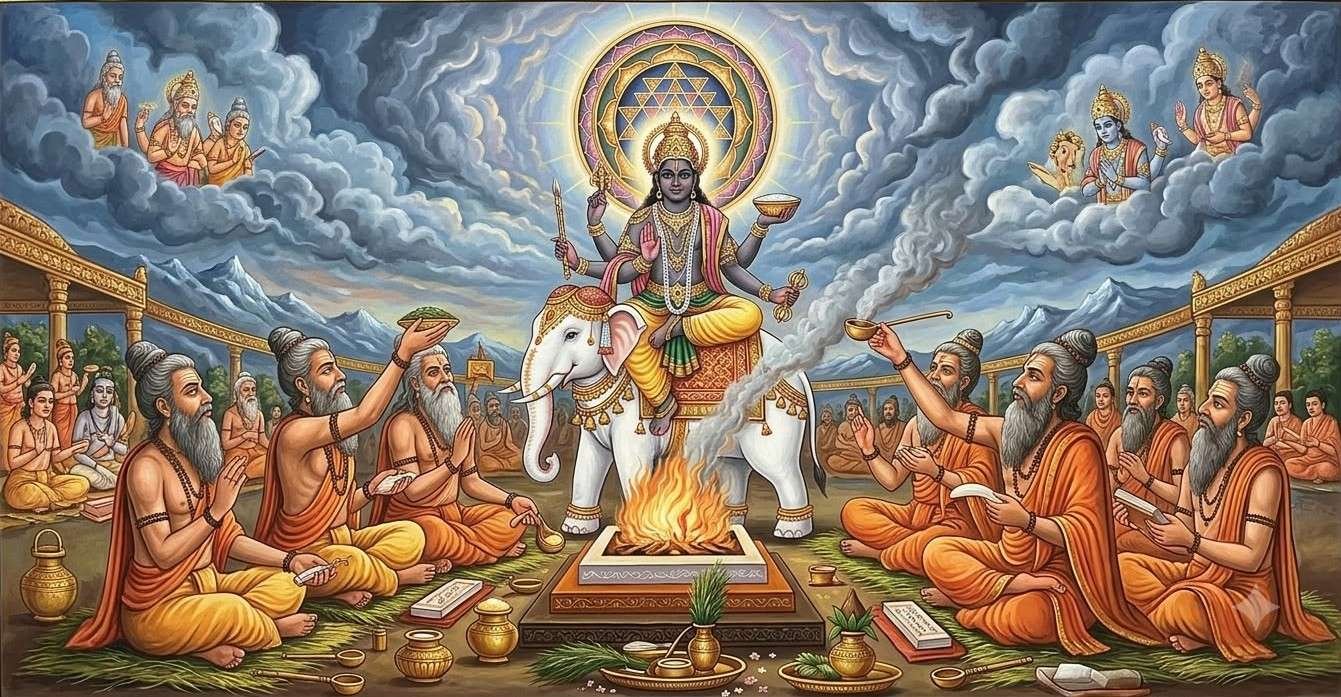
The sage wonders which sacrifice attracts the loving attention of Indra and which yajña is performed with such sincerity that the deity willingly arrives to partake of the sacred Soma. The Vedic sacrifice was never intended as a ritual of empty formalities. It represented the harmonious cooperation of nature, humanity, and the divine. The carefully prepared Soma symbolized purified consciousness, while the sacred fire carried the aspirations of humanity toward the celestial realm. Indra’s acceptance of Soma signifies the acceptance of truthful intention and righteous action.
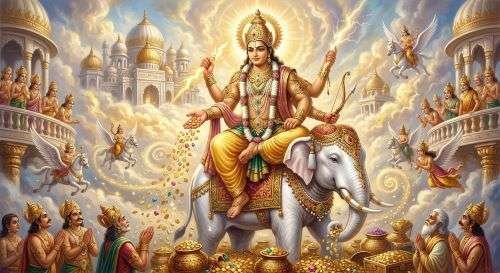
The hymn further asks which generous patron receives radiant wealth through devotion to Indra. In Vedic thought, wealth is never confined to gold or cattle. True prosperity includes wisdom, courage, noble descendants, fertile lands, healthy cattle, harmonious communities, and spiritual illumination. The patron who dedicates his resources to righteous causes, supports sacred learning, and performs yajñas for universal welfare naturally becomes worthy of divine abundance. Wealth gained through virtue strengthens society, whereas wealth earned through selfishness eventually diminishes itself.
The sage also reflects upon the nature of valor that deserves to share Soma with Indra. Physical bravery alone cannot qualify one for divine companionship. Genuine heroism consists of conquering fear, selfishness, ignorance, falsehood, and inner weakness. The warrior who protects righteousness and the seeker who conquers the enemies within are equally honoured in the Vedic vision. Such courage allows one to participate symbolically in Indra’s own divine strength.
The priests are portrayed as solemn custodians of sacred knowledge who pledge themselves to the flourishing of the patron and the entire community. Their sanctified bracelets symbolize vows of purity, discipline, and unwavering commitment to sacred responsibilities. Every ritual action performed by them reflects years of rigorous education, precise recitation, and profound contemplation. Their blessings are effective because they arise from lives governed by truth, self-restraint, and devotion.
The sage lovingly addresses Indra as the possessor of inexhaustible riches and asks whether the deity hears the hymns offered by devoted priests. The Vedic understanding affirms that sincere prayer never disappears into emptiness. Every noble thought produces subtle vibrations that influence the human mind and the surrounding environment. Modern scientific understanding similarly recognizes that disciplined meditation, focused intention, rhythmic chanting, and collective prayer produce measurable psychological and physiological effects, fostering mental clarity, emotional balance, and social harmony. The Vedic seers perceived these truths through direct spiritual experience long before they became subjects of scientific investigation.
Questions arise regarding Indra’s ancient gifts and why those timeless blessings continue to fulfil the desires of devoted worshippers. The answer lies in the eternal nature of Ṛta, the cosmic order governing the universe. Indra’s gifts are not arbitrary favours but manifestations of universal laws responding to righteous conduct. Whenever individuals align their lives with truth, justice, compassion, and disciplined effort, they naturally receive strength, protection, and prosperity according to these immutable principles.
Whenever patrons encounter danger, uncertainty, or hardship, they instinctively seek refuge in Indra through prayer and yajña. Their sacrifices rekindle hope, strengthen communal unity, and inspire courageous action. As fear gives way to confidence, they become inwardly radiant. Their riches emerge not merely through miraculous intervention but through renewed determination, wise decisions, harmonious cooperation, and favourable circumstances born of ethical living. Divine grace and human effort function together as complementary forces.
The hymn beautifully asks how Indra recognizes the uniqueness of each prayer. The Vedic sages understood that every sincere hymn carries the distinctive fragrance of the heart from which it arises. Words alone do not reach the divine; intention, sincerity, and purity accompany every invocation. At dawn, when darkness gradually yields to light, Indra’s acceptance of human relationships symbolizes the awakening of divine consciousness within every seeker. Dawn itself becomes a metaphor for spiritual enlightenment, where ignorance dissolves before the light of wisdom.
The Hotṛ priests continuously offer melodious hymns and sacred oblations, maintaining an intimate relationship with Indra through uninterrupted devotion. This relationship resembles a living friendship founded upon mutual trust. The worshippers proclaim, “You are Indra; we are your devoted patrons.” Such companionship becomes the source of strength that humiliates the forces of evil, injustice, and ignorance. Brotherhood with the divine elevates humanity beyond fear and establishes confidence rooted in righteousness.
Indra is celebrated as the most visible among the Vedic deities because his presence manifests through observable natural phenomena. The brilliance of lightning, the roar of thunder, life-giving rain, victorious courage, and the awakening power of dawn all reveal aspects of his divine personality. His dynamic movement resembles the radiant journey of the Sun across the heavens. Unlike abstract philosophical concepts, Indra is experienced through the living forces of nature and through the transformation occurring within the disciplined human mind.
The hymn also describes hostile demonic forces attempting to deceive and torment humanity. These demons symbolize destructive tendencies such as greed, hatred, falsehood, arrogance, and moral corruption. Indra sharpens his celestial weapons to destroy these inner and outer enemies. Another subtle enemy appears in the form of debt, which burdens both individuals and societies. By encouraging disciplined living, honest labour, responsible stewardship, and ethical prosperity, Indra becomes the destroyer of debt and the protector of sustainable well-being. Even the distant dawn obeys his command, signifying that divine order governs the rhythm of time itself.
The hymn then glorifies the radiant Ṛta Deva, the divine embodiment of cosmic order and truth. He possesses abundant waters, symbolizing inexhaustible reservoirs of life, fertility, knowledge, and purification. His sacred teachings possess extraordinary radiance, capable of penetrating even ears long closed to wisdom. Just as water gradually shapes mountains through patient persistence, divine knowledge slowly transforms human consciousness despite initial resistance.
Ṛta Deva is praised as possessing incomparable strength, a perfectly formed body, countless manifestations, and an exceedingly pleasant nature. His many forms reveal the diverse expressions of universal law operating throughout creation. Humanity seeks his special nourishment because true sustenance consists not merely of food but of wisdom, righteousness, vitality, and inner peace. The cows entering the yajña as sacred offerings symbolize the flow of prosperity, generosity, and gratitude sustaining both spiritual and material civilization.
His strength moves with irresistible swiftness and longs for water, illustrating the inseparable relationship between energy and life. Water nourishes every organism, every field, and every civilization. The vast expanses of heaven and earth, along with their deepest mysteries, remain under the governance of Ṛta. Modern science similarly reveals that the universe functions according to elegant and consistent laws governing matter, energy, motion, and life. The Vedic seers perceived these universal principles spiritually and celebrated them through poetic symbolism, demonstrating an extraordinary harmony between contemplative insight and rational observation.
The closing vision portrays heaven and earth themselves joyfully yielding their riches for Ṛta Deva, just as affectionate cows release nourishing milk for their beloved calf. This imagery conveys the profound Vedic conviction that when humanity lives in harmony with truth, the entire universe becomes supportive and generous. Nature, society, and the divine cease to stand apart; they become integrated expressions of one eternal reality. Through prayer, sacrifice, wisdom, righteous action, and reverence for cosmic law, humanity participates consciously in the unfolding harmony of existence, transforming both the individual soul and the world into reflections of divine radiance.