Lakshmanrao Upadhyayula
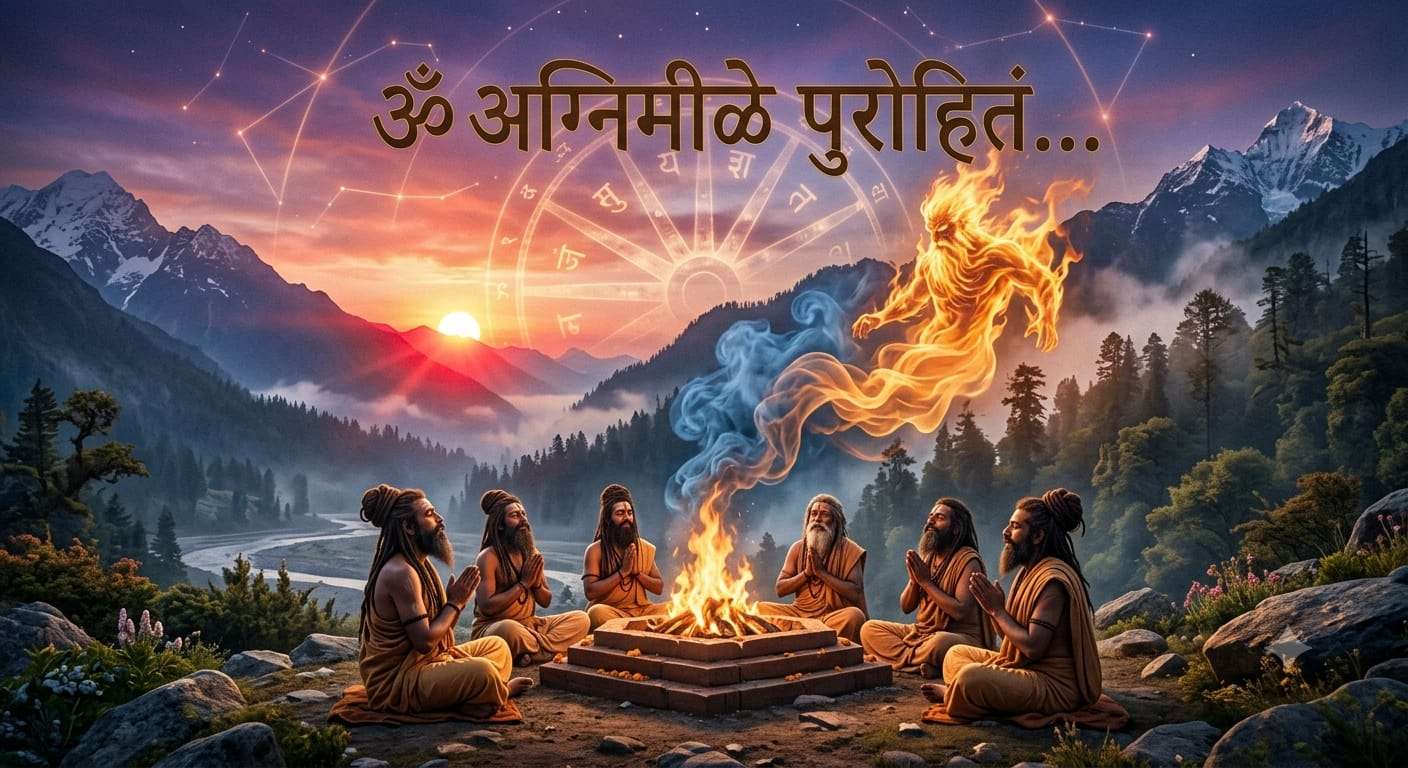
The venerable sage Śaunaka Gr̥tsamada, one of the illumined seers of the Ṛg Veda, offers this profound hymn in the Jagatī and Anuṣṭubh metres, invoking the deities who govern the cosmic order, the sacrificial process, the lunar phases, and the subtle powers that sustain life. In Vedic thought, every movement of nature is regarded as a conscious expression of the Divine. Heaven and Earth, the sacred sacrifice, the priests, and the deities are all participants in a single universal act of worship, wherein the individual soul seeks harmony with the eternal rhythm of existence.
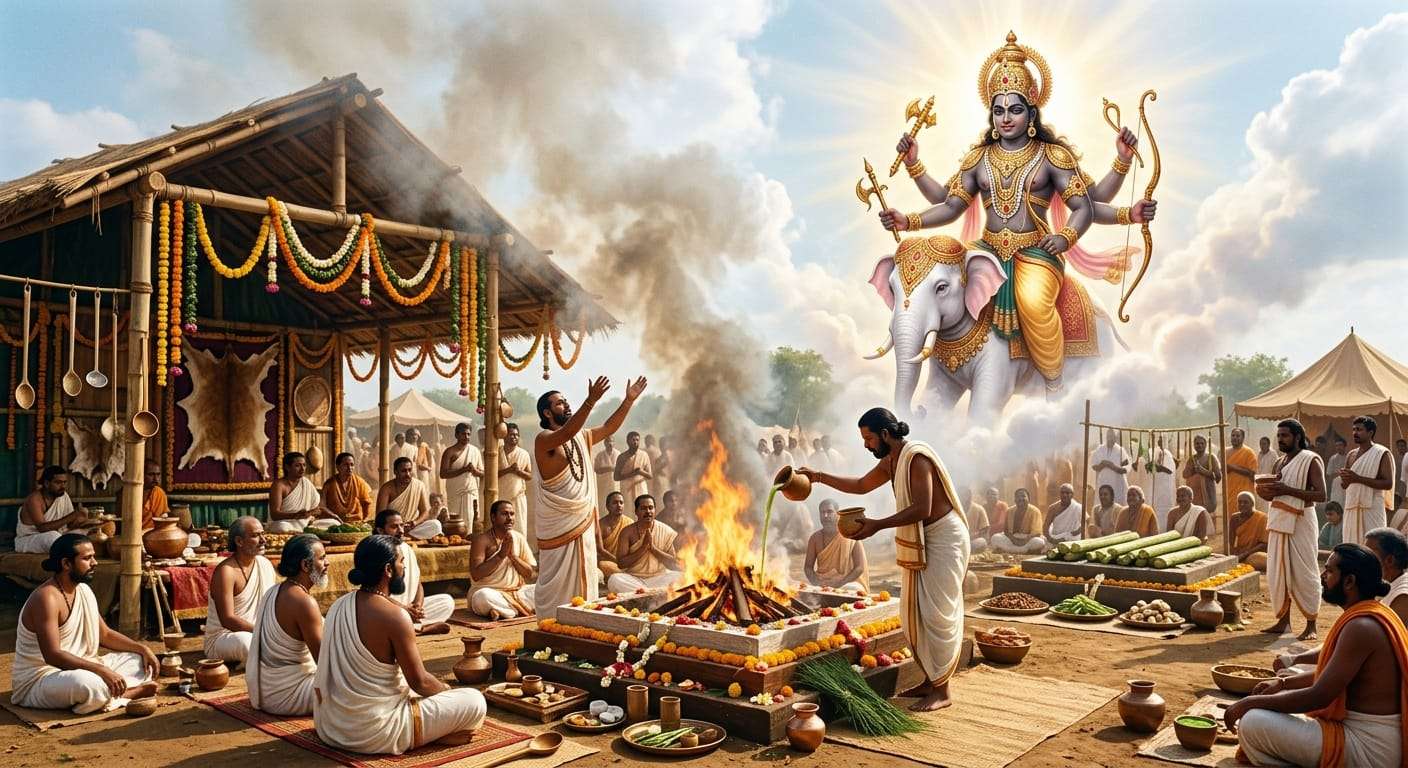
The sage begins by addressing Heaven and Earth, the great cosmic parents who uphold all worlds. Between them unfolds the yajña, the sacrificial process through which humanity communicates with the divine powers. The priests chant sacred mantras, but it is ultimately the Divine itself that inspires the invocation and grants refuge to the devotee. The shelter offered by these cosmic powers is not merely physical protection; it is the assurance that one’s life is supported by the vast intelligence that sustains the universe.
The nourishment bestowed by the gods is declared superior to all earthly substances. Food in the Vedic vision is sacred energy, transformed from sunlight, water, soil, and the invisible processes of life. It is the material expression of divine grace. Therefore, all beings instinctively praise the powers that provide sustenance. Desiring such nourishment, the sage chants exalted Vedic hymns, recognizing that abundance arises when human gratitude aligns with the laws of nature.
The prayer then turns to the mighty Indra, lord of luminous strength and conqueror of hostile forces. The sage asks that the deceptive powers of enemies, whether visible or concealed, by day or by night, may never overpower the community. In spiritual terms, these enemies represent fear, doubt, ignorance, and inner fragmentation. Indra is implored never to abandon his friendship, but to hold the welfare of his devotees constantly in his divine awareness. This intimate relationship between the worshipper and the deity reveals the Vedic understanding that the gods are not distant abstractions, but conscious allies in the human quest for well-being and truth.
The sage further invokes Indra as the bestower of the symbolic cow, ever a central image in Vedic literature. This cow is described as joyful, milk-giving, powerful, and full of vital energy. She represents not merely livestock, but the inexhaustible abundance of nature, the light of knowledge, and the nourishing flow of prosperity. Milk, transformed by biological and ecological processes, serves as a scientific symbol of how life converts natural resources into sustenance. Through this image, the Vedic seers expressed a deep appreciation of the interdependence between cosmic forces and biological life.
Indra’s movement is strong, and his speech is inseparable from truth. The sage therefore vows to praise him day and night, acknowledging that constant remembrance strengthens the bond between the human mind and the divine order. In psychological terms, repeated contemplation of noble ideals gradually reshapes consciousness, instilling courage, integrity, and resilience.
The hymn then turns to the sacred lunar phases, beginning with the radiant Full Moon, revered as a beneficent goddess. The full moon, or Pūrṇimā, is invited with the finest hymns, for she embodies completeness, fertility, and fulfillment. Her light, reflected from the sun and reaching the earth with rhythmic precision, has guided human calendars, agricultural cycles, and ritual observances for millennia. The sage asks that she understand the heartfelt desires of her devotees and weave their rituals together as skillfully as a needle stitches garments, integrating scattered efforts into a coherent fabric of blessing.
Pūrṇimā Devī is praised as the gracious receiver of offerings and the giver of wealth, serenity, and noble offspring. In Vedic thought, wealth includes not only material prosperity but also mental peace, healthy children, and enduring social harmony. The full moon thus symbolizes the culmination of growth, the maturity of aspiration, and the gentle radiance of divine favor.
The hymn next invokes the sacred night of the New Moon, the subtle and hidden beginning of the lunar cycle. This phase is addressed as a divine sister of the gods, accepting offerings even in darkness. Scientifically, the new moon marks the conjunction of the sun and moon, an unseen alignment that initiates renewal. Spiritually, it represents the fertile silence from which all visible manifestations emerge. The sage honors this unseen beginning, recognizing that every fullness is preceded by an invisible seed.
Among the lunar goddesses, the sage invokes Sinīvālī, associated with fertility and safe childbirth; Kuhu, guardian of the subtle new moon; the divine wives of the gods; and Sarasvatī, the flowing power of wisdom, speech, and inspiration. Together they represent the hidden forces that nurture conception, growth, expression, and fulfillment. The inclusion of these feminine powers reveals the Vedic reverence for creation as an unfolding process sustained by intelligence, nourishment, and grace.
The hymn also invokes the sacred river goddess Gaṅgā, whose flowing waters symbolize purification and continuity. Rivers were recognized by the Vedic seers as life-giving arteries of civilization, supporting agriculture, health, and cultural development. Their sanctification reflects a profound ecological awareness: to honor nature is to preserve the very foundations of human existence.
This remarkable hymn weaves together cosmology, psychology, ecology, astronomy, and spirituality. The gods are the intelligible powers behind natural phenomena; the lunar phases regulate biological and ritual rhythms; rivers sustain civilizations; and sacrifice symbolizes humanity’s reciprocal relationship with the universe. The Vedic seers observed the world with scientific attentiveness and spiritual insight, perceiving no conflict between reason and reverence.
Śaunaka Gr̥tsamada’s prayer thus becomes a timeless meditation on interdependence. It teaches that prosperity arises from harmony with truth, that divine friendship protects the sincere seeker, and that every phase of nature—from the hidden new moon to the resplendent full moon—participates in the sacred order of life. Through devotion, disciplined thought, and gratitude, human beings align themselves with the cosmic intelligence that nourishes, protects, and continually renews the world.