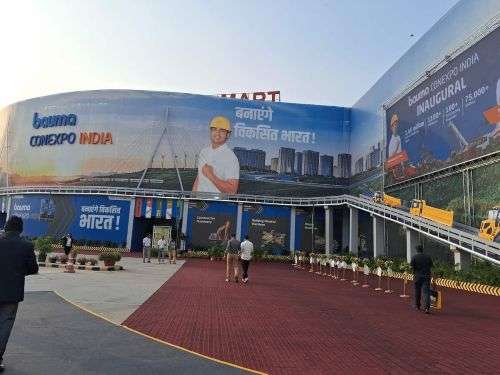
The construction equipment sector loves a good contradiction, and Schwing Stetter India is marching into the India Expo Centre, Greater Noida, with an absolute behemoth of one. It takes a certain breed of corporate audacity to occupy 2,500 square metres of real estate at bauma CONEXPO INDIA 2026 while preaching the gospel of an environmentally reduced footprint. The heavy engineering industry has historically equated performance with the visceral roar of diesel and the unapologetic displacement of earth, making a pivot toward alternative fuels feel like a deliberate disruption of its own DNA.
Yet, standing at Gate No. 1, Outdoor Area A, Booth No. O.F01 from 15th to 18th September 2026, the concrete giant is not merely participating in a trade show; it is attempting to orchestrate a fundamental shift in how the nation builds under the theme “Engineering Future.” The core irony remains that to make construction lighter on the planet, the equipment behind it must become smarter, more interconnected, and technologically heavier than ever before. This is an industry currently balancing on the edge of unprecedented infrastructure expansion, where the traditional pressures of raw productivity are clashing directly with global decarbonisation mandates.
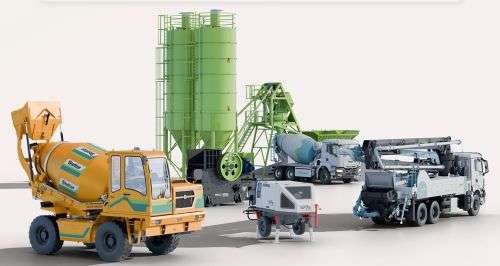
By bringing a massive portfolio of 26 specialized products across concrete equipment, pumping solutions, batching systems, transit mixers, crushing solutions, and project-focused technologies to the arena, the company is demonstrating that high-efficiency concrete pumping and lower emissions need not be mutually exclusive realities. It is a significant step towards the future of heavy machinery, reflecting the industry’s wider shift towards intelligent automation, electrification, alternative fuels, and more efficient powertrains.
Manufacturing Muscle
The physical reality of this transition requires substantial capital, forcing a massive industrial expansion far beyond traditional manufacturing borders. The company recently channelled a Rs 120-crore investment into its Tamil Nadu operations, installing advanced fabrication facilities alongside one of the nation’s largest automated paint shops. This brings their total investment in the state closer to Rs 700 crore, backed by an additional 50 acres secured for future expansion.
Breaking away from a historical reliance on South India, they recently commissioned a 200-unit concrete mixer plant in Jamshedpur, Jharkhand. Strategically placed right next to the manufacturing ecosystem of Tata Motors, this site slashes logistics costs for the North and East markets. The facility operates as a direct counter-weight to supply chain vulnerabilities, ensuring localized assembly can keep pace with aggressive domestic timelines.
By distributing its manufacturing weight, the enterprise is buffering itself against regional economic fluctuations while aggressively driving down delivery lead times for heavy-duty transit mixers.
Export Frontiers
What starts in these localized industrial hubs is increasingly finding a home across international borders, morphing India from a consumer into a primary exporter. The Global Manufacturing Hub is no longer just serving local infrastructure needs; it acts as a launching pad into international territories. Shipments are steadily moving across markets spanning from Africa to the ASEAN region, alongside direct supply chains to global subsidiaries.
Having cracked open entry points in Eastern Europe, the strategic horizon is now fixed firmly on deep penetration into Brazil, the United States, and the GCC markets. This structural shift away from purely domestic dependence allows the firm to hedge its bets against localized infrastructure spending pauses. It forces the domestic engineering teams to design equipment that satisfies both rugged Indian worksites and stringent international emission protocols.

Brains Trust
The true engine behind this global push lives within an R&D framework that treats intellectual property as a core business asset rather than an afterthought. Operating as a formally recognized research entity under the DPIIT, the engineering division has filed 15 patents, with 12 already granted. Their innovation model refuses to live in an academic vacuum, relying heavily on deep institutional ties to push practical boundaries.
Through a Platinum Membership with the IIT Madras TLC2 (Transforming Low-Carbon Construction) programme, they are directly funding research into recycled aggregates. This collaboration bridges the gap between laboratory material science and the mechanical realities of pumping low-carbon concrete mixes. It ensures that when new, abrasive, eco-friendly concrete binders emerge, the machinery is already engineered to handle them without catastrophic component wear.
Strategy Shift
The commercial manifestation of this technological evolution is a deliberate push to redefine value, moving far beyond the simple transaction of selling steel. Moving past the Rs 5,600 crore revenue milestone, the financial blueprint targets aggressive, sustained growth by capturing secondary market life cycles. The market strategy relies on embedding their personnel directly into customer operations through comprehensive service contracts.
By deploying a network of more than 450 trained service engineers across dozens of parts and service centres, they have built an operational safety net. Instead of leaving maintenance to third parties, they lock in long-term revenue through AMCs, Annual Maintenance Contracts, and full Operational Contracts. This system transforms unpredictable machinery breakdowns into predictable, subscription-like corporate revenue streams while ensuring maximum uptime for contractors.
Cultural Pivots
Equally transformative is the internal cultural restructuring occurring on the shop floors, deliberately challenging the historically male-dominated traditions of heavy engineering. Through dedicated Women in Manufacturing initiatives, the company is actively bringing non-traditional talent pools into heavy fabrication and precision assembly. They have structured specialized engineering courses tailored for women returning from extended career breaks, requiring zero prior background in engineering.
This program feeds directly into active factory roles, including live machinery demonstrations handled by trained female technicians at major trade shows. It functions as a necessary correction to industry-wide talent shortages while fundamentally altering the demographic profile of the manufacturing workforce. By reimagining who builds these machines, the company is subtly reshaping the cultural identity of the infrastructure ecosystem from the ground up.
Leadership Vision
V.G. Sakthikumar, Chairman & Managing Director of Schwing Stetter India, views this massive exhibition space not as a standard marketing opportunity, but as a window into an inevitable industrial transition. “Engineering Future is about understanding where the construction equipment industry is headed and developing technologies that are aligned with that transition. Across markets, we are seeing a clear shift towards electrification, alternative fuels, greater automation, improved energy efficiency, and equipment that can deliver higher productivity with a lower environmental impact.”
“At SCHWING Stetter India, we see this transformation as an opportunity to engineer solutions that are not only relevant to the industry today but are also designed for the demands of tomorrow. bauma CONEXPO INDIA provides us with the platform to bring this vision together and demonstrate how technology can shape the next phase of construction and infrastructure development in India,” Sakthikumar added, underscoring the high-level strategy backing their 2,500 square metre presence.
Future Cast
The immediate roadmap converges on the upcoming four-day showcase in Greater Noida, where Schwing Stetter will bring its “Engineering Future” theme to life across an expansive mix of batching systems, crushing solutions, self-loading mixers and other concrete technologies. The exhibition provides the company with an opportunity to demonstrate how its evolving portfolio is responding to the changing requirements of India’s construction and infrastructure sector.
The significance of the showcase extends beyond the size of the display. The more important story is how technologies around electrification, alternative fuels, automation and energy efficiency can move from engineering concepts into practical construction applications. For a sector operating under increasing pressure to deliver higher productivity while addressing environmental concerns, that transition is becoming increasingly relevant.
The larger question is whether this transition can translate into measurable operational gains across India’s construction ecosystem — and whether the machines of tomorrow can deliver both productivity and a smaller environmental footprint.
Concrete Reality
When the dust settles, the heavy machinery landscape will ultimately judge new technologies by what they deliver on actual worksites. Productivity, reliability, operating costs, uptime and environmental performance will together determine how quickly contractors and infrastructure companies embrace the next generation of construction equipment.
For Schwing Stetter, the opportunity is therefore larger than a four-day exhibition. Its investments in manufacturing, engineering, localisation, service infrastructure and emerging low-emission technologies position the company to participate in an industrial transition that is likely to reshape the construction equipment ecosystem.
The real test, as always, will be on the ground — where machines have to work harder, run longer and deliver greater efficiency while meeting the evolving environmental expectations of India’s infrastructure story.