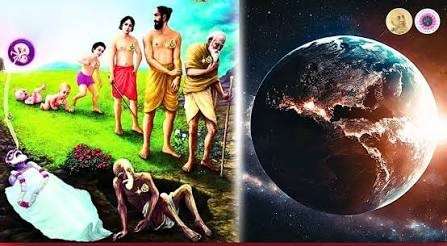
The timeless spirit and grandeur of Bharat Varsha have been shaped by its sages, seers, and spiritual seekers, whose wisdom and selfless lives laid the foundation of one of the world’s oldest and most enduring civilizations. Their teachings nurtured a culture that harmonized material progress with moral and spiritual values, inspiring generations to uphold truth, righteousness, compassion, and self-discipline. The ideals propagated by these enlightened souls transcended hermitages and found expression in every sphere of life. They guided kings and commoners alike, instilling courage, integrity, and a deep sense of duty. The eternal wisdom embodied in our sacred scriptures—the Vedas, Upanishads, Ramayana, and Mahabharata—continues to offer profound insights into righteous living and the purpose of human existence.
In an age of unprecedented technological advancement and social change, these timeless values remain as relevant as ever. They remind us that true progress is meaningful only when accompanied by moral character, inner peace, and a commitment to the greater good. This volume is a humble effort to reconnect readers with the rich spiritual and cultural heritage of Bharat. Through its pages, we hope to inspire reflection, noble action, and a deeper appreciation of the ideals that have sustained our civilization through the ages. May this eternal wisdom illuminate our lives and guide us towards harmony, dignity, and universal goodwill. — Editor
M Jaishree
“Lead me from the unreal to the Real. Lead me from darkness to Light. Lead me from death to Immortality.”
These timeless words arise from the ancient wisdom of the Brihadaranyaka Upanishad and embody one of the most profound prayers ever uttered by humanity. They are not merely a request for external blessings but a heartfelt invocation for inner transformation. The seeker does not ask for wealth, power, or earthly success. Instead, the prayer reaches beyond the limitations of the material world, longing for the highest truth that liberates the soul. It reflects the eternal journey of human consciousness from illusion to wisdom, from ignorance to enlightenment, and from mortality to the realization of the imperishable Self.
“Lead me from the unreal to the Real” expresses the Vedic understanding that the world perceived solely through the senses is incomplete. The unreal does not signify absolute nonexistence but the transient nature of everything that changes with time. The Real is the eternal foundation underlying all existence, known as Brahman, the infinite and unchanging reality. According to the Vedas, every individual carries within the divine essence called Atman, which is neither born nor destroyed. Spiritual awakening begins when one recognizes that identity is not confined to the body, the mind, or fleeting emotions, but is rooted in the eternal consciousness that transcends all limitations.
“Lead me from darkness to Light” carries a meaning far deeper than the transition from night to day. In the Vedic vision, darkness symbolizes ignorance, confusion, fear, and spiritual forgetfulness, while Light represents knowledge, wisdom, discernment, and direct realization of truth. This illumination is not merely intellectual achievement but an inner awakening that enables a person to perceive reality without the distortions of ego and desire. The Vedic sages regarded knowledge as sacred because it dispels the shadows of illusion and reveals the unity that binds all creation. Such enlightenment transforms not only personal understanding but also one’s relationship with every living being.
“Lead me from death to Immortality” reveals the highest aspiration of Vedic philosophy. Death is understood not merely as the end of physical existence but as the continual cycle of birth, decay, attachment, and rebirth governed by ignorance and karma. Immortality is the realization that the true Self is eternal, untouched by time, disease, or destruction. This prayer seeks liberation from the fear that arises from identifying with the perishable body. The Upanishadic sages declare that one who knows the eternal Self transcends the anxiety of mortality and discovers an abiding peace that cannot be shaken by the changing circumstances of life.
The scientific temperament reflected in this prayer is remarkably sophisticated. The Vedic seers encouraged disciplined inquiry, observation, contemplation, and direct experience rather than blind acceptance. Just as science investigates the external universe through evidence and experimentation, the Vedic tradition investigates the inner universe through meditation, self-discipline, and sustained introspection. Both approaches begin with humility, acknowledge that ignorance exists, and pursue truth through careful exploration. The difference lies in their domains: science measures the observable world, while Vedic wisdom examines the nature of consciousness, perception, and existence itself. Together they reveal complementary dimensions of reality, encouraging both intellectual rigor and spiritual insight.
Modern neuroscience continues to demonstrate that focused meditation reshapes neural pathways, enhances emotional regulation, improves attention, and reduces stress. These discoveries resonate with the Vedic insight that disciplined awareness transforms the mind and uncovers deeper levels of consciousness. While scientific instruments measure changes in the brain, the Vedic tradition describes the corresponding refinement of awareness experienced by the practitioner. Thus, ancient spiritual practice and contemporary scientific observation converge in recognizing that sustained inner discipline profoundly influences human cognition, behavior, and well-being.
The enduring beauty of this sacred invocation lies in its universal relevance. It transcends religious boundaries, cultural identities, and historical periods, speaking directly to every person who seeks meaning amid uncertainty. It reminds humanity that the greatest pilgrimage is not across continents but within the heart, where illusion yields to truth, ignorance gives way to wisdom, and fear dissolves into the realization of the eternal. This ancient prayer continues to inspire generations because it expresses the deepest longing of the human spirit: to awaken to the fullness of truth, to live in the radiance of wisdom, and to discover the immortal essence that forever abides beyond the changing horizons of life.