
MS Sparsha
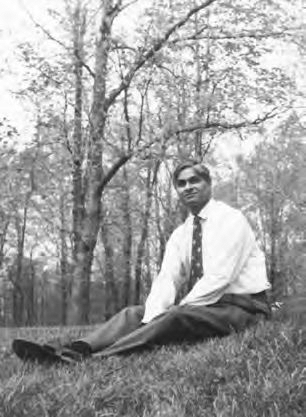
In 1959, an Indian mathematician walked into a New York hotel to settle his bill. The cashier glanced at him, then at a newspaper lying nearby. It was the front page of The New York Times, carrying the guest’s photograph.
“Is that your picture in the New York Times?” he asked.
“Yes,” came the reply.
“You must have done something extraordinary. The front page of the New York Times cannot be bought for a million dollars!”
The guest was Raj Chandra Bose, an Indian mathematician who, along with Sharadchandra Shrikhande and American mathematician Ernest T. Parker, had just achieved what generations of mathematicians had failed to do: disprove a celebrated conjecture by the legendary Leonhard Euler that had remained unchallenged for 177 years. The trio earned the affectionate title “Euler’s Spoilers”.
A Puzzle That Defied Generations
The story dates back to 1782, when Swiss mathematician Euler posed a seemingly simple puzzle involving 36 military officers belonging to six different regiments and six different ranks.
Could they be arranged in a 6 × 6 square so that every row and column contained one officer from each regiment and one from each rank, without repeating any combination?
The mathematical problem involved constructing two mutually orthogonal Latin squares of order six. Euler believed it was impossible. His conclusion about the 6 × 6 arrangement was eventually proved correct by Gaston Tarry in 1901.
But Euler went further, conjecturing that such arrangements were impossible for every order of the form 4n+2. This sweeping generalisation would remain an open challenge for nearly two centuries.
Three Minds Against Euler
The breakthrough came in 1959. Bose and Shrikhande constructed mutually orthogonal Latin squares of order 22, directly challenging Euler’s broader conjecture. Parker independently produced a construction for order 10.
Their combined work established that Euler’s conjecture was wrong for every order of the form 4n+2, except 2 and 6. In short, Euler was right about the six-officer puzzle but wrong in believing that the same impossibility applied universally.
It was a stunning reversal of a mathematical belief that had survived for 177 years.
From Indian Fields to Mathematical Fame
What makes this achievement particularly remarkable is that its foundations were rooted in practical statistical research.
Bose and Shrikhande drew upon balanced incomplete block designs, mathematical structures used in planning agricultural and scientific experiments. These designs help researchers compare different treatments or variables systematically, ensuring that results are reliable even when resources are limited.
Methods developed to improve experimental planning, including agricultural field trials, thus became the key to solving one of mathematics’ most celebrated puzzles.
Bose and Shrikhande had both been associated with the Indian Statistical Institute in Calcutta, which emerged as an important centre for statistical research. By 1959, they were at the University of North Carolina at Chapel Hill. Ernest Parker, meanwhile, was associated with the Univac division of Remington Rand and pursued the problem alongside his professional commitments.
Their collaboration brought together different approaches, persistence and extraordinary mathematical ingenuity.
A Front-Page Achievement
The historic result was announced at the American Mathematical Society’s annual meeting in New York in April 1959. Its significance was such that The New York Times carried the story prominently on its front page on April 26, 1959, under the headline: “Major Mathematical Conjecture Propounded 177 Years Ago Is Disproved.”
The newspaper also reported the nickname bestowed upon the three mathematicians: “Euler’s Spoilers”.
For an achievement in the highly specialised world of combinatorics to make international headlines was extraordinary in itself. For Bose, an Indian mathematician, it was also a moment of global recognition.
And the hotel cashier’s spontaneous reaction perhaps captured the occasion better than any formal citation could.
A Legacy Beyond the Puzzle
The work of Bose, Shrikhande and Parker was much more than a mathematical rebuttal to Euler. It strengthened combinatorial design theory, with implications for experimental planning, coding theory, communications and other areas of applied mathematics.
Their achievement demonstrated how ideas developed for practical problems could unlock seemingly impossible theoretical challenges. It also reinforced the contribution of Indian mathematical scholarship to the international scientific community.
Raj Chandra Bose’s story deserves particular recognition. He was not simply an Indian who made it to the front page of The New York Times. He was one of the minds behind a discovery that overturned a 177-year-old mathematical conjecture.
Sometimes, history remembers the greatest mathematicians through their equations. In Bose’s case, it also remembers a hotel cashier who instinctively understood that the man standing before him must have done something truly extraordinary.
Euler had his conjecture. Bose, Shrikhande and Parker had the last word.