A new political churning is underway in Bharat’s rapidly evolving political landscape. The aftershocks of the recent Assembly elections appear to have fundamentally altered the balance of power between the ruling BJP-led National Democratic Alliance (NDA) and the Congress-led Opposition bloc, IN.D.I.A. What seemed unthinkable a few years ago is increasingly becoming a political reality today — the gradual fragmentation of the Opposition and the emergence of conditions that could allow the NDA to push through some of the most consequential legislative reforms in independent Bharat’s history.
The developments unfolding across several states are not isolated events. They are part of a larger political realignment that may have far-reaching consequences for national politics in the years ahead.
The first major shock came from Tamil Nadu. The Congress, the principal pillar of the I.N.D.I.A. alliance and a long-standing ally of the DMK, chose to sever ties and align itself with actor-turned-politician Joseph Vijay’s Tamilaga Vettri Kazhagam (TVK). The move significantly weakened the Opposition’s collective strength in Parliament while simultaneously exposing the growing discomfort among regional parties over Congress’ leadership of the alliance.
If Tamil Nadu delivered one setback, West Bengal delivered an earthquake.
The humiliating defeat suffered by Mamata Banerjee’s Trinamool Congress (TMC) has triggered unprecedented turmoil within the party. More importantly, the subsequent split involving a large section of elected legislators has revived memories of similar political developments witnessed in Maharashtra.
Bharat’s politics has seen such precedents before. When Eknath Shinde led a rebellion against Uddhav Thackeray’s Shiv Sena, the breakaway faction not only secured legislative dominance but eventually gained recognition as the real Shiv Sena from the Election Commission of India, along with the party symbol. Similarly, Ajit Pawar’s split from the Sharad Pawar-led Nationalist Congress Party transformed Maharashtra’s political equations overnight.
These examples have demonstrated that political legitimacy in contemporary Bharat is increasingly determined by organisational strength, legislative numbers and electoral relevance rather than emotional claims over political legacy.
The cumulative impact of these developments has significantly weakened the Congress-led Opposition bloc. A coalition that once projected itself as a united challenge to Prime Minister Narendra Modi and the BJP now appears increasingly vulnerable to internal contradictions, competing regional ambitions and leadership struggles.
The numbers tell their own story.
The Opposition’s parliamentary strength has been reduced substantially from what it once was, while the NDA’s position has steadily improved. More importantly, the BJP appears increasingly confident that it can now secure the support required to push through key constitutional and legislative reforms that had previously faced stiff resistance.
Among the most significant proposals are the Delimitation Bill, the One Nation One Election framework and the Uniform Civil Code (UCC).
These are not ordinary pieces of legislation.
Each of them has the potential to reshape Bharat’s political architecture for decades.
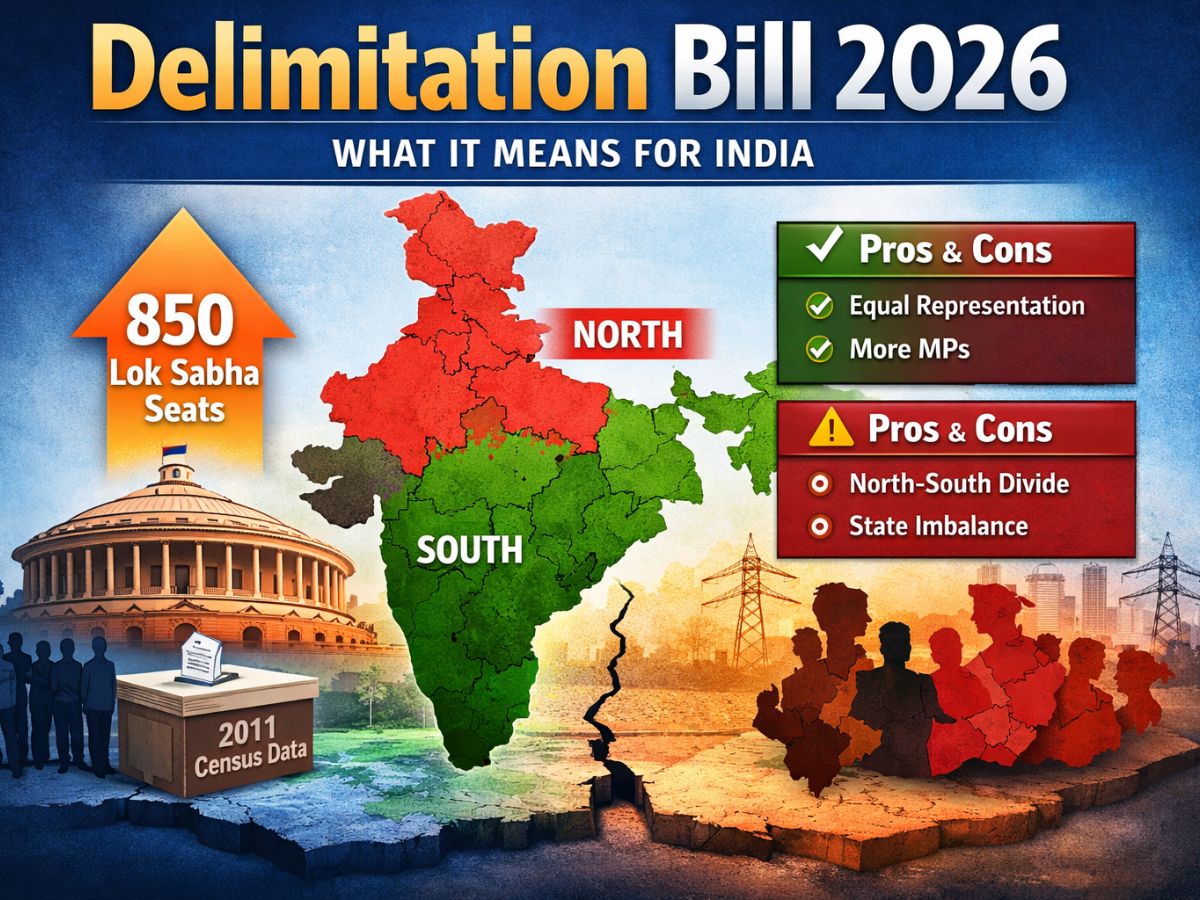
The Delimitation Bill, in particular, carries enormous political implications. For years, states that successfully controlled population growth have expressed concerns regarding parliamentary representation. At the same time, the BJP views delimitation as a necessary democratic exercise to ensure that representation reflects current demographic realities.
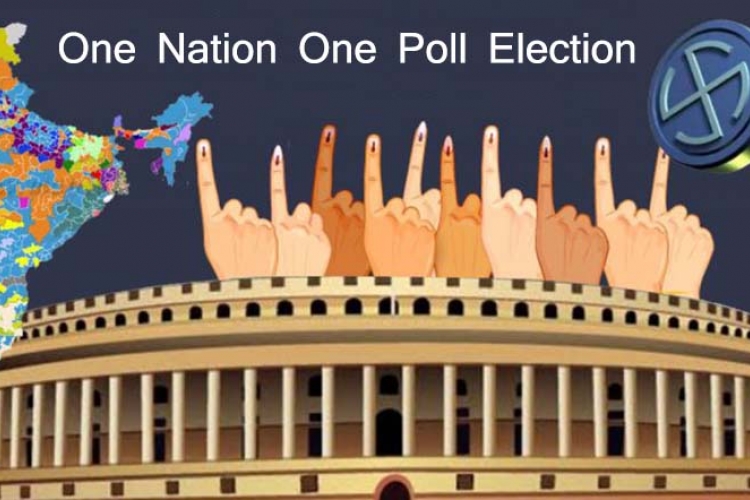
Similarly, One Nation One Election has been one of Prime Minister Modi’s most ambitious governance reforms. The argument advanced by its supporters is simple: frequent elections disrupt governance, impose massive financial costs and keep governments in perpetual campaign mode. Synchronising elections, they argue, would improve administrative efficiency, reduce expenditure and allow governments to focus more on development rather than electoral calculations.
With the Opposition weakened and regional parties reassessing their political priorities, the prospects of such reforms being passed appear considerably brighter than they did a few years ago.
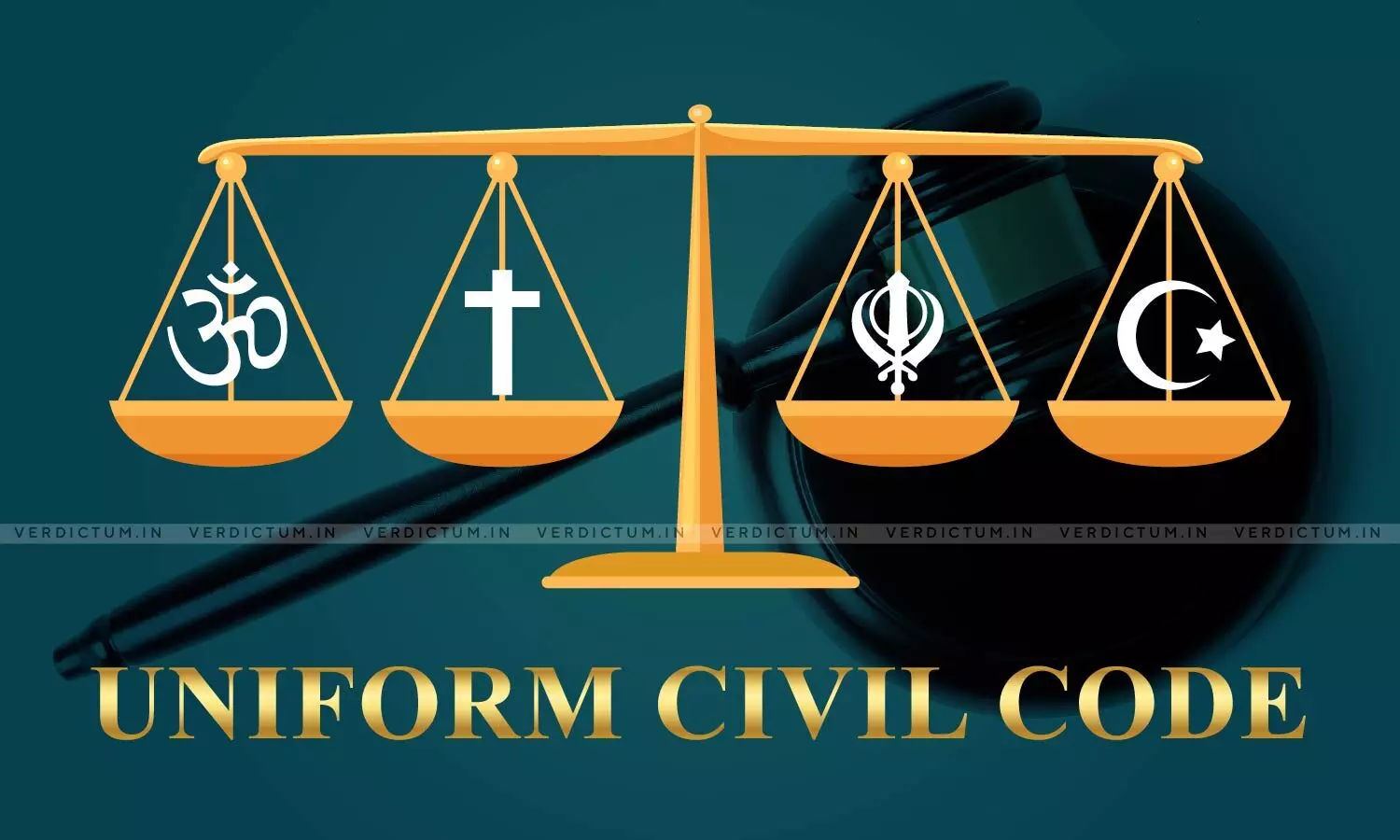
The Uniform Civil Code remains perhaps the most politically sensitive of the three proposals.
While the BJP has consistently advocated a common civil framework for all citizens, some NDA allies have historically expressed reservations. Among them, the Telugu Desam Party (TDP) has often adopted a cautious approach owing to its diverse voter base.
However, politics is ultimately driven by survival and relevance.
Regional leaders across the country are closely watching the changing political mood. The electoral setbacks suffered by several Opposition leaders have reinforced a lesson that Indian voters increasingly reward governance, stability and leadership credibility over coalition arithmetic.
In Andhra Pradesh, Chief Minister N. Chandrababu Naidu is widely perceived to be focused on ensuring a smooth political transition for his son, Nara Lokesh. Any long-term strategic decisions taken by the TDP will likely be viewed through that lens.
At the same time, the ambitions of Jana Sena chief Pawan Kalyan add another interesting dimension to Andhra politics. While he remains a significant political force, the path to becoming Chief Minister remains challenging without the numerical strength required to stake such a claim independently.
Political observers, therefore, believe that future alignments within the NDA will continue to be shaped by both regional aspirations and national calculations.
The Telangana factor also deserves attention.
The Congress government led by Revanth Reddy came to power with considerable expectations. However, anti-incumbency appears to be building much faster than anticipated. Critics accuse the government of failing to fully deliver on several electoral promises while projecting an image of overconfidence.
At the same time, the Bharat Rashtra Samithi (BRS), despite being led aggressively by K.T. Rama Rao following K. Chandrasekhar Rao’s reduced political activity, has struggled to convert public dissatisfaction into political momentum.
The biggest beneficiary of this situation appears to be the BJP.
The party has steadily expanded its footprint in Telangana over the past several years. With leaders such as Union Ministers G. Kishan Reddy and Bandi Sanjay Kumar maintaining an aggressive political campaign, and state president N. Ramchander Rao strengthening organisational structures, the BJP increasingly sees Telangana as its most promising southern battleground.
That calculation has become even stronger after the party’s impressive electoral performances in several states.
The BJP’s broader strategy appears clear.
First consolidate gains in Telangana.
Then expand influence in Karnataka.
Both states are currently governed by the Congress, yet both are witnessing growing political challenges that the BJP hopes to capitalise upon in the coming years.
Against this backdrop, proposals involving fresh Opposition realignments or mergers may generate headlines, but their actual effectiveness remains doubtful.
The fundamental challenge facing the Opposition is not arithmetic.
It is credibility.
Regional parties that once dominated their respective states are increasingly struggling to present a coherent national alternative. Voters appear less interested in anti-BJP rhetoric and more interested in governance outcomes, economic growth, infrastructure development and political stability.
This leaves the Samajwadi Party as one of the few remaining major pillars of the Opposition alliance.
Yet even there, difficult questions remain.
Will Akhilesh Yadav be willing to concede substantially more political space to the Congress in Uttar Pradesh? Will regional parties sacrifice their own growth prospects merely to preserve Opposition unity?
History suggests otherwise.
The Samajwadi Party has traditionally been reluctant to provide the Congress more than a limited electoral footprint in Uttar Pradesh. There is little evidence to suggest that such calculations will suddenly change.
Moreover, the BJP continues to benefit from the popularity of Chief Minister Yogi Adityanath, whose supporters point to major investments, infrastructure expansion, law-and-order improvements and industrial growth as evidence of governance success.
This reality further complicates the Opposition’s efforts to regain lost ground in Bhart’s largest state.
Taken together, these developments suggest that the BJP-led NDA may be entering a politically advantageous phase.
A weakened Opposition, fragmented regional alliances, leadership crises among rival parties and the continuing popularity of Prime Minister Narendra Modi have collectively created conditions favourable for the ruling coalition.
More importantly, they may finally provide the numbers required to clear long-pending reforms such as One Nation One Election, delimitation and potentially even the Uniform Civil Code.
If that happens, the impact will extend far beyond Parliament.
It will reshape the political narrative heading into future national elections.
For the BJP, the passage of these reforms would not merely represent legislative victories. They would become powerful political symbols showcasing decisiveness, governance capability, and the ability to execute long-promised commitments.
For Prime Minister Narendra Modi, it would reinforce the image that has defined his political journey for over a decade — a leader who not only announces transformative ideas but also possesses the political capital to implement them.
Whether one supports or opposes these reforms is a matter of political belief. However, from a purely political standpoint, the ongoing churn in Bharat politics appears to be creating conditions that favour the NDA far more than its rivals.
And if the current trajectory continues, the BJP may find itself not merely winning elections but also fundamentally reshaping Bharat’s political and legislative landscape for years to come.
For millions of its supporters, that confidence is captured in a phrase that has become synonymous with the Modi era: “Modi hai to mumkin hai.”