



The Congress party may organise grand summits, deliver sermons on democracy, lecture the world on governance and even attempt to project itself as the architect of a new global order. But there is one subject on which it would do well to introspect before pointing fingers at others: its own chequered record of corruption. The latest controversy surrounding the Congress government in Karnataka, involving a staggering ₹3.83 crore sanctioned for arrangements for a single-day Cabinet meeting in Mangaluru, is yet another reminder of why the party continues to struggle with its credibility on financial propriety. Congress and corruption have, unfortunately, become an inseparable political narrative.
What makes the Karnataka episode particularly disturbing is not merely the magnitude of the expenditure but the circumstances surrounding it. According to a Finance Department order dated September 17, 2026, the Siddaramaiah government sanctioned ₹3,83,26,700, excluding GST, for arrangements connected with the Cabinet meeting held on September 18. The expenditure covered civil works, hospitality, fuel, additional vehicles, transportation, stage management and other logistical requirements. More significantly, the government invoked Section 4(g) of the Karnataka Transparency in Public Procurements Act, 1999, to exempt the procurement from the Act’s provisions. The order also leaves open the possibility of additional expenditure through other government departments.
The obvious question is: does a one-day Cabinet meeting warrant nearly ₹4 crore of public money? Even if the government has legitimate administrative explanations for individual expenses, taxpayers deserve a detailed account of every rupee sanctioned and spent. Transparency cannot be a convenient slogan invoked against political opponents and conveniently forgotten when public money is involved.
This controversy assumes greater significance against the backdrop of Union Home Minister Amit Shah’s latest political offensive against the Congress at Talegaon Dabhade in Maharashtra on November 15. Responding to the Congress-sponsored Bharat Summit organised in Hyderabad on November 13 and 14, Shah drew a sharp distinction between the Congress-led UPA’s decade in power and the 12 years of Narendra Modi’s leadership. He recalled that the Congress-led governments between 2004 and 2014 were associated with corruption scandals which, according to his political assessment, amounted to ₹12 lakh crore. In contrast, he asserted that not even an allegation involving four annas of corruption had been levelled against Prime Minister Modi during his 12 years in office.
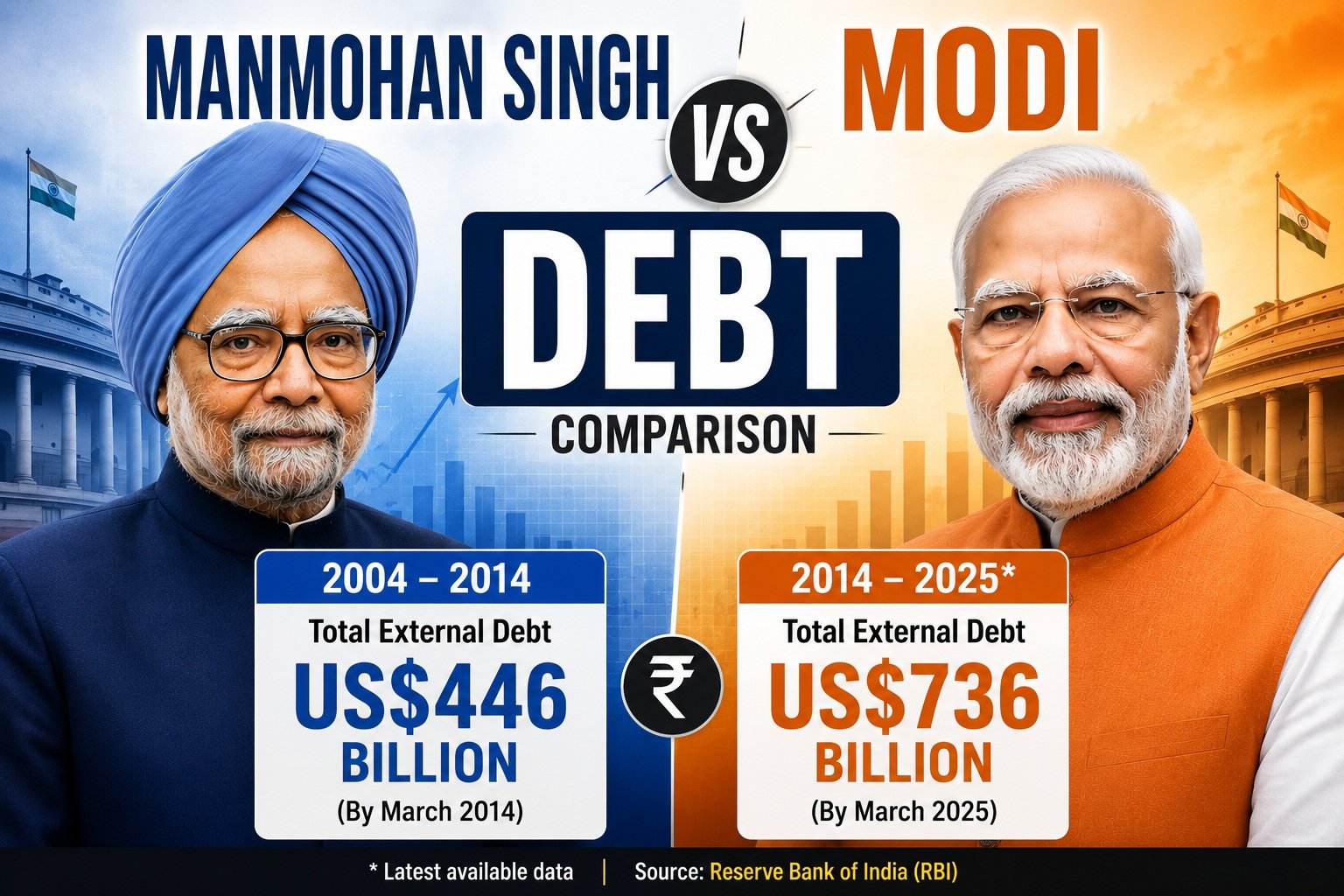
The distinction is politically significant. The UPA years were marked by a succession of controversies, including the 2G spectrum allocation, coal block allocations, Commonwealth Games preparations and the AgustaWestland helicopter deal. These were not imaginary political talking points. They triggered investigations, parliamentary confrontations, judicial scrutiny and, in several instances, criminal proceedings. The Comptroller and Auditor General’s reports on 2G spectrum allocation and coal block allocations, in particular, exposed serious questions about transparency, allocation procedures and the potential loss of public resources.
It would, however, be inaccurate to suggest that the ₹12 lakh crore figure represents an independently established aggregate of proven losses across these cases. It is Shah’s political charge. Equally, the absence of a proven personal corruption charge against the Prime Minister must not be confused with a claim that every decision or every government department has been beyond criticism. Accountability must apply universally. Nevertheless, the contrast between the political baggage inherited by the Congress and the Modi government’s record of centralised leadership and delivery-driven governance is an important part of the political debate.
The Congress cannot simply wish away its past. The 2014 electoral verdict was, among other things, a public expression of widespread frustration with corruption allegations, policy paralysis and the perception that the UPA government had lost its capacity to govern decisively. The BJP’s promise of accountable, transparent and corruption-free governance was central to the political mandate that brought Narendra Modi to power.
And the Karnataka episode demonstrates that the Congress’s problems are not confined to its national political legacy. They continue to surface in states where the party is entrusted with power. Whether it is Karnataka’s extravagant expenditure on a Cabinet meeting or other controversies surrounding Congress-ruled administrations, the recurring question is whether public money is being treated as a sacred trust or as an expendable resource for political and administrative convenience.
Shah’s observation about the Congress’s frustration also deserves attention. A party that once enjoyed an extensive political and organisational network, with access to power from the panchayat level to Parliament, now finds itself struggling electorally across much of the country. His suggestion that the Congress leadership should introspect rather than blame institutions and political opponents strikes at the heart of its credibility crisis. Electoral defeats cannot indefinitely be attributed to conspiracies, manipulated narratives or institutional interference. Ultimately, voters judge governments by their performance, integrity and delivery.
There is, meanwhile, an important distinction between the political rhetoric of promising corruption-free governance and the responsibility of demonstrating it through institutional mechanisms. The Modi government deserves credit for placing transparency, digital delivery, direct benefit transfers, financial inclusion and technology-driven administration at the centre of governance. The JAM trinity (Jan Dhan, Aadhaar and Mobile), for instance, has transformed the delivery architecture of welfare programmes by enabling direct transfers into beneficiaries’ bank accounts and reducing opportunities for intermediaries to siphon off funds. The expansion of digital payments and DBT has strengthened the architecture of financial accountability. These are tangible governance reforms, not merely political slogans.
The Congress, instead of questioning the Modi government’s credentials through international platforms and organising expensive political spectacles under impressive titles such as Bharat Summit, would do well to demonstrate comparable administrative accountability in the states it governs. If it wants to reclaim public confidence, it must first put its own house in order.
Ultimately, the issue is not whether one political party can claim a monopoly over honesty. No government should be above scrutiny, irrespective of its political affiliation. But there is a world of difference between a government that makes transparency and accountability its declared governance priorities and one that repeatedly finds itself explaining questionable expenditure and corruption controversies.
The Karnataka government’s ₹3.83-crore sanction for a single-day Cabinet meeting should therefore be more than another passing political controversy. It should serve as a reminder that public money belongs to the people, not to the ruling establishment. Congress leaders may disagree with Amit Shah’s assessment, but they cannot escape the responsibility of answering uncomfortable questions about their own record.
Corruption cannot be whitewashed through political conferences, ideological posturing or lofty promises of a new world order. Before preaching governance to the world, the Congress must demonstrate that it can practise financial propriety at home.


