There are a few components in heavy equipment that attract less attention than a bearing. Excavators get photographed, engines get specifications and hydraulic systems get discussed in detail, while electronics and telematics increasingly occupy the centre of the machinery conversation. The bearing generally remains somewhere inside the machine, doing its job without demanding attention.
That changes rather quickly when it fails.
At bauma CONEXPO INDIA 2026, NBC Bearings is attempting to bring that otherwise invisible component into a much larger discussion about productivity, reliability, maintenance and the cost of keeping expensive equipment working. Rajesh Premchandran, Chief Sales & Marketing Officer, National Engineering Industries, the company behind the NBC brand, describes the change in emphasis quite directly.

“NBC Bearings’ primary strategic focus at bauma CONEXPO INDIA 2026 is to move the conversation from components to productivity, uptime and total equipment performance.”
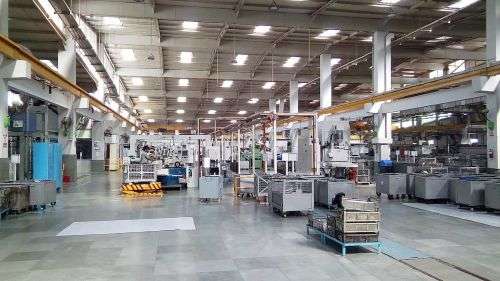
For a company founded in 1946, that represents an interesting evolution. National Engineering Industries, part of the CK Birla Group and headquartered in Jaipur, has built the NBC brand across automotive, railway, aerospace and industrial applications. The company currently says it manufactures more than 260 million bearings a year in more than 7,600 variants, with operations supported by more than 2,800 people and customers in more than 30 countries.
The scale matters because NBC is not approaching bauma simply as a construction-equipment bearing supplier. The exhibition becomes an opportunity to bring a much wider engineering capability into a sector where machine utilisation, reliability and maintenance are becoming increasingly important purchasing considerations.
Pavilion Business
The products on the NBC stand will still matter. This is, after all, a bauma CONEXPO India platform, where machinery and hardware have a habit of overwhelming strategy presentations.
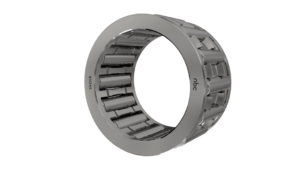
NBC plans to showcase bearing housings, induction heaters, bearing pullers and fitting tools alongside slewing-ring bearings, full-complement cylindrical roller bearings, thrust ball bearings, taper roller bearings, deep-groove ball bearings and other bearing solutions.
The selection itself says something about the intended conversation. It places the bearing alongside the tools and engineering practices that determine how it is installed, maintained and ultimately used.
Premchandran describes the difference from a conventional product display.
“What makes the showcase different is the focus on application-led engineering rather than a catalogue of products. Visitors will see how bearing selection, design optimisation, monitoring and maintenance intelligence can work together to improve equipment availability and lifecycle performance.”
That application emphasis is particularly relevant in industries such as cement, steel, mining, power and material handling, which Premchandran identifies as important opportunity areas. A bearing operating in one of these environments does not exist in isolation; load, contamination, vibration, temperature, lubrication and maintenance practices all influence how it performs.
The engineering challenge therefore begins well before a part number appears on a purchase order.
Portfolio Stretch
NBC’s portfolio has expanded substantially over the years, with the company now describing more than 7,600 variants across its wider range. The number is impressive, but the commercial question is what happens after a new bearing enters the catalogue.
Premchandran’s answer is pointed.
“Our objective is therefore not simply to add these sizes or variants to a catalogue, but to convert portfolio breadth into market relevance—combining product availability, engineering capability and application expertise to win new customers and deepen our presence in India’s rapidly expanding infrastructure and industrial ecosystem.”
That distinction matters in a market where availability and application support can be as important as the component itself. A large catalogue may demonstrate manufacturing capability; getting the right product into the right application, at the right time and with the necessary engineering support is what turns that capability into business.
For NBC, bauma provides a particularly useful setting because the audience includes equipment manufacturers, component suppliers, contractors, distributors and users, all looking at different parts of the same machinery chain.
Assembly Economics
The next step in the proposition moves beyond the individual bearing.
NBC is looking increasingly at integrated and application-ready assemblies, including pre-greased, sealed and other configurations designed around particular customer requirements. The attraction for an OEM is not simply another bearing specification. It is the possibility of simplifying assembly, improving consistency and reducing interventions further down the operating cycle.
Premchandran is careful not to reduce the issue to a conventional premium-versus-price argument.
“However, I would not characterise the market as simply accepting or resisting a ‘premium’. The discussion with OEMs is increasingly shifting towards total value rather than piece-part price.”
That is a more useful way of looking at the economics. A component that appears inexpensive at the point of purchase can become expensive if it demands additional assembly work, requires premature replacement or contributes to equipment downtime. Conversely, a more integrated solution has to demonstrate why its additional cost produces a corresponding benefit.
The argument therefore belongs as much in the production and maintenance departments as it does in procurement.
Digital Bearings
Condition monitoring extends the same thinking into the digital domain.
The bearing itself remains a mechanical component, but the equipment around it is increasingly capable of generating information about vibration, temperature, lubrication and operating condition. NBC’s MaintX proposition brings together condition-monitoring and maintenance-related capabilities with its bearing expertise, while the company’s research and development work includes smart-bearing solutions.
The commercial challenge is not simply to generate another stream of machine data. It is to make that information useful enough for someone to change a maintenance decision before a failure occurs.
Premchandran puts the requirement in business rather than technological terms.
“For procurement leaders, however, the conversation cannot stop at ‘we provide alerts.’ The ROI should be quantified in business terms: avoided unplanned downtime + reduced maintenance cost + lower spare-parts consumption + improved asset availability, less the cost of monitoring.”
That is where the digital proposition becomes considerably more demanding. A sensor can produce an alert. A useful maintenance system has to help somebody decide what to do with it, when to do it and whether the intervention was economically justified.
Premchandran’s preferred evidence is equally practical.
“The strongest customer cases should therefore demonstrate baseline downtime, intervention lead time, avoided failure cost and payback period.”
The emphasis on measurement is significant because condition monitoring is becoming a crowded field. The technology may attract attention at an exhibition, but the customer eventually wants to know whether the machine spent more time producing and less time waiting for attention.
Industrial Canvas
This is where India’s changing industrial environment gives the NBC proposition a wider context.
Construction and mining equipment is operating within increasingly demanding project schedules, while OEMs and users are paying closer attention to equipment utilisation, maintenance planning and lifecycle cost. The component supplier consequently finds itself closer to the customer’s operating economics than it was when the transaction ended with the delivery of a box of bearings.
Premchandran identifies cement, steel, mining, power and material handling alongside construction-related applications because the underlying requirement is similar: rotating equipment has to keep working in environments where interruption can affect an entire production or material-flow chain.
NBC’s broader industrial portfolio gives it a base from which to approach those requirements. The challenge at bauma is to make that breadth relevant to the machinery sitting around the exhibition halls rather than merely adding another layer to the corporate catalogue.

Green Ledger
Environmental considerations are entering the same procurement conversation.
NBC says it has Environmental Product Declarations for eight bearing products, following ISO 14025 and EN 15804 requirements, while its sustainability programme includes the use of renewable energy across its operations.
The more significant change is not the terminology. It is the movement of environmental information towards the engineering and supply-chain side of procurement, where customers increasingly need information that can be incorporated into their own environmental assessments.
Premchandran sees the shift in similar terms.
“For heavy OEMs, sustainability is increasingly becoming an engineering and supply-chain qualification criterion, not simply a branding claim.”
That puts sustainability on a more demanding footing. The conversation eventually moves away from general statements about being green and towards the environmental characteristics of specific products, processes and supply chains.
For an engineering company, that is a useful distinction.
Quality Contest
Quality remains the foundation beneath the newer propositions.
NBC received the Deming Grand Prize in 2015 after its long-term Total Quality Management programme, an achievement the company identifies as the first such award for a bearing manufacturing industry worldwide. Its quality history also extends across automotive, industrial and railway applications, giving the company a broader manufacturing base than the construction-equipment conversation alone suggests.
The international dimension has grown as well. NBC acquired Kinex Bearings in Europe in 2020 and established its Global Technology Centre in Germany in 2022, extending its engineering and technology footprint beyond India.
That combination of manufacturing scale, quality systems and international engineering capability becomes relevant when the discussion moves from component price to lifecycle performance.
Premchandran puts the commercial pressure plainly.
“In a market where OEMs are reassessing their vendor base and evaluating increasingly competitive low-cost alternatives, the real question is not simply the initial acquisition price of a bearing, but its cost over the operating lifecycle.”
It is an argument that cannot be won through branding alone. Bearing life, maintenance requirements, application suitability and the consequences of failure eventually have to support the claim.
Aftermarket Reality
The other side of that equation is the aftermarket, where authenticity becomes part of product performance.
NBC has built a substantial distribution network in India, with more than 550 authorised stockists and a wider retailer network. Its NBC Connect platform is intended to help customers authenticate products, an increasingly relevant function in a market where counterfeit components can undermine both safety and equipment reliability.
The company’s anti-counterfeiting work also reflects a broader problem facing established manufacturers: protecting the brand is only part of the task. The real objective is to ensure that the customer receives a genuine product and has confidence in the channel through which it was purchased.
Premchandran’s response is notably cautious when asked whether enforcement has already shifted grey-market demand back into authorised channels.
“However, I would not claim that grey-market demand has already been quantitatively converted back to authorised channels without validated sales and scan data.”
That qualification is important. Seizure figures can demonstrate enforcement activity, but they do not by themselves establish a change in customer behaviour. For that, the more meaningful indicators would be authenticated purchases, channel volumes, repeat verification and other evidence showing that customers have actually moved towards authorised sources.
It is another area where the company is being pushed towards measurable outcomes rather than broad claims.
Expo Moment
All of this gives NBC’s presence at bauma CONEXPO INDIA 2026 a somewhat different character.
From September 15 to 18 at the India Expo Centre in Noida, the company will occupy Booth B13 in Hall H9, with the physical display covering bearings, bearing-related tools and application solutions.
But the more significant proposition sits behind the hardware.
The company wants its expanding portfolio to be understood through applications rather than numbers, its assemblies through manufacturing and lifecycle economics rather than price alone, its condition-monitoring capability through measurable maintenance outcomes rather than technology terminology, and its sustainability efforts through engineering and supply-chain requirements rather than broad environmental messaging.
That is a much harder proposition to sell than a bearing.
It is also a more interesting one.
Premchandran’s final formulation brings the argument back to the machine itself.
“So, rather than selling IoT as another technology layer, the proposition is: detect earlier, intervene smarter and convert machine-health data into measurable uptime and cost savings.”
The bearing has not become fashionable. It remains a precision component whose best performance is often measured by nobody noticing it. What has changed is the machinery around it, the value of the equipment carrying it and the cost of allowing that equipment to stand still.
For NBC, that is where the bearing begins to acquire a much larger role in the India growth story: not as the most visible part of the machine, but as one of the components whose reliability increasingly shapes the economics of keeping the machine at work.