


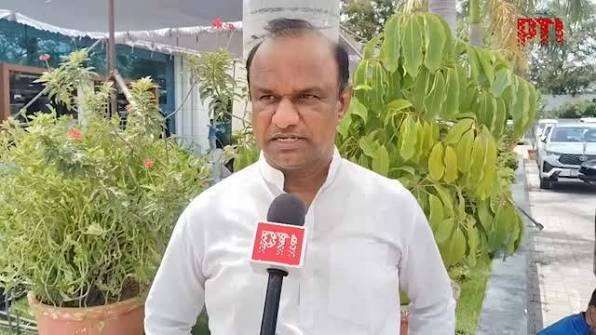
Hyderabad: The Telangana Cricket Association (TCA) on Saturday said it has made a strategic legal move to press its long-standing claim for Full Membership of the Board of Control for Cricket in India (BCCI), even as the Hyderabad Cricket Association (HCA) continues to oppose the expansion of organised cricket across Telangana.
In a strongly worded statement, TCA General Secretary Dharam Guruva Reddy said the cricket administration in Telangana continues to suffer from what he described as a fundamental structural anomaly—the dominance of a city-centric association over the State’s Full Membership, leaving the interests and aspirations of cricketers from the districts inadequately represented.
“The landscape of cricket administration in Telangana has been marked by a glaring imbalance. A city-based association continues to exercise control over the State’s Full Membership, while thousands of talented youngsters from 32 districts have been denied the opportunity to develop through an inclusive State-wide cricket structure,” he said.
Guruva Reddy said TCA has now shifted its strategy by placing its claim for Full Membership directly before the Bombay High Court, besides submitting a detailed representation before the BCCI leadership and the BCCI Ombudsman on September 7, 2026.
According to him, the central issue has to be examined in the context of the Supreme Court’s directions on cricket administration and the reformed BCCI Constitution following the recommendations of the Justice R.M. Lodha Committee.
“The principle of One State–One Full Member has to be viewed in the context of territorial representation, transparency, accountability and development of cricket at the grassroots. TCA believes that the existing arrangement in Telangana deserves a fresh examination against these constitutional principles,” he said.
Mr. Guruva Reddy said TCA’s legal position is supported by several issues that, in its view, warrant serious scrutiny, including the financial and administrative record of the HCA.
He referred to provisions of the BCCI Constitution concerning continued entitlement to grants and recognition, and claimed that the HCA’s financial position and compliance record have been the subject of scrutiny, including audit-related proceedings and concerns over its accounts.
“TCA is not seeking recognition merely for an institutional advantage. We are asking a fundamental question: can an association continue to enjoy State-level privileges when serious questions have repeatedly arisen over its financial compliance, governance and administration?” he said.
The TCA General Secretary also referred to criminal proceedings involving HCA office-bearers and judicial interventions concerning the administration of the association. He said these developments, along with continuing litigation, demonstrated the need for an objective review of the existing governance structure.
He further alleged that the March 2026 HCA elections raised questions relating to club eligibility, representation and the participation of clubs whose status had previously been questioned. TCA, he said, has placed these issues before the appropriate judicial and regulatory authorities for examination.
Guruva Reddy said TCA has also approached the BCCI Ombudsman and Ethics Officer on issues concerning district cricket and alleged violations of BCCI regulations.
“For more than a decade, TCA has worked to develop cricket outside Hyderabad, particularly in the districts, without receiving the institutional support that a State-wide cricket body should ideally receive. Thousands of youngsters have been given opportunities despite these limitations,” he said.
He alleged that the absence of a genuinely inclusive State-wide structure had allowed the district cricket ecosystem to remain fragmented, while initiatives such as commercial franchise leagues had raised questions about regulatory compliance and the interests of grassroots cricket.
“The issue before the authorities is not about personalities or individual office-bearers. It is about the future of Telangana cricket. The district cricketer from Adilabad, Nizamabad, Karimnagar, Warangal, Khammam or any other part of Telangana deserves the same institutional opportunity as a youngster from Hyderabad,” he said.
Guruva Reddy said TCA would continue pursuing its legal and regulatory remedies before the competent forums.
“Our objective is clear: transparency, accountability, merit and genuine grassroots development. TCA believes that Telangana cricket requires a State-wide structure that represents all districts and provides young cricketers a fair pathway to the highest levels,” he said.
“The legal chessboard has changed. We have placed our claim before the appropriate forums and will allow the courts and competent authorities to decide the issues. Our fight is ultimately for the future of Telangana cricket and for the thousands of young cricketers whose voices deserve to be heard,” Guruva Reddy added.



Before We Tear Down Telangana Cricket’s House, Let’s Look at What’s Actually Being Built
The Telangana Cricket Association (TCA) has gone public with its push to be recognised as the state’s full cricket body, arguing that a “city-centric” Hyderabad Cricket Association (HCA) has left district cricketers behind for years. As someone who just loves the game and has watched Telangana cricket up close for a while, I get why that story lands — city versus district is an old, familiar grievance. But it’s worth asking: is it actually true right now, in 2026?
From what I’ve followed, the answer is more complicated than the press release lets on.
What’s changed for district players
Over the last couple of seasons, HCA’s structure has visibly shifted toward including districts, not shutting them out:
A Division now has a combined district team — district players getting a shot at the top domestic tier, not just watching city clubs play it.
C Division and the schools tournament have added district teams, so there’s a wider base of organised competitive cricket outside Hyderabad.
Open selections have been held in the districts themselves, instead of making every hopeful travel to the city just to be seen.
TG20 requires two district players per team — guaranteed game time on the state’s biggest stage, in front of the crowds and cameras that actually build a career.
Is it enough? Honestly, no — not yet. The bigger promises, like dedicated district academies and centres of excellence, are still on paper more than on the ground, and it’s fair to be impatient about that. Fans in the districts have heard plans before. But there’s a difference between “slow” and “nothing happening,” and the last two seasons look a lot more like the former.
Why HCA always seems to be in the news
Part of why HCA looks troubled is simply that it’s under a court-appointed committee, so its disputes, audits, and complaints all play out in public — in a way most sports bodies’ internal messes never do. That visibility can make it look worse off than it is. Under the current oversight, Telangana has reportedly played well over a thousand matches in a year, its teams have won multiple all-India titles, and things like transparent office-bearer elections and a first women’s-safety committee have actually happened. That’s not nothing.
So why would BCCI actually switch horses?
This is the part TCA’s release skips. “One state, one full member” sounds clean in principle, but plenty of Indian states have had messier city/state histories than this without a wholesale swap. And if HCA’s problems were really disqualifying, the courts already have the power to end its role outright — so far, they haven’t chosen to. That’s telling, even to someone who isn’t a lawyer.
None of this means every complaint against HCA is wrong. Some of the individual disputes are real and deserve to be sorted out on their own merits. But there’s a big gap between “some office-bearers have questions to answer” and “the whole association should be replaced” — and TCA’s statement leans hard on the second while only really proving the first.
What I actually care about
I don’t have a stake in who holds a BCCI certificate. What I care about is whether a kid from Adilabad or Khammam gets a real shot at playing top-level cricket. On that measure, the last two seasons — combined district teams, open trials in the districts, guaranteed TG20 slots — are a more honest answer than a legal filing in a court several states away.
The membership fight will keep running through the courts and the Ombudsman for a while yet. But the question I’d actually want answered, as a fan, is simpler: is district cricket in Telangana getting better right now? From where I’m sitting, yes — slower than anyone would like, but real.
Before We Tear Down Telangana Cricket’s House, Let’s Look at What’s Actually Being Built
The Telangana Cricket Association (TCA) has gone public with its push to be recognised as the state’s full cricket body, arguing that a “city-centric” Hyderabad Cricket Association (HCA) has left district cricketers behind for years. As someone who just loves the game and has watched Telangana cricket up close for a while, I get why that story lands — city versus district is an old, familiar grievance. But it’s worth asking: is it actually true right now, in 2026?
From what I’ve followed, the answer is more complicated than the press release lets on.
What’s changed for district players
Over the last couple of seasons, HCA’s structure has visibly shifted toward including districts, not shutting them out:
A Division now has a combined district team — district players getting a shot at the top domestic tier, not just watching city clubs play it.
C Division and the schools tournament have added district teams, so there’s a wider base of organised competitive cricket outside Hyderabad.
Open selections have been held in the districts themselves, instead of making every hopeful travel to the city just to be seen.
TG20 requires two district players per team — guaranteed game time on the state’s biggest stage, in front of the crowds and cameras that actually build a career.
Is it enough? Honestly, no — not yet. The bigger promises, like dedicated district academies and centres of excellence, are still on paper more than on the ground, and it’s fair to be impatient about that. Fans in the districts have heard plans before. But there’s a difference between “slow” and “nothing happening,” and the last two seasons look a lot more like the former.
Why HCA always seems to be in the news
Part of why HCA looks troubled is simply that it’s under a court-appointed committee, so its disputes, audits, and complaints all play out in public — in a way most sports bodies’ internal messes never do. That visibility can make it look worse off than it is. Under the current oversight, Telangana has reportedly played well over a thousand matches in a year, its teams have won multiple all-India titles, and things like transparent office-bearer elections and a first women’s-safety committee have actually happened. That’s not nothing.
So why would BCCI actually switch horses?
This is the part TCA’s release skips. “One state, one full member” sounds clean in principle, but plenty of Indian states have had messier city/state histories than this without a wholesale swap. And if HCA’s problems were really disqualifying, the courts already have the power to end its role outright — so far, they haven’t chosen to. That’s telling, even to someone who isn’t a lawyer.
None of this means every complaint against HCA is wrong. Some of the individual disputes are real and deserve to be sorted out on their own merits. But there’s a big gap between “some office-bearers have questions to answer” and “the whole association should be replaced” — and TCA’s statement leans hard on the second while only really proving the first.
What I actually care about
I don’t have a stake in who holds a BCCI certificate. What I care about is whether a kid from Adilabad or Khammam gets a real shot at playing top-level cricket. On that measure, the last two seasons — combined district teams, open trials in the districts, guaranteed TG20 slots — are a more honest answer than a legal filing in a court several states away.
The membership fight will keep running through the courts and the Ombudsman for a while yet. But the question I’d actually want answered, as a fan, is simpler: is district cricket in Telangana getting better right now? From where I’m sitting, yes — slower than anyone would like, but real.
TCA’S RESPONSE: LET THE FACTS SPEAK — AN OPEN CHALLENGE TO THE HCA
If the anonymous person attempting to hold a brief for the HCA has the courage of his convictions, let him first identify himself. If he is an HCA office-bearer, official, member or stakeholder, let him say so openly. Why hide behind anonymity and shoot from the shadows?
The TCA has nothing to hide. We are prepared to place our records, tournament data, score sheets, financial details and documentary evidence before any competent forum. Our challenge is simple: let the HCA answer with facts, figures and records—not anonymous comments.
The HCA now appears keen to project the impression that it has comprehensively developed cricket across Telangana’s districts. The obvious question is: since when?
If the HCA has genuinely been discharging this responsibility across Telangana, let it publish the district-wise record for the last decade—tournaments conducted, players developed, coaching programmes held, grounds created or upgraded, expenditure incurred, district competitions organised and players from outside Hyderabad who progressed through its system.
The records will speak for themselves.
Is it merely a coincidence that the HCA has suddenly begun emphasising its supposed district-wide activities after the TCA’s sustained legal pursuit of Associate Membership—and, more significantly, after the TCA changed gears and placed its claim for Full Membership squarely before the BCCI?
If the HCA believes its record is superior, there is a very simple way to establish it.
I, as General Secretary of the Telangana Cricket Association, invite the anonymous commentator, any HCA office-bearer or any authorised HCA representative to debate me publicly—on television, before the media, or on any other public platform of their choice.
Let the subject be confined to facts, figures, records and the development of cricket in Telangana.
The HCA describes itself as a founding member of the BCCI. That historical status, however, cannot by itself answer the fundamental question of what has been done for aspiring cricketers across Telangana outside Hyderabad.
How many genuine opportunities have been created for rural and district-level cricketers?
How many district tournaments were conducted?
How many players from the districts progressed through a transparent pathway into the State team?
How many players who performed at district level were given a fair opportunity to compete for higher honours?
And where selectors or cricketing bodies identified deserving talent, was every such recommendation fairly considered on merit?
These are not personal questions. They are questions concerning the future of thousands of young cricketers.
The HCA should also publish its complete statistics of tournaments and competitions conducted across the Telangana districts before the TG20 initiative. If the HCA has a substantial record of grassroots development, there should be no difficulty whatsoever in producing it.
The judicial record is equally relevant. The Bombay High Court proceedings concerning the TCA and HCA have already brought into focus the need for cooperation and the development of cricket outside Hyderabad, including opportunities for talented rural cricketers to progress on merit.
The TCA does not ask anyone to accept its claims merely because we make them.
We invite scrutiny.
The TCA has documentary material running into substantial volumes, including tournament records, score sheets, player participation details and financial records demonstrating its grassroots activities across Telangana. These materials have been relied upon in the legal proceedings to substantiate the TCA’s claim regarding its sustained contribution to cricket development.
That is the fundamental difference.
We speak from records. Let the HCA speak from records too.
The historical allegation that district structures were sometimes created or controlled through nominated individuals rather than genuinely representative local cricket stakeholders is also capable of being tested against records. If the HCA disputes this, let it produce the relevant district constitutions, membership registers, elections, office-bearer records and tournament records.
There is no need for abuse or rhetoric.
Documents can settle the question.
The same standard must apply to infrastructure and expenditure.
Let the HCA publish, district by district:
* the amount spent on cricket development;
* grounds established or upgraded;
* coaching and academy programmes;
* tournaments conducted;
* number of registered players;
* number of matches conducted;
* district-level selection processes;
* players promoted to State-level cricket; and
* the audited expenditure supporting these claims.
If the record is strong, the TCA will acknowledge it.
If the record is weak, the cricketing community has a right to know that too.
The history surrounding the Uppal stadium and the manner in which government land and the stadium project were dealt with has already been the subject of public discussion and scrutiny. The larger lesson is that cricket administration must remain accountable for public resources and cricketing assets.
Today, announcements of grand new stadium projects and large-scale cricket initiatives may sound impressive. But the basic question remains:
Where is the corresponding grassroots cricket infrastructure across the Telangana districts?
A cricket administration cannot measure its success merely by stadium announcements, commercial leagues or high-profile events.
Its real success must ultimately be measured by how many children in the districts get a ground, a tournament, a coach, a selection opportunity and a genuine pathway to State and national cricket.
That is precisely where the TCA says it has concentrated its efforts.
For nearly twelve years, while pursuing recognition through lawful and constitutional means, the TCA has continued its grassroots activities across Telangana. We have conducted tournaments and leagues across multiple centres and preserved the underlying records.
We are prepared to place those records under scrutiny.
The TCA therefore does not fear comparison. We welcome it.
If the HCA believes it has done more for district cricket than the TCA, let us put both records side by side.
Let there be no anonymous allegations.
Let there be no personal attacks.
Let there be no diversion.
Let the HCA produce its records. The TCA will produce ours.
And let the cricketing community, the media and, where appropriate, the competent judicial and statutory forums examine them.
The TCA’s pursuit of Associate Membership and its claim for Full Membership are not matters for anonymous commentators to decide. They are matters to be determined through the applicable BCCI framework and lawful institutional processes.
The TCA will continue to pursue those remedies peacefully, constitutionally and through the appropriate forums.
The HCA need not be disturbed by that.
Instead, the HCA should answer the more important questions concerning its own administration.
How many court interventions have been necessary?
How much institutional time and cricketing resources are being consumed by litigation?
How much of the attention of the administration is being devoted to litigation and internal disputes instead of expanding opportunities for young cricketers?
And, most importantly:
How long will talented cricketers from Telangana’s districts have to wait for a genuinely transparent, merit-based and inclusive pathway?
These are legitimate questions.
They deserve answers.
The TCA has nothing to hide.
We have records.
We have score sheets.
We have tournament data.
We have financial documentation.
We have placed material before judicial forums.
And we are prepared to subject our claims to scrutiny.
Therefore, to the anonymous author and to any HCA official who believes the HCA record can withstand comparison, the challenge remains open:
Come out in the open. Identify yourself. Bring the records.
I am prepared to debate the matter on facts, figures, documents and cricketing development—anywhere, anytime, on any public platform of your choice.
No anonymity. No abuse. No rhetoric.
Just facts. Just records. Let Telangana’s cricketing future be the winner.
— Dharam Guruva Reddy
General Secretary
Telangana Cricket Association (TCA)
too long to read. anyway let the BCCI and Courts adjudicate.
Why the hide and seek?
One Should Be dare enough to Face before Trial— De— ???? Mindset …!!
TCA Challenge is Vindicated ..!!
Ignorants need to be explained at length. Didn’t your senseless argument to defend the most corrupt association in two parts too lengthy than the TCA Secretary’s statement? Your back tracking exposed your fear to hear the truth. Join the debate, if u have the courage, on facts why do u need excuses?
When facts are on the table, excuses become the last refuge of the fearful. If HCA’s defence is so strong, why retreat from the debate? Come to the crease and face the facts.
Remember: Kauravas had the numbers, Ravana had Lanka, but neither could defeat the truth—history has no mercy for arrogance masquerading as entitlement.
If HCA has the facts, let it answer TCA publicly—on its claim to represent all Telangana cricket, its compliance with BCCI Rule 3, its exclusion of the 31 districts outside Hyderabad, and its refusal to address TCA’s Full/Associate Membership claim. No slogans—answer the facts, point by point.
“I am a cricketer from outside Hyderabad, and I strongly support TCA’s legitimate demand for Full Membership. The issue is not about one association defeating another; it is about whether the BCCI Constitution will actually work as it was designed to work for the development of cricket across a State. If the Constitution, particularly its membership and territorial principles under Rule 3, recognises organised cricket on the basis of defined territories and genuine cricketing activity, then those provisions cannot be selectively invoked when convenient and ignored when inconvenient. You cannot claim the whole State when it comes to control, but treat the vast majority of its districts as if they do not exist when it comes to representation and opportunity. TCA has demonstrated organised grassroots cricket across Telangana; therefore, its Full Membership claim deserves to be examined on the Constitution, facts and performance—not buried under diversionary arguments or endless rhetoric. Cricket must be governed by rules, not by pick-and-choose interpretations of the rules.”
As a cricketer, what worries me is the attempt to turn a vital constitutional issue into a propaganda debate. The BCCI Constitution cannot be treated as a menu: accountability, territorial clarity, and membership rules apply to everyone equally. The Telangana Cricket Association’s (TCA) Full Membership claim based on sustained activity demands a transparent, rule-based determination—not personal attacks or diversionary tactics. There is no room for double standards or constitutional pick-and-choose.
“I am a cricketer from outside Hyderabad, and I strongly support TCA’s legitimate demand for Full Membership. The issue is not about one association defeating another; it is about whether the BCCI Constitution will actually work as it was designed to work for the development of cricket across a State. If the Constitution, particularly its membership and territorial principles under Rule 3, recognises organised cricket on the basis of defined territories and genuine cricketing activity, then those provisions cannot be selectively invoked when convenient and ignored when inconvenient. You cannot claim the whole State when it comes to control, but treat the vast majority of its districts as if they do not exist when it comes to representation and opportunity. TCA has demonstrated organised grassroots cricket across Telangana; therefore, its Full Membership claim deserves to be examined on the Constitution, facts and performance—not buried under diversionary arguments or endless rhetoric. Cricket must be governed by rules, not by pick-and-choose interpretations of the rules.”
One State cannot mean one city”
For decades, cricketers outside Hyderabad have watched opportunities remain conveniently hoarded in a single zip code. Now that the Telangana Cricket Association (TCA) is asking a basic question—why statehood counts for government administration but vanishes when it’s time for cricket representation—the BCCI suddenly treats its own rulebook like a buffet. Rules are aggressively enforced when protecting the status quo, yet mysteriously optional when accountability is required. It’s time to stop hiding behind manufactured noise: examine the grassroots facts, apply the constitution without favoritism, and decide. Legitimacy is earned through fairness, not administrative gatekeeping.
The Rulebook Isn’t Optional: The alleged defiance of BCCI constitutional norms—from governance and committee oversight to AGM accountability, expenditure, and conflict of interest rules—exposes a system operating with absolute impunity. Rules are not decorative text; they are hard legal safeguards meant to block arbitrary control, and dodging them with PR rhetoric or personal attacks won’t work anymore.
A Monopoly Built on Convenience: An association cannot demand absolute authority over an entire state while treating accountability like an administrative suggestion, treating the rulebook as a shield for self-preservation. Telangana’s districts deserve a transparent, rule-by-rule audit of every record and committee decision, because true cricket legitimacy is earned on the ground, not through gatekeeping.
THE BELL-RINGER & WHISTLE-BLOWER ALERT — RULES MUST RULE!
This is no longer a TCA–HCA squabble. It is a test of whether the BCCI Constitution governs everyone, or whether rules can be bypassed when inconvenient. Alleged non-compliance with Rules 23, 26, 28, 30, 31, 37 & 38, coupled with the apparent failure of the SMC to ensure transparent, accountable district cricket governance, cannot be buried under rhetoric, personal attacks or diversionary “debates.” Rules are not suggestions. They are guardrails against arbitrary power. If there is nothing to hide, put the records, decisions, approvals and compliance on the table. No pick-and-choose Constitution. No double standards. No escape from accountability.
A WHISTLE-BLOWER QUESTION: If HCA is fully compliant, transparent and confident in its position, why fear an independent rule-by-rule examination? TCA’s Full Membership claim should be decided on the BCCI Constitution, facts, grassroots cricket and Telangana’s territorial reality—not intimidation, noise or manufactured distractions. No association is above the rule book. No office-bearer is above scrutiny. Let the Constitution speak. Let the documents speak. Let the cricketers speak. THE TELANGANA CRICKET DOESN’T NEED POWER ABOVE THE RULES. IT NEEDS GOVERNANCE UNDER THE RULES. RULES MUST RULE.
Expose the Paper Trail: HCA can hide behind legal noise and court delays, but it cannot erase the hard record—from the Justice L. Nageswara Rao report’s warnings on arbitration collusion and COMCA scrutiny to questionable payments and governance defaults. These are verifiable facts on record, not internet rumors, demanding an immediate, independent, rule-by-rule reckoning by the BCCI.
The 92-Year Failure: After nearly a century of existence, HCA cannot name a single genuine pathway it built for cricketers living and developing outside Hyderabad city. If Telangana is one state, a single city-centric monopoly has no constitutional right to hijack the cricketing destiny of all 33 districts.
BCCI’s Moment of Truth: The BCCI must stop treating rules like 23, 26, 28, 30, 31, 37, and 38 as ornamental decoration. If serious violations are proven, protecting an entrenched full member over the constitutional rights of districts sets a dangerous precedent.
Open the Books: TCA challenges HCA and the BCCI to lay every document, committee decision, and disputed financial record on the table for a live, transparent audit. No city monopolies, no untouchable office-bearers—just rules applied equally for every cricketer in Telangana.
ALERT: FOLLOW THE CHAIN OF EVENTS ..!!
The real question is not who can shout louder in a WhatsApp debate. The question is what happened to accountability in HCA after the appointment of Justice P. Naveen Rao as SMC on 25.07.2025? Despite repeated complaints and representations, TCA alleges that a succession of controversial and allegedly rule-defying developments were allowed to continue: the appointment of an Interim CEO whose qualifications, appointment process and continuing tenure require public scrutiny; the Ameerpet CC connection and its disputed ownership history; the alleged conflict surrounding Basava Raju; the subsequently dismissed HCA President appointment; the unapproved Kaka Venkata Swamy tournament; the controversial appointment of the Secretary; the disputed composition of the Governing Council; and alleged league activities despite objections placed before the SMC, Ombudsman and BCCI. If these objections were repeatedly placed on record, why was decisive corrective action not taken? Why should accountability be optional while authority appears unlimited?
NOW TCA IS PUTTING THE QUESTION DIRECTLY ON THE TABLE: Are the BCCI Constitution and its safeguards being applied fully and equally or selectively? The disputed proceedings in WP 21904/2025, WP/6779/2021 and COMCA 32/2025, and every consequential appointment or decision, deserve scrutiny through jurisdiction, natural justice, Rules 23, 26, 28, 30, 31, 37 & 38, conflict-of-interest safeguards, financial accountability and due process. TCA is not asking for special treatment. TCA is demanding one standard for everyone. So here is the challenge: HCA publish the records. SMC answer the complaints. BCCI apply the Constitution. Let every appointment, approval, expenditure and governance decision face independent scrutiny. TCA and Telangana’s district cricketers are ready to put every document, every rule and every question on the table—any time, anywhere, any day or night. No brokers. No backdoors. No diversion. No intimidation. TCA will not be silenced by noise—it will answer with documents, rules and facts.
THIS IS NOT A FIGHT FOR POWER. IT IS A DEMAND TO PUT POWER BACK UNDER THE RULES. TCA STANDS READY. LET THE RECORDS SPEAK. LET THE CONSTITUTION DECIDE.
WHO GAVE HCA PERMISSION TO CONDUCT TG20? SHOW THE SANCTION — NOT THE SPIN.
HCA itself announced TG20 as its “premier T20 cricket league.” But the fundamental question remains unanswered: Where is the BCCI’s prior written approval? Where is the Rule 30 compliance? Where is the Rule 28 approval/authority for a competition of this nature?
If the approvals exist, publish them. If they do not, explain under what authority HCA proceeded. TCA has already publicly questioned the absence of the required BCCI approval under Rule 30.
SECRECY IS NOT COMPLIANCE. SILENCE IS NOT SANCTION.
If an association conducts a major commercial league while the mandatory constitutional permissions are disputed, the answer cannot be another press release or another procedural diversion. BCCI must conduct a suo motu, independent rule-by-rule inquiry into the approvals, governance authority, finances, contracts, franchise arrangements and Rule 28/30 compliance — and take appropriate disciplinary action if violations are established.
HCA: SHOW THE PERMISSION.
BCCI: SHOW THE OVERSIGHT.
TCA: WILL SHOW THE RECORD.
The cricketers and public deserve to know who authorised the league, under which rule, with whose approval, and with what accountability.
No secret cricket governance.
No commercial league above the BCCI Constitution.
No monopoly without accountability.
RULES MUST RULE.
TCA has been pushing for BCCI recognition since 2014. BCCI rejected its associate membership bid in 2021, directing HCA to engage with TCA instead — a meeting that only happened this year, after Bombay HC pressure.
Since then, TCA’s public activity has been almost entirely press statements, legal notices (including to actors and players over TG20 endorsements), and unproven allegations — cash-for-selection, financial misappropriation — with no adjudicated findings yet. Matter remains subjudice before the Bombay HC.
Meanwhile HCA continues running its full domestic calendar — A-Division league, B-Division T20, U-19 women’s league, and TG20 — under a High Court-appointed Single Member Committee, and remains BCCI’s sole recognised body for the state under the “one state-one member” principle.
Bottom line: allegations ≠ findings. Let the courts and BCCI’s own process decide.
TCA OPEN CHALLENGE TO HCA — 16.09.2026
Enough of anonymous lectures and social-media noise. Come into the open, HCA! TCA invites HCA and its supporters to a LIVE, face-to-face round-table debate before the National & State Media. Venue? Haritha Plaza, ITC Kohinoor, Fateh Maidan Club or Rajiv Gandhi Stadium—your choice!
You claim Telangana-wide cricket development? Then bring the original records! Bring the registers, player lists, scorebooks, scorecards, fixtures, officials’ reports, venue records, vouchers and bank trails behind the 3,778 summer-camp figure and the district reports showing alleged identical 15-match U-19/U-25 patterns and overlapping schedules. If every number is genuine, prove it live.
TCA will bring the documents. Will HCA bring the evidence—or only excuses?
No anonymous warriors. No diversion. No personal attacks.
ONE TABLE. TWO SIDES. ALL RECORDS. LIVE TELECAST.
HCA — ACCEPT THE CHALLENGE.
16.09.2026. FACE THE FACTS.
Telangana Cricket deserves transparency—not manufactured narratives.