


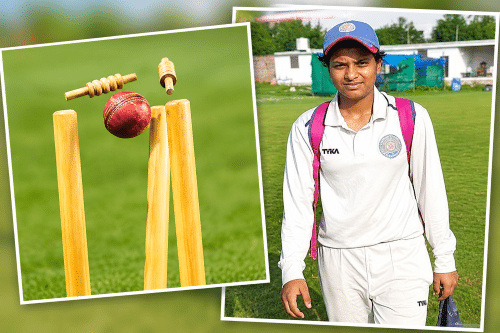
Special Correspondent, with inputs from aggrieved parents
Women’s Cricket Cannot Be Left in the Shadows
While considerable attention is finally being directed towards reforming men’s cricket in Hyderabad — whether through the State High Court-appointed Single Member Committee (SMC), the new Secretary or initiatives such as TG20 and attempts to take the game to the districts — there is a disturbing question that cannot be brushed aside:
What is happening to women’s cricket?
Repeated reminders and concerns raised before the SMC and the HCA administration appear to have produced little visible change. And when the issue concerns young women cricketers whose careers depend almost entirely on the fairness and integrity of the system, silence cannot be an acceptable substitute for accountability.
This writer has no intention of mincing words or dressing up uncomfortable questions in polite language. Having entered journalism more than four decades ago, beginning as a sports journalist, and having personally witnessed the difficult circumstances in which women’s cricket was established in the State, the present situation is deeply disturbing.
Women’s cricket did not emerge overnight. It was built painstakingly by people who believed that girls deserved the same opportunity to play, compete and represent the State. Among those who worked during those early and difficult days were the late legendary sports journalist T.N. Pillay (then Editor of Deccan Chronicle) and Mrs Jyoti Joshi, then Physical Director of Osmania Women’s College, Koti.
Those who struggled to create opportunities for women cricketers would surely find it difficult to understand a situation in which parents of young players now approach with serious complaints about the functioning of the system.
Questions that refuse to disappear
Over the past period, this writer has heard accounts from parents and stakeholders concerning the alleged influence of an individual with a controversial past in another State’s cricket administration.
The allegations being spoken about are serious.
They include claims concerning sexual harassment of women cricketers in the neighbouring State and the fact that complaints had earlier been made against the individual. According to the accounts brought to this writer’s attention, the then undivided State Home Minister took cognisance of complaints made by women cricketers and directed that appropriate criminal proceedings be initiated.
Those are matters that belong to the public record and, where necessary, should be independently verified from official documents and the concerned authorities.
This writer is not presenting every allegation subsequently narrated by parents as a judicially fact.
But neither can a responsible journalist pretend that repeated complaints do not exist.
That is precisely why the matter deserves scrutiny.
The concern becomes even more serious when the person against whom such allegations have been made is alleged to have continued to remain within the cricketing ecosystem and to have access to young women cricketers and their families.
Why is such influence being tolerated?
The question that therefore needs to be asked is not merely about one individual.
It is about the system that permits an individual surrounded by such allegations and controversies to remain influential in the cricketing environment.

Parents have approached Orangenews9 with complaints and concerns about the person’s continuing activities. Some of these complaints have been verbal, while others have been submitted in writing. These inputs remain subject to verification and due response from those concerned.
Orangenews9 has consistently maintained that allegations must not automatically be converted into facts. At the same time, a media organisation cannot simply ignore credible complaints merely because they concern powerful or well-connected individuals.
Indeed, over the past year and a half, Orangenews9 has provided a platform to stakeholders who say that their grievances concerning the Hyderabad Cricket Association have not received adequate attention elsewhere. That role carries a responsibility: allegations must be put in the public domain carefully, the concerned persons must be given an opportunity to respond, and documentary evidence must be sought wherever possible.
That is precisely the approach being followed here.
The academy question
One of the concerns brought to this writer’s attention is that, following the bifurcation of the State, the individual in question allegedly established a cricket academy in an elite residential area of Gachibowli.
Parents and stakeholders have questioned whether the academy and its activities have provided an avenue for maintaining influence over young women cricketers and their families.
Again, these are allegations requiring independent verification.
But there is a larger question which cannot be avoided:
Why should an individual carrying such a controversial background have any opportunity to exercise influence over the careers of young women cricketers?
Even the perception of such influence can damage confidence in the system.
If the person has no role in selection, team formation or administration, the HCA should have no difficulty making that position clear.
If the person does have any formal or informal role, the nature and extent of that role deserve to be disclosed.
And if no role exists, the administration should explain how and why such allegations of influence have gained currency among parents and stakeholders.

Selection is where transparency matters most
This concern becomes particularly relevant in the context of women’s team selections.
Questions have already been raised about whether selection is consistently based on performance, fitness and cricketing merit, or whether considerations other than cricket are sometimes allowed to influence decisions.
Several stakeholders have questioned the continued opportunities given to certain players despite periods of limited statistical contribution, while other players with strong league or age-group performances allegedly find it difficult to enter the State system.
Names of individual players have been mentioned in complaints and discussions. But this writer deliberately does not seek to pronounce judgment on any player.
Players should not become victims of an administrative controversy.
Their complete official records — matches played, runs scored, batting averages, wickets taken, bowling averages, strike rates, fielding contributions and opportunities received — should be placed alongside the criteria applied by selectors.
Let the numbers speak.
If the records justify selection, there is nothing to fear.
If the records do not appear to justify repeated selection, the administration should explain the cricketing reasons.
That is how a professional sporting system should function.
The more disturbing allegation
More serious allegations have also reached Orangenews9 concerning claims that money may have been sought or collected from parents in connection with selection opportunities or favourable treatment.
These allegations are extremely serious and must not be casually converted into established facts without evidence.
At the same time, their seriousness is precisely why they cannot simply be dismissed.
If money was never demanded, the appropriate authorities have every opportunity to say so and establish the facts.
If money was demanded or collected, the questions become much more fundamental:
Who demanded it?
Who collected it?
On whose behalf?
Where did the money go?
Were any transactions recorded?
Did any player subsequently receive selection or preferential treatment?
Were officials aware of any such arrangement?
These are not questions that should be settled through whispers in cricketing circles.
They require evidence.
If documentary evidence, transaction records, messages, recordings or other credible material exists, it should be placed before the appropriate investigative authority.
The answer to a serious allegation cannot be another allegation.
It has to be evidence and investigation.
The issue of influence
Another concern repeatedly raised by stakeholders relates to the alleged existence of informal networks involving influential intermediaries, certain parents, coaches and persons connected with cricket administration.
Such networks may or may not amount to wrongdoing.
But the perception that selection can be influenced through personal relationships is itself damaging to the credibility of any sporting institution.
The basic principle is simple:
A young cricketer should not need a powerful intermediary to obtain an opportunity.
She should need runs, wickets, fitness, discipline and sustained performance.
That is what merit means.
And if selectors are themselves connected with institutions, academies, coaches or players whose interests may overlap with their official responsibilities, appropriate conflict-of-interest safeguards become essential.
Declarations of interest and recusal where necessary are not signs of mistrust.
They are signs of a mature sporting administration.
Who protects the young players?
This is perhaps the most uncomfortable question of all.
A young woman entering competitive cricket is not merely entering a sporting arena. She is entering an environment in which administrators, selectors, coaches and senior players can influence the direction of her career.
A teenager and her parents may have little knowledge of how selection systems work.
They may not know whom to approach when they believe an injustice has occurred.
They may hesitate to complain because they fear that doing so could damage the player’s future.
That imbalance of power places a greater responsibility on administrators.
The system must protect the player — not the powerful intermediary.
It must encourage complaints, not discourage them.
It must investigate complaints, not bury them.
And it must ensure that a girl does not have to compromise her dignity, independence or self-respect merely to remain in contention for selection.
But this raises another uncomfortable question: where is the institutional mechanism for a young woman to actually make such a complaint?
Why is there no POSH committee that is visibly functioning on the ground and accessible to women cricketers and their parents?
If such a mechanism exists, why is it not clearly known to the players and their families? If it does not presently function in a meaningful manner, why has this basic safeguard not been put in place?
The HCA has an Ethics Officer who is a woman. Why can she not, at least for the time being, handle or oversee this responsibility until a proper and fully functional POSH mechanism is put in place?
The question is not about creating another layer of administration.
It is about ensuring that a young woman knows exactly where she can go when she feels threatened, harassed, intimidated or unfairly treated.
And there is another matter that deserves a clear answer.
What happened to the enquiry into last year’s controversy concerning the coach of the senior women’s team?
Was an enquiry conducted?
What was its finding?
Was any action taken?
If the matter was closed, on what basis was it closed?
If it remains pending, why has it remained pending for so long?
A system that asks young players and parents to have faith in its grievance mechanisms must also be willing to disclose what happened when serious complaints were previously brought before it.
There is also a perception among stakeholders that several high-profile appointments involving women have originated from the same outside influence that has been repeatedly referred to in complaints.
Is this merely a perception, or is there a documented basis for it?
Who made these appointments?
What criteria were followed?
Were the appointments made through a transparent process?
Were conflicts of interest examined and declared?
These are legitimate questions not because an appointment itself establishes wrongdoing, but because transparency is the only effective way of dispelling a perception of outside influence.
What happened to the spirit with which women’s cricket was built?
Those who built women’s cricket in the State did not do so to create another closed circle of influence.
They created opportunities for girls.
They wanted women to play cricket because they believed talent should not be restricted by gender.
The generation that fought for women’s cricket had very little of the infrastructure available today. Yet they created pathways through colleges, institutions, local competitions and State-level cricket.
Today, there are better facilities, greater financial resources, professional coaching and a much larger ecosystem.
So why should parents now feel compelled to approach the media with complaints about the fairness of the system?
That question deserves an honest answer.
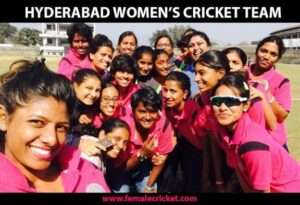
HCA must look beyond personalities
The answer should not be to target individual players or their families.
Nor should it be to protect individuals merely because they are connected to influential people.
The answer lies in institutional transparency.
The HCA should consider making the selection system demonstrably transparent by:
Clearly publishing selection criteria for every age-group and senior women’s team.
Recording the performance indicators considered before each selection.
Maintaining documented reasons for significant selection or replacement decisions.
Requiring selectors and relevant officials to declare conflicts of interest.
Establishing a genuinely independent grievance mechanism for players and parents.
Creating a formal channel to receive and investigate allegations of financial inducement.
Conducting periodic reviews comparing player performances with selection outcomes.
Ensuring that intermediaries, academies and parents have no informal pathway into the formal selection process.
Providing protection against retaliation for players or parents who raise genuine complaints.
Making it possible for disputed selection decisions to be independently reviewed.
None of these measures requires the HCA to prejudge any individual.
They merely require the institution to demonstrate that its processes are fair.
The police question also needs an answer
Some stakeholders have also claimed that senior police officials are aware of concerns surrounding the individual referred to in these complaints.
That is another matter which should be independently verified.
If police authorities have received complaints, the status of those complaints should be ascertainable through proper legal and administrative channels.
If they have not received complaints, that should also be made clear.
What cannot be healthy for any institution is a situation where parents believe that everybody knows about alleged wrongdoing but nobody is willing to formally examine it.
Awareness is not investigation.
Rumour is not evidence.
But neither is silence proof that nothing happened.
Orangenews9’s responsibility
This newspaper does not claim to be a court.
It does not pronounce guilt.
It does not seek conviction through journalism.
But journalism has another equally important responsibility — to ask questions when people who feel powerless come forward.
For the past year and a half, Orangenews9 has been receiving inputs from stakeholders who claim to have grievances concerning the functioning of Hyderabad cricket. Some have approached us verbally. Others have submitted written complaints.
Where allegations are made, the concerned persons deserve an opportunity to respond.
Where evidence is available, it deserves examination.
Where allegations are demonstrably false, they should be corrected.
But where credible evidence establishes wrongdoing, the appropriate authorities must act.
That is the only responsible course.
Also read: https://orangenews9.com/fair-play-for-hyderabad-cricket-part-ii/
Let women’s cricket not become collateral damage
The larger danger is that, while everyone debates the reform of men’s cricket, women’s cricket could quietly remain trapped in an ecosystem where informal influence and opaque processes are allowed to flourish.
That would be an injustice not merely to today’s players but to the next generation.
A girl who spends years training deserves to know that her performance will be assessed honestly.
A parent who spends money and time supporting a daughter’s cricket deserves to know that selection is not available to the highest bidder or the best-connected family.
A coach deserves to know that hard work will be recognised.
A selector, therefore, deserves an institutional framework that protects him or her from outside pressure, influence or interference.
Most importantly, the HCA must ensure that no individual — however influential, well-connected or deeply embedded in cricketing circles — is allowed to become bigger than the institution itself.
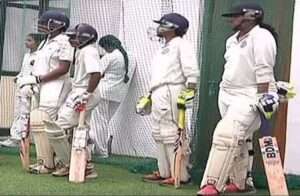
The concern raised by aggrieved parents is that the individual referred to above has increasingly emerged as an influential presence around age-group cricket, with allegations that securing a berth in certain state age-group teams is linked to players or families falling in line with his scheme of things. If established, such a situation would raise serious questions about the independence and integrity of the selection process, particularly if the influence is allegedly being used to build personal visibility and advance ambitions within the BCCI and elsewhere.
The issue, therefore, is not about one individual alone. It is about whether the institutional system is strong enough to ensure that selections remain based on performance, merit and transparent criteria, rather than personal proximity, influence or perceived allegiance.
The final test is simple
The HCA need not answer Orangenews9.
It needs to answer the parents.
It needs to answer the players.
It needs to answer the coaches.
And ultimately, it needs to answer the records.
If the statistics justify the selections, publish them.
If the selection process is clean, demonstrate it.
If allegations of financial inducement are false, investigate them and establish that they are false.
If conflicts of interest do not exist, disclose the safeguards.
If an individual has no influence over selection, make that clear.
And if any person is found to have improperly influenced selection, demanded money, exploited access to young players or otherwise abused a position of influence, the institutional response should be unequivocal.
Hyderabad has produced women cricketers who have earned recognition through talent and perseverance.
They deserve a system worthy of their effort.
The administrators who are presently entrusted with the future of Hyderabad cricket have an opportunity to restore that confidence.
They should not wait for another generation of parents to come forward with the same complaints.
They should not wait for another controversy.
And they certainly should not allow the reputation of Hyderabad women’s cricket to be determined by allegations, whispers and perceptions.
Clean the system. Open the records. Establish the facts. Protect the players.
That is not asking for too much.
It is the minimum that women’s cricket deserves.

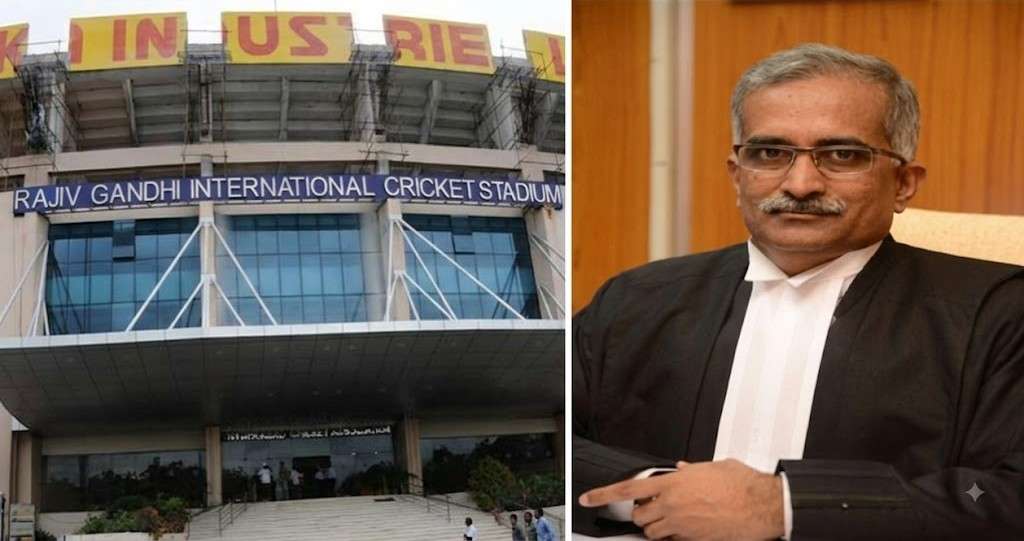


There are concerns among players regarding poor management, in HCA inappropriate verbal communication, lack of professional treatment, and insufficient support for talented players. Some players feel that talent and performance are not always given the importance they deserve and that opportunities may be influenced by factors other than cricketing ability.