

N Nagarajan
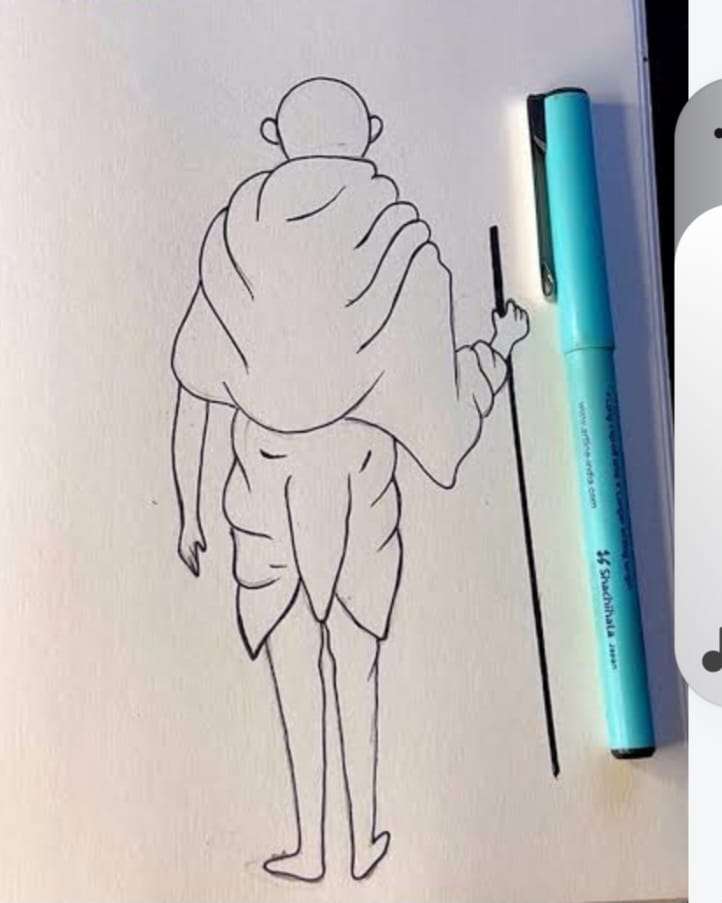
Perhaps it is better to stop invoking Gandhi ceremonially than to allow his name and legacy to be repeatedly abused. On 2 October, the nation will once again observe Gandhi Jayanti. The President, Prime Minister and political leaders across parties will pay tribute to Mahatma Gandhi.
For many, however, it will simply be another public holiday—an opportunity for a family outing or a short break. For social media, it will be another occasion for both admirers and critics of Gandhi to make their views heard. But how many of today’s leaders or citizens have actually understood Gandhi?
Almost all of us know him through books, writings, films and the interpretations of admirers and critics. The present generation of political leaders did not witness the freedom struggle or Gandhi’s movements. Yet we continue to invoke his name, often selectively, depending on our political convenience.
The Congress has a special historical connection with Gandhi. He spent years within the organisation and used it as an important platform for India’s freedom movement. His commitment to non-violence and his belief in respecting different faiths became central to his public life.
Yet, over the decades, the Congress itself has changed considerably, as have its politics and methods. It is difficult to see how today’s political practices consistently reflect the Gandhian approach. The same question can be asked of other political formations.
Today’s ruling party was established after Independence, and its present leadership obviously belongs to a very different India from the one in which Gandhi lived and worked. Its political and economic positions have also evolved substantially over the decades. This is not an argument against any particular party.
It is a question for all political parties: if Gandhi’s principles no longer guide their conduct, why must they continue to invoke him? The larger problem lies with society itself. Gandhi has become an object of extreme admiration for some and equally extreme hostility for others. Social media discussions can descend into abuse, with some even expressing hatred towards him in terms that would have been unthinkable in earlier public discourse.
Ironically, both sides may know surprisingly little about the man they praise or condemn. Gandhi’s ideas belong to another era, and India has changed enormously. Khadi, once associated with self-reliance and simplicity, has become a fashion statement. Even the familiar Gandhi spectacles have acquired a symbolic value far removed from the life he lived. His image survives everywhere—from government offices to currency notes—while his philosophy appears increasingly distant from everyday life.
So perhaps we should ask an uncomfortable question: Would it be better to erase Gandhi officially from our public rituals rather than continue invoking him while allowing his name to be abused? “Erase” need not mean erasing history.
Gandhi should remain in our books, archives and national memory, where he can be studied, questioned, admired or criticised honestly. But perhaps the time has come to stop turning him into a political symbol that everyone claims, and nobody truly owns.
If we cannot respect Gandhi, understand him or even debate him with civility, perhaps remembering him ceremonially once a year does more harm than good. It may be better to let history speak for Gandhi—and let the rest of us decide what, if anything, we wish to learn from him. I suspect Gandhiji, peacefully resting in his grave, would be more than happy with my thoughts. At least they might help him spend his afterlife in peace, away from those who praise him, condemn him, and, increasingly, abuse him without really knowing him.



True, we hardly see in practice the teachings of Mahatma Gandhiji. It’s really disappointing and sad to notice that the Jayanti of Gandhiji, declared as a public holiday, is to remember his principles and simple life and not to celebrate disrespecting the principles taught by the Father of the Nation. Let’s erase the misguiding interpretations of the principles taught by Mahtma Gandhi and remember to practice his invaluable teachings for our good!
very well written. simply superb
Valuable message
Nagarajan garu, I agree with much of what you say about Gandhi, but he is ‘Not My Mahatma’. During my school days, I looked forward to October 2 as the day we remembered the ‘champion of India’s independence’. Not anymore.
With the passage of time, I have come to see Gandhi less as the father of India’s freedom struggle and more as one of the many cogs in the wheel of a long and complex struggle.
His greatness, to me, is most evident in his insistence that Hindus should not harbour hatred towards Muslims, even when faced with provocation and all the Hindus are killed.
The Gandhi-Nehru legacy also deserves to be examined without the reverence that has long surrounded it. In my view, their influence on post-Independence India often proved more damaging than beneficial – the proverbial Rahu and Ketu of the nation’s early years.
As more skeletons tumble out of the cupboard and more of history is revisited, the ceremonial Gandhi of October 2 means less to me than the complicated historical figure behind the portrait.
I would rather question Gandhi, study him and acknowledge both his contributions and his shortcomings than turn him into a Mahatma.
Dear Mr Nagarjuna
Point well taken. In my piece i have not used Mahtma a title given by Gurudev Rabindranath Tagore. His non violence was so deep probably thats what costed him life. But by accepting bullet he proved violence would take us no where atleast no piece of mind. That’s why Erasing him is best way.
Apologise. The tittle itself had Mahatma.