
Shrikant Rao
For decades, the heavy machinery world ran on an unspoken rule: highway trucks stayed in their division, earthmovers stayed in theirs, and fleet software lived in an entirely separate engineering bucket. If you ran a mining operation, you dealt with this fragmentation daily. You bought haulers from the truck team, excavators from the construction group, and tried to stitch everything together using third-party software patches and custom API integrations that frequently broke down under heavy industrial use.
Today, with the industry racing toward decarbonization, site electrification, and autonomous fleets, that old division is becoming a massive headache for everyone trying to run an efficient, high-yield operation. Mining houses face unprecedented capital expenditure pressures, making seamless interoperability between different machine classes an absolute necessity rather than a luxury.
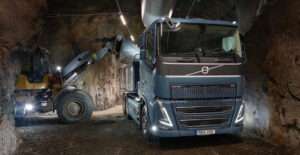
That’s why yesterday’s decision in Gothenburg by the Volvo Group to launch “Volvo Mining” on January 1, 2027, is a bold, high-stakes bet. By breaking away from legacy silos to solve a structural headache that has plagued mining houses for decades, Volvo is positioning itself as a true industry innovator. Instead of keeping things scattered, the new unit will live right inside Volvo Construction Equipment, establishing a unified command center for the group’s entire heavy industrial extraction lineup.
As Melker Jernberg, President, Volvo CE, has pointed out, the growing scale of the industry demands sharper focus, bringing capabilities together from across the entire group to deliver more value to customers and dealers.
Led by Per-Erik Lindström—who moves over from heading Volvo Trucks International to take the helm as Head of Volvo Mining—the new setup bundles trucks, heavy earthmovers, and autonomous tech into a single entity built to sell straight to mining houses and contractors on a unified commercial basis.
VCE’s New Mandate
Bringing Volvo Mining into Volvo Construction Equipment completely changes what the division actually does. Instead of just being viewed as a standard manufacturer of excavators and wheel loaders, Volvo CE is elevated to the status of a master strategist—acting as the central command post for the group’s entire extraction lineup by coordinating hardware, R&D, and autonomous tech under one unified ecosystem.
Backed by dedicated financial support and cross-group engineering resources, Volvo CE will steer strategy and joint R&D from its core operational networks, shifting away from selling isolated pieces of unbundled hardware. Clearly, mining conglomerates aren’t looking for piecemeal gear anymore—they want single-accountability contracts that guarantee uptime, safety, and real carbon reduction.
For mine operators managing multi-vendor fleets across remote terrain, the promise of a single point of accountability for both hardware uptime and software reliability is the ultimate prize. Acting as customer-centric partners, Volvo is moving away from just selling “unbundled iron,” offering end-to-end solutions that pair heavy machinery with constant digital telematics, preventive maintenance schedules, and automated fleet management.
Bengaluru’s Edge
This shift hits close to home for developing markets and internal engineering teams. At Volvo’s R&D and IT hub in Bengaluru—housing the group’s largest technology center outside Sweden—engineering teams handle a massive share of the global software workload, focusing on telematics code, digital connectivity, and platform developments. With the creation of Volvo Mining, additional software and systems architecture responsibilities are expected to flow through this Global Capability Centre (GCC), further elevating its strategic status on the company’s global industrial map.
This regional engineering footprint is what lets Volvo bridge the gap between software development and heavy-iron execution, ensuring that what gets designed and engineered digitally connects smoothly with physical machinery deployments. By combining robust embedded systems with real-time data analytics, the Bengaluru team helps translate platform architecture into operational intelligence.
Rival Responses
Volvo’s consolidation is certainly expected to shake up the established order, forcing major global competitors to re-evaluate their strategic playbooks. Caterpillar, based in Irving, Texas, currently runs many mine sites with its Cat MineStar automation and fleet suite, using proprietary software to keep clients locked into its ecosystem. Meanwhile, Tokyo-based Komatsu relies on its FrontRunner autonomous haulage system and Smart Construction framework to hold ground across the Americas and Asia-Pacific.
To counter Volvo, industry watchers expect these giants to lean into open-architecture software, letting mixed fleets plug into a single dashboard for buyers who hate vendor lock-in. At the same time, ultra-class specialists like the Liebherr Group in Germany have to prove their massive rigid haulers can talk seamlessly to digital site systems to win enterprise deals and maintain market relevance.
Market Ripples
Meanwhile, the pressure is trickling down across the board, affecting alternative-fuel builders like Propel Industries and commercial players like Scania India as they rethink their strategies, supply chains, and product roadmaps. Enterprise buyers everywhere want single-source contracts that guarantee both uptime and sustainability targets.
Commercial truck divisions across the industry now have to figure out how to sync heavy tippers and off-road dumpers into automated, multi-brand fleets—or watch fully integrated rivals steal their market share as client expectations shift permanently toward unified ecosystem management.
The Road Ahead
As the clock ticks toward January 1, 2027, the commercial landscape is likely to branch out in three directions.
First, a Nordic rollout across Sweden, Norway, and Finland will act as Volvo’s testing ground before it scales into larger international mining corridors.
Second, entrenched rivals will lean on their global dealer networks and proprietary software to defend key accounts, sparking a fierce battle on price, service, and uptime guarantees.
Third, mining companies themselves will push back against vendor lock-in, forcing the industry toward open standards where every machine shares data across mixed fleets.
When the heavy machinery sector reaches January 1, 2027, one thing is glaringly obvious: the days of simply selling unbundled iron are coming to an end. Whether through closed ecosystems or open collaboration, the battle for the modern mine won’t be won by who builds the biggest truck, but by who masters the digital threads holding it all together.