
By all conventional measures of success, Professor Ashoke Sen should have spent his life in the world’s most celebrated scientific institutions. He had studied at some of the finest centres of learning, worked at America’s premier physics laboratories, won one of the richest prizes in science worth $3 million—nearly three times the Nobel Prize money—and helped trigger a revolution in modern theoretical physics.
Instead, he chose India. He cycled to work.
In a country that celebrates celebrity scientists only after they become household names abroad, Ashoke Sen remains one of India’s least-known scientific giants. Outside the rarefied world of theoretical physics, few Indians know that one of the most influential physicists of our times spent most of his career quietly working from Allahabad (now Prayagraj), producing ideas that changed the course of modern physics.
Born in Kolkata on July 15, 1956, Sen grew up in an intellectually stimulating environment. His father was a physics professor, and science was more than a subject—it was a way of thinking. After graduating from Presidency College, Kolkata, he completed his Master’s degree from IIT Kanpur before earning his PhD from the State University of New York at Stony Brook in 1982.
The doors of the world’s greatest laboratories soon opened for him. He undertook postdoctoral research at institutions such as Fermilab and SLAC in the United States—places where many scientists spend their entire careers aspiring to reach. Yet, unlike many of his contemporaries, Sen never saw his future outside India.
He returned home.
That decision would prove to be consequential not only for Indian science but for theoretical physics itself.
To understand Ashoke Sen’s contribution, one need not master the mathematics of string theory. In the early 1990s, physicists faced an embarrassing problem. String theory—the most promising attempt at unifying all the fundamental forces of nature—existed in five different versions. Nobody knew whether one of them was correct or whether all of them were fundamentally flawed.
The scientific community was deeply divided.
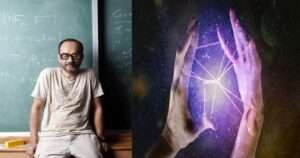
In 1994, Sen proposed what is today regarded as one of the most important ideas in modern theoretical physics—S-duality. Simply put, he demonstrated that two apparently different string theories could actually be mathematically equivalent, describing the same physical reality from different perspectives. What appeared to be strong interactions in one theory emerged as weak interactions in another.
The implications were revolutionary.
His work fundamentally altered how physicists understood string theory and sparked what came to be known as the “Second Superstring Revolution.” It provided crucial foundations for Edward Witten’s formulation of M-theory in 1995—the most serious candidate yet for a unified “Theory of Everything” that seeks to reconcile Einstein’s theory of gravity with quantum mechanics.
When some of the world’s finest physicists were searching for answers, one of the decisive breakthroughs came from an Indian scientist working in India.
The scientific establishment took notice. In 1998, the legendary Stephen Hawking personally nominated Sen for Fellowship of the Royal Society, one of science’s highest honours. He was awarded the inaugural Breakthrough Prize in Fundamental Physics in 2012 for his pioneering contributions to string theory. The citation recognised his work on strong-weak duality, which opened the path towards understanding that different string theories may merely represent different limits of the same underlying reality.
His list of honours is formidable—the Padma Shri, Padma Bhushan, Dirac Medal, Shanti Swarup Bhatnagar Prize, Infosys Prize, ICTP Prize, and Fellowship of the Royal Society among many others.
Yet, perhaps what distinguishes Ashoke Sen most is not the magnitude of his scientific achievements but the simplicity with which he wears them.
After receiving the $3 million prize, he donated a substantial portion of it towards supporting scientific research and students in India. There were no luxury cars, no extravagant celebrations, and no dramatic transformation of lifestyle. He simply returned to work, riding his bicycle to his office like any other day.
In an age obsessed with instant fame and material success, Ashoke Sen offers a different definition of greatness. His life reminds us that scientific excellence does not require geographical migration, intellectual compromise or public spectacle.
He chose India when he could have chosen anywhere else. He changed modern physics while working from India. And after winning one of science’s richest prizes, he chose the simplest possible celebration—doing what he loved most.
Perhaps that is why Ashoke Sen is not merely a great physicist. He is also a powerful argument for what Indian science can achieve when talent chooses purpose over prestige.