Lakshmanrao Upadhyayula
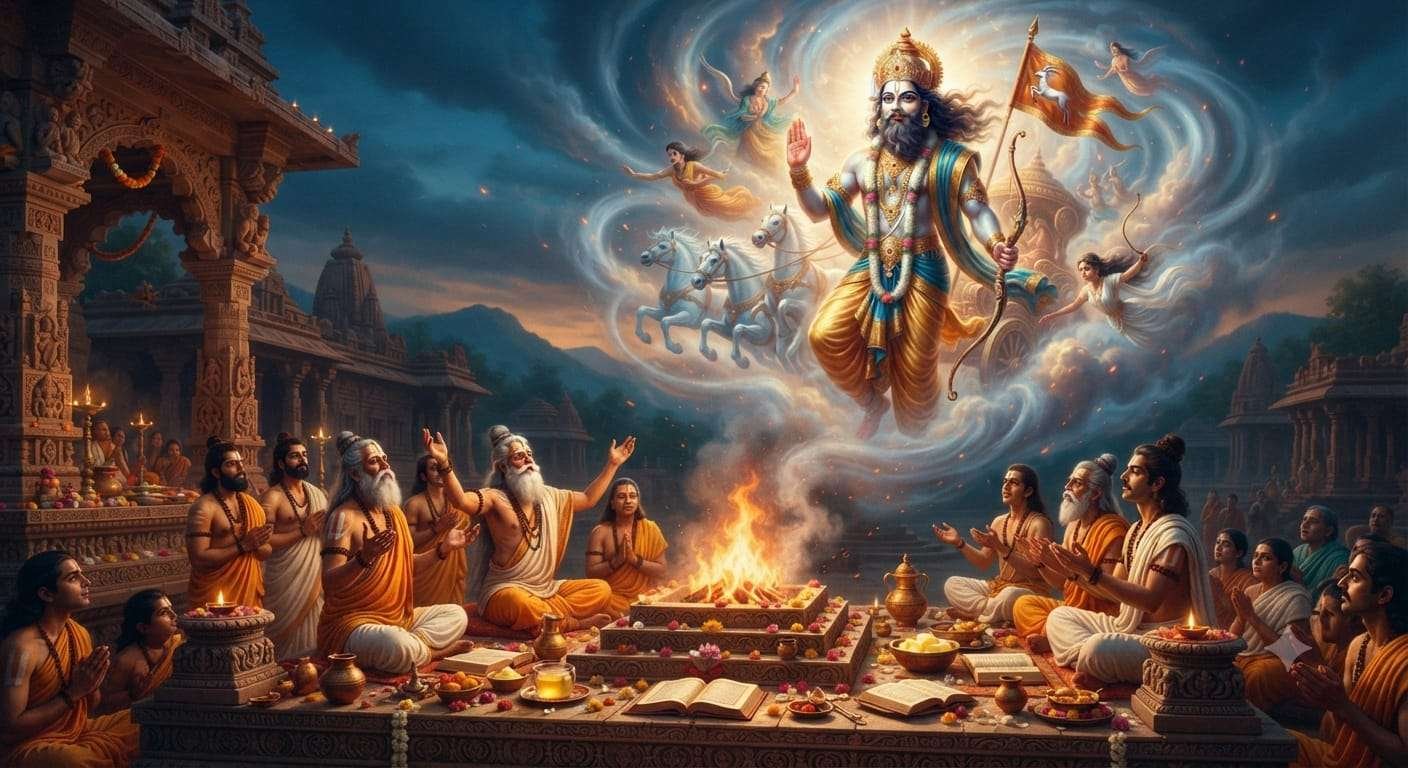
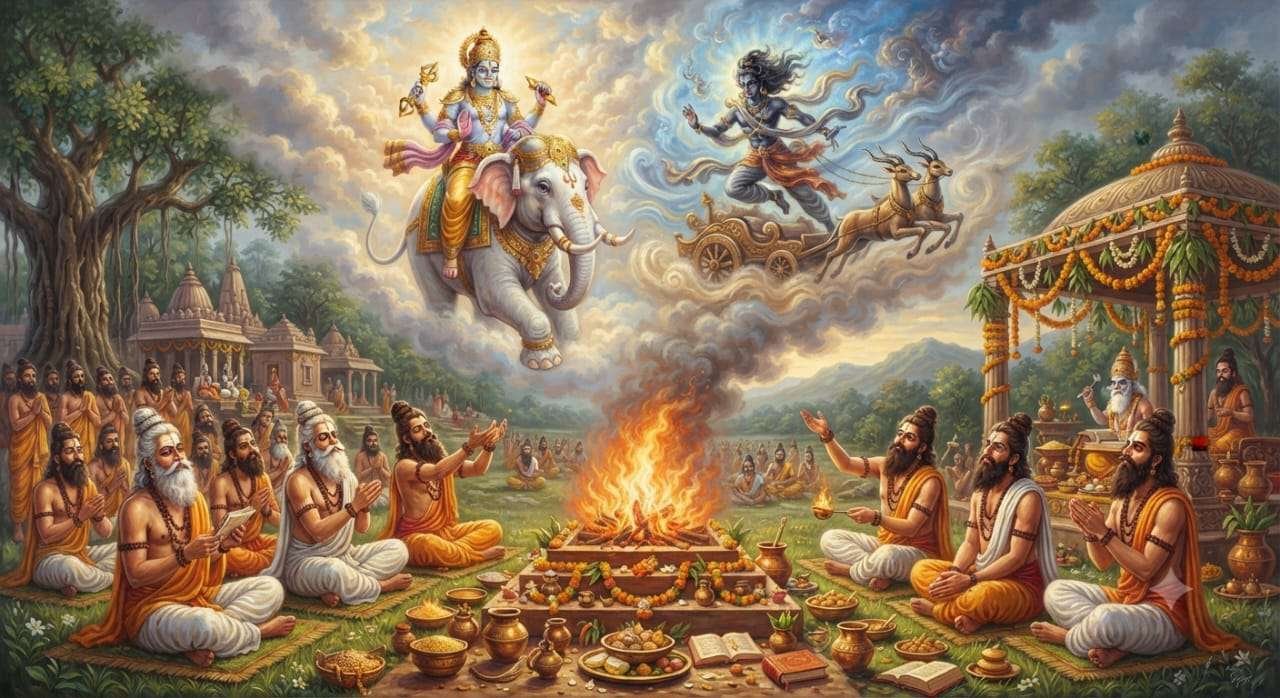
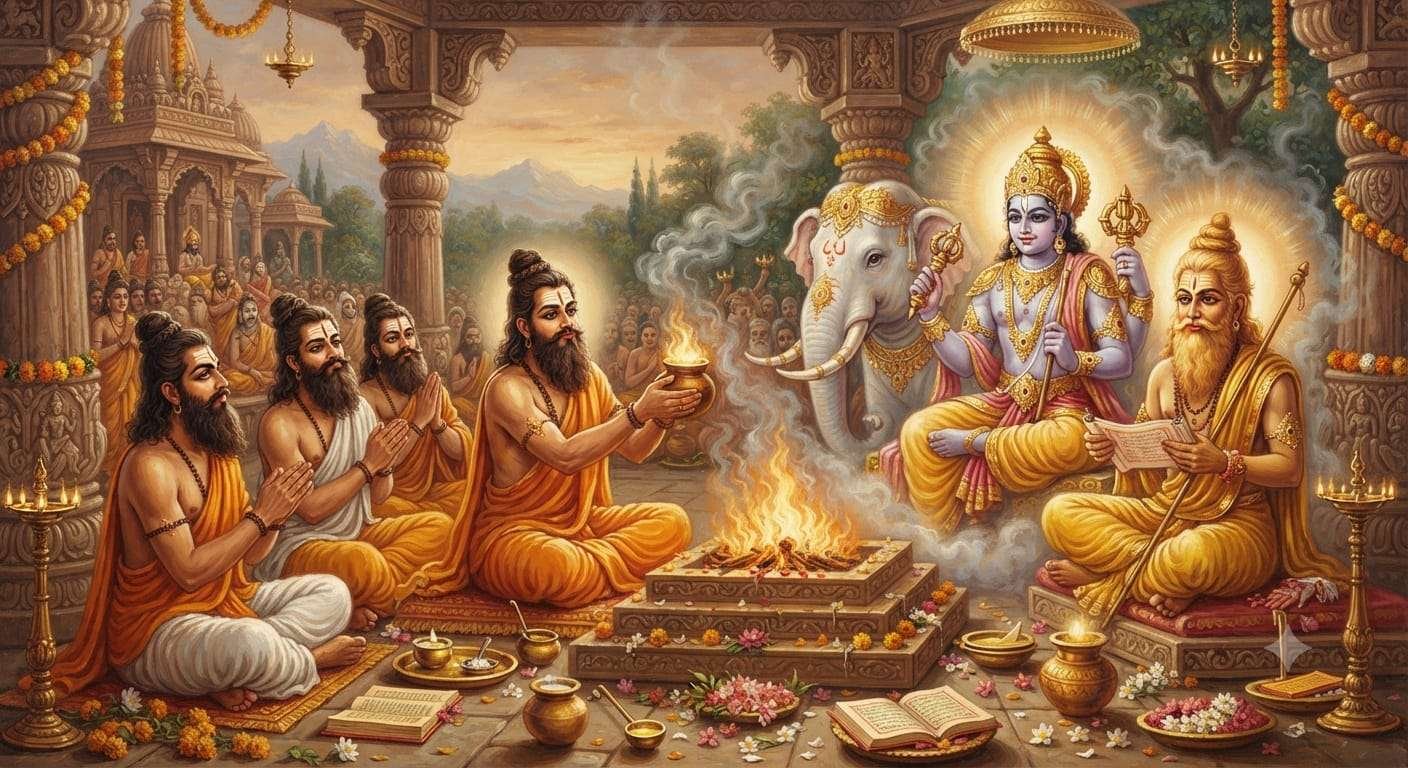
The sage Vamadeva, in the luminous tradition of the Rigveda, invokes Indra and Brihaspati through hymns composed in the Gayatri chandas. His prayer is not merely an appeal for material prosperity; it represents a profound Vedic vision in which divine power, sacred knowledge, disciplined action, nature, and human aspiration are brought into harmonious relationship. Indra embodies dynamic strength, courage, protection, and the power that overcomes obstruction, while Brihaspati represents wisdom, inspired speech, spiritual discernment, and the ordering intelligence behind sacred knowledge.
Vamadeva offers Soma to Indra and Brihaspati as though presenting nourishment to honoured guests. The language of the hymn conveys hospitality, reverence, and disciplined ritual practice. Soma is described as being carefully prepared and purified before it is offered. The repeated emphasis on purification is significant. In the ritual imagination of the Vedic seers, nothing worthy of sacred offering is presented casually or in an impure state. Preparation itself becomes an act of consciousness, reminding human beings that whatever they offer to the higher order of existence must first be refined.
The Soma offering therefore carries a meaning deeper than the physical substance used in the ritual. It becomes a symbol of transformed vitality, inspiration, illumination, and the concentrated essence of disciplined effort. The Vedic seers perceived nature not as something separate from spiritual life but as an interconnected field of forces. Plants, water, fire, breath, sound, sunlight, human effort, and cosmic order were woven into a single sacred continuum. Soma occupies an important place within this vision because it represents nature received, purified, transformed, and consciously offered.
When Vamadeva invites Indra and Brihaspati to drink the Soma, the invitation expresses a deeper principle: divine powers are awakened and strengthened through harmonious participation between human endeavour and the cosmic order. The yajna is therefore not simply an external ceremony. It is a disciplined interaction between the individual, society, nature, and the transcendent. The sacrificer prepares the offering, chants the mantra, maintains the sacred fire, and follows prescribed procedures. Through these actions, physical activity becomes a vehicle for mental concentration and spiritual aspiration.
The reference to Soma being purified according to established methods also reflects the Vedic respect for order, procedure, and disciplined observation. The ancient seers did not treat sacred practice as arbitrary. They developed elaborate procedures concerning preparation, timing, measurement, recitation, purification, and offering. Although the modern scientific method is fundamentally different from ritual knowledge, this disciplined attitude reveals an important intellectual temperament: the conviction that results depend upon appropriate processes, careful preparation, precision, and adherence to an established order.
The invitation to Soma-drinking deities to enter the sacred precincts of the yajna creates an atmosphere of intimate communion between the human and divine worlds. The yajna becomes a meeting place where aspiration rises and blessing descends. The sacred enclosure is not merely a physical location; symbolically, it represents the purified inner space of the human being. When the mind becomes disciplined, speech becomes truthful, actions become responsible, and intentions become pure, the individual creates an inner sanctuary capable of receiving higher knowledge.
Vamadeva’s request that Indra and Brihaspati enrich the worshippers with hundreds of cows and thousands of horses should also be understood within the economic and cultural world of the Vedic age. Cows represented nourishment, agricultural wealth, sustenance, and social prosperity, while horses represented mobility, vitality, power, and productive energy. Wealth in the Vedic imagination was therefore not confined to accumulated possessions. It included food, animals, productive resources, physical strength, intellectual capability, social stability, and the capacity to sustain a flourishing community.
The prayer for abundance is consequently not a plea for selfish accumulation. It expresses the desire that the community should possess the resources necessary to live, create, protect, share, and continue its cultural and spiritual traditions. Prosperity acquires its highest value when it supports dharma, generosity, learning, social responsibility, and the welfare of others.
Brihaspati’s presence alongside Indra is particularly meaningful. Strength without wisdom can become destructive, while wisdom without the power to act may remain ineffective. The Vedic pairing of these two divine principles suggests that human progress requires both intellectual illumination and courageous execution. Knowledge must guide power, and power must protect and implement knowledge. This balance remains relevant even in a scientific and technological civilisation, where extraordinary capabilities must be accompanied by ethical judgement and responsibility.
The repeated chanting of Vedic hymns before the Soma offering also highlights the extraordinary importance that the Vedic tradition attached to sound. Mantra was not regarded merely as poetry. Carefully preserved syllables, rhythm, pitch, pronunciation, and metre were considered integral to the efficacy and identity of the hymn. Gayatri chandas, with its disciplined rhythmic structure, reflects the Vedic conviction that ordered sound can focus consciousness. From a modern perspective, one may study chanting through acoustics, rhythm, breath regulation, memory, attention, and psychological effects without reducing its spiritual meaning. The two perspectives can coexist: one examines measurable phenomena, while the other explores their experiential and philosophical significance.
The Vedic scientific temperament is therefore best understood not as modern experimental science projected backwards into antiquity, but as an intellectual culture that valued observation, classification, precision, regularity, correspondence, and disciplined practice. The sages sought patterns in nature and human experience and expressed those patterns through richly symbolic language. Their hymns repeatedly reveal an attempt to understand the relationship between cosmic processes and human life. Fire, wind, rain, dawn, sunlight, speech, breath, plants, seasons, and celestial movements were contemplated not as isolated phenomena but as expressions of an interconnected order.
In this context, Soma becomes a meeting point between the tangible and the intangible. It belongs to the world of plants, preparation, purification, offering, and ritual action, yet it also signifies exhilaration, inspiration, divine communion, and awakened consciousness. The Vedic imagination does not insist upon a rigid separation between matter and spirit. Instead, it explores how the visible world can become a gateway to the invisible dimensions of existence.
Vamadeva’s final appeal that Indra and Brihaspati remain in the sacred place of the generous patron and be satisfied by the offering conveys another important ethical principle. The yajna is sustained through reciprocity. The patron gives; the priests prepare and recite; the community participates; nature provides its resources; and the divine powers are invoked for protection, knowledge, strength, and prosperity. Giving is therefore not portrayed as loss. It is participation in a larger cycle of renewal.
At its deepest level, this hymn teaches that prosperity becomes meaningful when joined with wisdom, strength becomes noble when governed by discernment, and knowledge becomes fruitful when translated into responsible action. The purified Soma represents the refinement of human potential; the yajna represents disciplined cooperation; Indra represents dynamic power; Brihaspati represents enlightened intelligence; and the abundant cows and horses represent the flourishing resources of life.
Thus, Vamadeva’s prayer transcends the boundaries of an ancient ritual. It presents a vision in which human beings are neither passive observers of nature nor masters detached from it. They are participants in a vast cosmic order, responsible for refining themselves, using resources wisely, cultivating knowledge, exercising strength with restraint, and contributing to collective prosperity. The hymn’s enduring message is that the highest form of offering is not merely what one places before the sacred fire, but the purification of one’s own thought, speech, intention, and action.