



There is absolutely nothing anti-national about an Opposition leader questioning the government, exposing administrative failures or criticising policies. That is the essence of democracy. But does the same principle automatically extend to making sweeping, disparaging assertions about the country on foreign soil, particularly when those assertions concern Bharat’s economic standing, international influence or national security? That is where the distinction deserves serious examination. And that is precisely where some sections of the Bharatiya media appear to have developed a rather convenient blind spot.
A recent Sunday debate on India Today TV offered an interesting glimpse into this editorial inconsistency. The subject was Rahul Gandhi’s frequent overseas engagements, particularly his interactions in the United States, where Sam Pitroda, a prominent Congress overseas associate, has often been involved in organising such programmes. Videos of these interactions have raised questions about the nature of the audiences, the substance of the exchanges and, more importantly, the sweeping claims made by the Congress leader about Bharat.
One does not have to agree with the BJP or Narendra Modi to question the wisdom of taking domestic political arguments to foreign platforms and making statements that could influence perceptions about Bharat. Calling the Indian economy ‘dead’ or suggesting that the country is under severe economic stress is certainly a political position. But should such assertions escape scrutiny merely because the person making them happens to be the Leader of the Opposition? If the ruling establishment must answer for its claims, surely the Opposition must also be accountable for its own.
The irony, however, was in the manner the debate unfolded. When a panelist questioned Rahul Gandhi’s overseas statements, the lady anchor was quick to introduce a familiar counterargument: Narendra Modi, too, had criticised previous governments while travelling abroad. A convenient comparison, but was it really an equivalent one?
Modi’s references to the state of the Bharatiya economy and governance after the Congress-led UPA government were primarily directed at explaining the inheritance of the new administration to overseas Bharatiyya audiences. One may question the appropriateness of such comparisons, but that does not automatically make every subsequent overseas political statement equivalent. Surely, the context, audience, language and implications of a statement matter. Journalism cannot operate on the principle that if one leader did something, another leader must automatically be absolved of scrutiny for doing something similar.
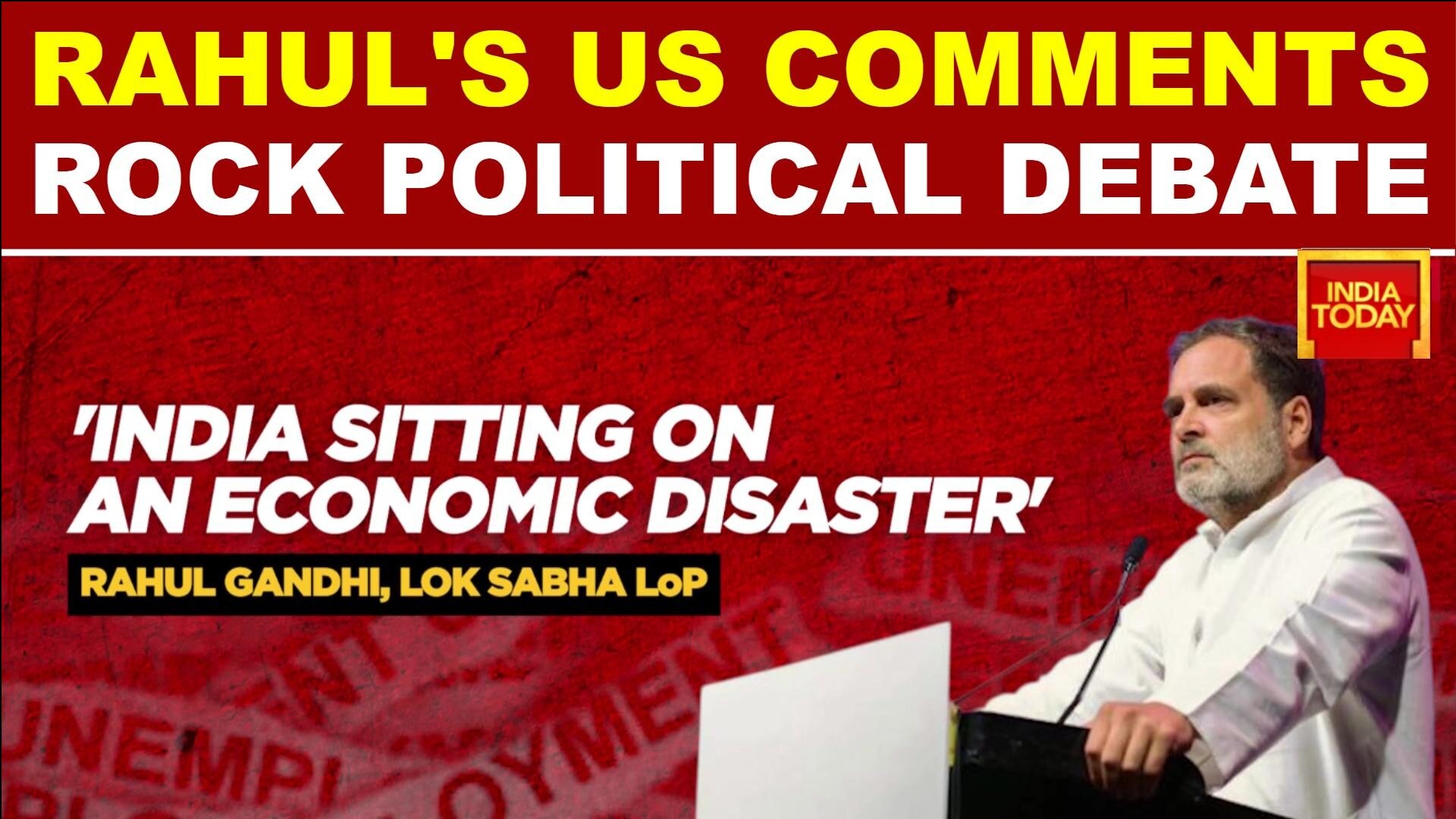
More importantly, the panelist was attempting to make precisely that distinction. Yet, instead of allowing the argument to be examined on its merits, the discussion appeared to drift towards establishing a convenient political equivalence. Is that what viewers expect from a channel that carries the country’s name in its identity?
There is also a larger question of political conduct. Bharat’s democratic history has witnessed Opposition leaders questioning governments fiercely within the country, sometimes under extremely difficult circumstances. Criticism of the government is not criticism of the nation. But neither should the Opposition’s constitutional position become an unquestionable licence to make sweeping claims abroad without being challenged on facts, context and consequences.
And what about the media itself? India Today, associated with one of India’s established publishing houses under Arun Purie, has built a considerable reputation over the years. Its viewers are entitled to expect independent questioning, not selective explanations; editorial consistency, not convenient political comparisons. A television anchor’s responsibility is to interrogate arguments, not rescue one side from uncomfortable questions or manufacture equivalence to neutralise criticism.
Press freedom is indispensable, but editorial accountability is equally important. A channel is free to question the government, the Opposition and every constitutional authority. But viewers are equally entitled to question the channel’s standards, its choice of arguments and its consistency.
After all, calling a channel India Today carries an identity and an expectation. It does not confer a monopoly over patriotism, nor does it exempt the channel from scrutiny. If the intention is to uphold democratic debate, let every political leader face the same tough questions, irrespective of party affiliation.
India Today must decide whether it wants to be a platform for fearless journalism or a stage for selective outrage. Its viewers deserve better than a debate in which the questions are as politically convenient as the answers.

