


Bhindranwale’s rise, of course, remains controversial. In August 1977, he became the head of Damdama Taksal, the premier Sikh religious institution. At the outset, he expressed his commitment to Khalistan and the use of violent means.
Yet, Zail Singh, former President of India, and the Congress (I) sponsored the emergence of both Bhindranwale and the Dal Khalsa with a view to countering the Akali Dal’s influence. Mark Tully and Satish Jacob have produced substantial circumstantial evidence to establish that “the man who had been the Chief Minister of Punjab and was to go on to become the Home Minister in the Central Cabinet and then President of India, continued to promote its cause.”
It is an established fact that Zail Singh, as Home Minister, allowed Bhindranwale to actively support Congress (I) candidates in selected constituencies during the 1980 elections. He also ordered Bhindranwale’s release after his arrest on Darbara Singh’s orders in October 1981. More importantly, he allowed Bhindranwale to make a triumphant visit to Delhi in April 1982, accompanied by supporters brandishing weapons and spreading Sikh-Hindu hatred.
Meanwhile, Bhindranwale’s cult of extremist violence took a significant toll on his opponents, irrespective of religion. He attempted to engineer a clash with the Nirankaris on April 13, 1978, on Baisakhi day, resulting in the deaths of 13 Sikhs due to police firing. In retaliation, Baba Gurucharan Singh, head of the Nirankari Mission in Delhi, was killed on April 24, 1980. In September 1980, an Indian Airlines plane was hijacked to Lahore. Lala Jagat Narain, editor of Hind Samachar and an Arya Samaj activist, was killed on September 9, 1981.
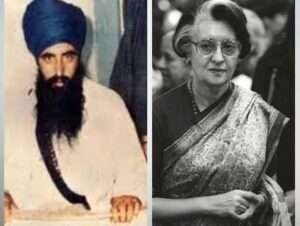
If the Congress (I), while out of power in Punjab between 1978 and 1982, attempted appeasement to serve its vested interests, the Akali Dal too joined the bandwagon, riding the tiger to protect and consolidate its hold over Sikh affairs and thwart Congress (I) designs. As a result, political rivalry for supremacy unwittingly promoted dangerous extremist-cum-terrorist religious fundamentalism, ultimately paving the way for a disastrous politico-religious outcome.
Meanwhile, the desecration of Hindu religious places was initiated to provoke a Hindu backlash elsewhere. As Bhindranwale’s campaign of violence escalated, even the Akali Dal decided to match it with its own brand of militancy, declaring a holy war against the government and masterminding the Jail Bharo agitation. Later, they stormed Parliament and followed it up with a succession of agitations: Nahar Roko (canal blockade), Rail Roko (railway blockade), Rasta Roko (road blockade) and Kam Roko (work stoppage). A Morcha was also launched in July 1982, demanding the release of Amrik Singh, Bhindranwale’s right-hand man and president of the All India Sikh Students Federation (AISSF).
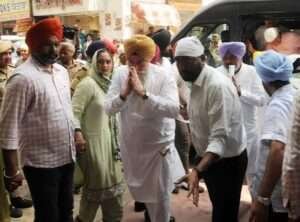
By mid-1982, the Bhindranwale phenomenon had become unmistakable. He too chose to conduct his fight for Khalistan from within the Golden Temple. Throughout this high drama, the Akalis remained largely silent bystanders. They were a divided house: P.S. Badal advocated moderation, Tohra supported the extremists, while Longowal steered a middle course. All three dithered, but agreed that the party would become isolated if it failed to act. Consequently, they too joined the call for a Holy War to realise the demands listed in the Anandpur Sahib Resolution.
In 1983, President’s Rule was imposed. Several peace initiatives and negotiations were attempted but failed, largely due to a lack of political will and the fear of losing Hindu vote banks. Meanwhile, Bhindranwale wrested the initiative and control inside the Golden Temple after a bitter struggle with Longowal and the high priests, entrenching himself for the final showdown. Last-minute negotiations between Tohra and Bhindranwale failed with the emergence of the Hindu Suraksha Samiti. At this stage, Longowal called for a bandh to prevent the transfer of foodgrains. This forced the government to order the Army to conduct operations inside the Golden Temple.
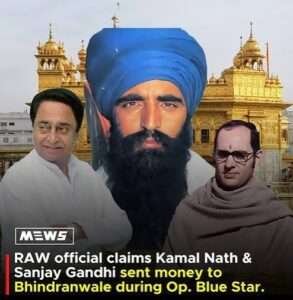
The Army conducted Operation Bluestar between June 4 and 7, 1984. Longowal, Tohra and Harminder Singh Sandhu of the AISSF, along with around 400 others, surrendered. Bhindranwale was killed. Sikhs across the world mourned his death, while the Hindu reaction was one of relief. Yet, the violence did not recede.
On June 9, 1984, Jagjit Singh Chauhan called upon patriotic Sikhs to rise up and assassinate Indira Gandhi, her son Rajiv and the senior military officers who had conducted the operation. He organised Sikh terrorist groups under the aegis of the World Sikh Organisation, founded in New York in July as a response to the desecration of the Golden Temple. The organisation drew support from Sikhs residing in five foreign countries: the USA, Canada, Great Britain, Norway and Holland. Representatives of the Kashmir Liberation Front, Tamil separatist organisations and Afghan Mujahideen also attended the convention.
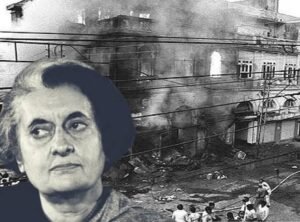
The Sikh extremists struck on October 31, 1984. Indira Gandhi was assassinated by her Sikh bodyguards, plunging the nation into grief. While Hindus mourned her death, some Sikhs reportedly rejoiced. The high priests, who initially condemned the assassination, withdrew their condemnation 24 hours later, further accentuating the estrangement between the communities.
What followed was a spate of Hindu-Sikh communal riots in Delhi and elsewhere, allegedly led by Congress (I) activists. Fortuitously, Sikh extremists maintained a low profile in Punjab. Apprehending police brutality, a large number of Sikh youth crossed over to Pakistan, where they were indoctrinated, trained and supplied with weapons by Pakistan’s ISI.
All the important Akali leaders, except P.S. Badal, were arrested. This created a vacuum in the Akali leadership, resulting in its fragmentation and marginalisation. The development and consolidation of religious extremism-cum-terrorism forced both political and religious leaders to adopt a low or pro-militant profile. Thus, when the Central Government attempted political initiatives by releasing Akali leaders, the situation did not change dramatically. Attempts to reunite the Longowal and Talwandi groups failed. Instead, a truncated United Akali Dal (UAD), under Baba Joginder Singh, Bhindranwale’s father, emerged.
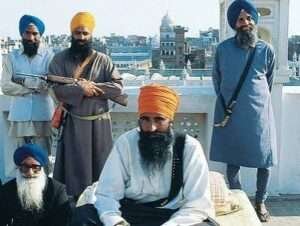
Meanwhile, the terrorists followed a simple strategy: to teach a lesson to anyone attempting to negotiate an accord with the Central Government. In January 1985, terrorists attacked Giani Kirpal Singh, the head priest of the Akal Takht, in broad daylight and inflicted serious injuries. However, he survived.
Political Flux or Faux Pas
Ultimately, the Rajiv-Longowal Accord was signed in July 1985. However, it became a non-starter due to the factional politics of the Akali Dal. Even Badal and Tohra denounced the Accord and refused to endorse it at a party meeting. Such was the awesome might of the militants’ guns. This was followed by Longowal’s assassination on August 20, 1985, which naturally instilled caution even among the moderates.
Nevertheless, Longowal’s Akali Dal won the elections in September 1985. Barnala became the party leader and Chief Minister instead of Badal. The Terrorist and Disruptive Activities (Prevention) Act, 1985, was promulgated to counter the terrorist menace. A separate Minister of Internal Security was also appointed in the Home Ministry.
Meanwhile, both the SGPC and the Akal Takht were once again taken over by radicals from the Damdama Taksal and the AISSF. In November 1985, Giani Sahib Singh, the head granthi of the Golden Temple, was shot inside the temple complex on the morning of Guru Nanak’s birthday. He too survived. Subsequently, the militants dismissed the moderate religious leadership for its alleged collaboration with the government and passed excommunication orders against Zail Singh, the President of India, and Buta Singh, the Home Minister, at a truncated Sarbat Khalsa convention on January 26, 1986.
The combined militant groups selected a Panthic Committee as their apex body. However, the moderates held another Sarbat Khalsa at Anandpur and revoked the orders issued by the radicals. At such a crucial juncture, Badal walked out of the Akali Dal (Longowal) to form a separate group.
In April 1986, Operation Black Thunder, a police action, was launched inside the Golden Temple after the Panthic Committee, backed by militant religious leadership, announced the declaration of a separate state of Khalistan and proclaimed its intention to seek a seat in the United Nations.
Meanwhile, on August 10, 1986, General A.S. Vaidya, former Chief of Army Staff, was shot dead in broad daylight in Pune. On October 3, 1986, an attempt was made to kill Ribeiro, the Director General of Police, at the Punjab Armed Police campus in Jullundur.
Meanwhile, Barnala’s image suffered a setback when his candidate was defeated in the SGPC elections in November 1986. Tohra was re-elected as its president with Badal’s support. In December 1986, both Tohra and Badal were arrested to neutralise their growing political influence, a move that only helped militancy to grow.
The next episode involved the dramatic removal and appointment of high priests of religious institutions. Prof. Darshan Singh Ragi was appointed head priest of the Akal Takht. The newly appointed head priests issued a Hukumnama ordering Akali leaders to submit their resignations to facilitate the formation of the UAD. In response, both Badal and Joginder Singh submitted their resignations, whereas Barnala refused. The head priests consequently declared him Tankhaiya and excommunicated him.
In May 1987, President’s Rule was re-imposed. In March 1988, the Legislative Assembly was dissolved.
At this stage, even the UAD withdrew in favour of the militants in the management of Sikh affairs. In September 1987, the high priests too called upon Sikhs to reject the Akali Dal in favour of the militants, a move challenged by the SGPC. This led to the arrest of the high priests, who were later released in March 1988 as part of yet another political initiative. In May 1988, Jasbir Singh Rode was appointed Jathedar of the Akal Takht.
In February 1988, the government attempted another political initiative by holding a dialogue with Jathedars and Sikh politicians lodged in Jodhpur jail as detenus for over four years. They claimed they could influence the militants. Five Jathedars and 40 detenus were released. The pressure exerted by the security forces was eased as a concession, which the militants promptly exploited by regrouping inside the Golden Temple.
Thus, the second police operation, Operation Black Thunder II, was launched inside the Golden Temple in May 1988. It proved a remarkable success and dealt an effective blow to fundamentalist militancy-cum-terrorism. This was followed by the appointment of Sant Thakur Singh as the chief of Damdama Taksal and Dharshan Singh as the Jathedar of the Akal Takht. It heralded the end of the Bhindranwale era.
By then, several terrorist outfits had sprung up, including Babbar Khalsa, Khalistan Commando Force, Khalistan Liberation Front, Bhindranwale Tiger Force, Khalistan Liberation Organisation and Shelly Regiment. When their top leadership was killed or captured, these groups increasingly fell into the hands of criminals.
Many impoverished youths from rural socio-economic backgrounds, with little ideological commitment, joined their ranks. Some were driven by fear of reprisals from either the police or the terrorists. Criminals and smugglers enjoying Pakistani support resorted to extortion, murders and rape. Sikhs living abroad no longer lent unquestioning support to the militants, increasingly repelled by their violence and concerned about possible amendments to refugee laws.