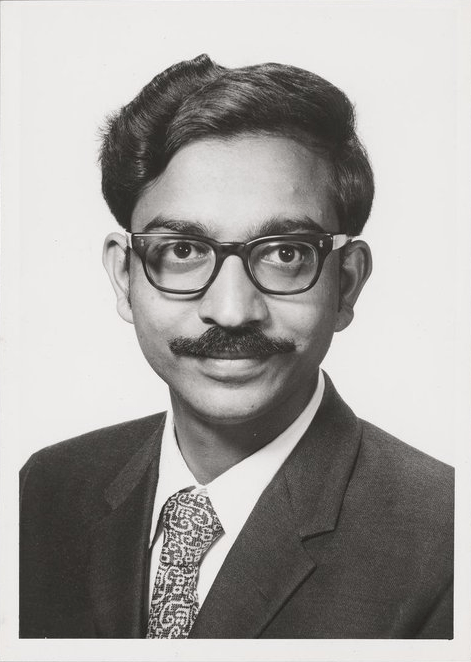
K S Nagarajan
Should a citizen keep knocking at the doors of justice to strengthen the fulcrum of the Constitution, territorial integrity and sovereignty of Bharat—or should he simply give up when institutions meant to protect his rights appear unwilling to hear him?
This is the question I am confronting as a former government servant and 1971 war veteran from Tamil Nadu. Nearly two decades of pursuing what I believe is a legitimate grievance have left me frustrated, emotionally exhausted and still without what I consider justice.
My long legal battle began with Writ Petition No. 25571/2003, in which I sought, among other reliefs, the quashing of what I described as a “fraudulent counter-affidavit” filed by public authorities. I alleged that the authorities had made commitments but subsequently failed to honour them, that relevant records had been destroyed and that prescribed procedures had not been followed.
My writ petition remained pending for years. Repeated adjournments added to my frustration and, when I eventually placed before the court my contention that constitutional duties under Article 51A must be upheld, my petition was dismissed. I continue to dispute the reasoning behind that decision.
My next recourse was a writ appeal. I say the Division Bench raised a pertinent question of law concerning the matter and sought a response from the respondent public-sector undertaking. According to me, I did not receive a satisfactory answer on the issue I believed was central to my case. I further understood the subsequent order as directing me to “bring to life” a file that had already been declared destroyed, while holding that there would thereafter be no impediment to the respondent acting on its earlier commitment.
I then approached the Supreme Court through SLP No. 292/2012. I recall with particular anguish that the prayer seeking a direction to the respondent to perform its commitment was described in the order as “mercurial”. I regarded that observation as deeply hurtful, particularly in view of my service as a 1971 war veteran.
My efforts did not end with the courts.
I twice approached the President of India, including once during the tenure of former President A. P. J. Abdul Kalam, seeking intervention in relation to my grievance and retirement dues. I allege that my representations were ultimately dealt with at lower administrative levels and that my core grievance remained unresolved.
I subsequently turned to the Right to Information mechanism and eventually approached the Central Information Commission in cases CIC/PRSEC/A/2025/100192 and CIC/PRSEC/A/2025/100232. I allege that even there, the larger issue I wanted examined—particularly the implementation and significance of the constitutional duty under Article 51A—was not addressed in the manner I expected.
I further allege that, during the hearing on September 7, 2026, the respondent was initially absent but was subsequently heard after the hearing had effectively concluded, without giving me an opportunity to respond, despite my presence at the hearing venue. This is my allegation and my understanding of what transpired.
At this stage, I find myself left with two choices.
One is to put my energy into completing an innovative machine which, I believe, could generate opportunities for entrepreneurs and employment, and dedicate the remainder of my life to encouraging innovators and incubators in different branches of science.
The other is to continue drawing public attention to what I perceive as institutional failures and seek intervention from higher authorities.
My warning is stark: institutions must remain accountable to the citizen, and constitutional values cannot become mere words on paper.
“Let Bharat not become another Venezuela,” I told the CIC during the September 7 hearing.
Whether one agrees with every assertion in my long-running battle or not, there is a larger democratic question here: when a citizen repeatedly approaches courts and constitutional institutions with a grievance, does the system provide him or her a meaningful opportunity to be heard and obtain a reasoned resolution?
That question deserves an answer—not merely from me, but from every institution entrusted with upholding the Constitution.