MS Sparsha
Some of the most consequential ideas in technology do not begin with billion-dollar laboratories or celebrated corporate research teams. Sometimes they begin with a young Indian professor, a difficult computer-science puzzle and an idea that nobody seems interested in buying.
Suhas Patil’s journey is one such story.
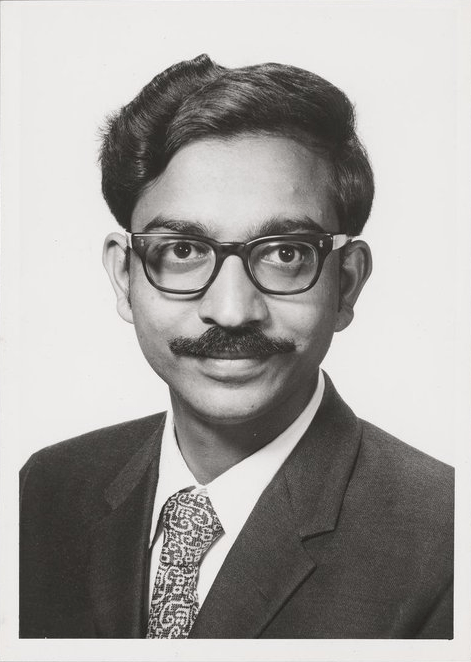
Born in Jamshedpur, where his father worked at Tata Steel, Patil studied engineering at IIT Kharagpur before moving to the Massachusetts Institute of Technology for his master’s and PhD. In 1970, he joined MIT’s faculty and worked in computer architecture and Project MAC, one of the pioneering centres of computer research in the United States.
A year later, Patil described what became known as the Cigarette Smokers’ Problem, a classic concurrency and synchronisation problem that continues to appear in computer-science teaching. The seemingly simple problem involves three smokers, three ingredients and an agent distributing combinations of those ingredients. Its real purpose was to expose the difficulty of coordinating competing processes and resources. Patil’s 1971 technical report introduced the problem that would become a familiar part of operating-systems and concurrency studies.
But Patil was not content to remain in academia.
His next challenge was far more commercial—and initially far less successful.
Working between MIT and the University of Utah, Patil developed Storage/Logic Array (SLA) technology, a structured approach to designing integrated circuits. The idea was to make the design of complex chips more systematic and efficient rather than relying entirely on laborious, application-specific methods.
In 1981, convinced that the semiconductor industry needed such technology, he founded Patil Systems in Salt Lake City.
The market disagreed.
For nearly three years, the company struggled to find customers. Patil later recalled the experience bluntly: “I made the rounds and could not give it away.”
The company remained tiny, with roughly 11 employees, and appeared destined to become another technically impressive venture that never found its commercial moment.
Then came the decision that changed everything.
Patil recognised that technical brilliance alone was not enough. He brought in Michael Hackworth, a semiconductor industry veteran with marketing and management experience. Hackworth saw that Patil’s technology could be broadened into a platform for rapidly developing specialised chips for the fast-expanding personal-computer market.
Patil Systems moved to Silicon Valley and became Cirrus Logic in 1984. Hackworth became its president and CEO in January 1985.
There was another important breakthrough. Instead of building expensive fabrication plants, Cirrus Logic adopted the emerging fabless semiconductor model, designing chips while relying on external foundries for manufacturing. Cirrus Logic became one of the early successful companies to demonstrate how this separation of chip design and fabrication could work commercially.
That model would become enormously important to the semiconductor industry, later underpinning the business strategies of companies such as NVIDIA and Qualcomm.
The results followed. Cirrus Logic was among the early suppliers of VGA-compatible graphics chips after IBM introduced the VGA standard in 1987. The company went public on NASDAQ in 1989 and expanded through acquisitions, including Crystal Semiconductor, strengthening its position in audio and mixed-signal technology.
And eventually came Apple.
Cirrus Logic today is a major supplier of audio and mixed-signal components, with Apple accounting for the overwhelming majority of its revenue in recent years. Current financial data reported for 2025 put Apple’s contribution at about 89 per cent of Cirrus Logic’s revenue.
Think about that journey.
A professor whose semiconductor idea once struggled to attract customers in Salt Lake City eventually founded a company whose technology became an important part of the supply chain of one of the world’s most valuable technology companies.
Patil’s contribution, however, extends beyond chips.
In December 1992, he joined Ambrish Patel, Kanwal Rekhi and other Indian-origin entrepreneurs in founding TiE — The Indus Entrepreneurs, created to encourage entrepreneurship through networking and mentorship. In late 1993, Patil was chosen as TiE’s first official president as the organisation began taking formal shape.
His family story is remarkable too. His son, DJ Patil, later became the first U.S. Chief Data Scientist, serving in the Obama administration from 2015 to 2017.
From Jamshedpur to MIT, from an obscure computer-science problem to semiconductor innovation, from an almost failed startup to Cirrus Logic, and eventually into Apple’s supply chain, Suhas Patil’s story carries a lesson more valuable than the technology itself.
An idea rejected today is not necessarily a bad idea. Sometimes the world simply has not yet learned how to use it.