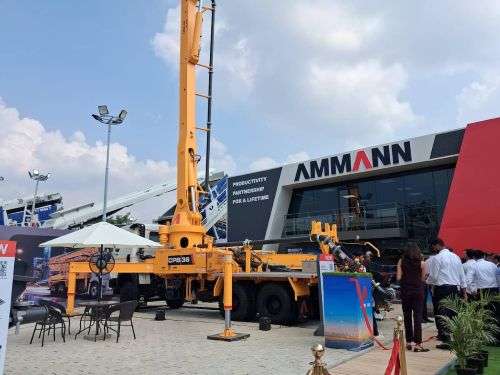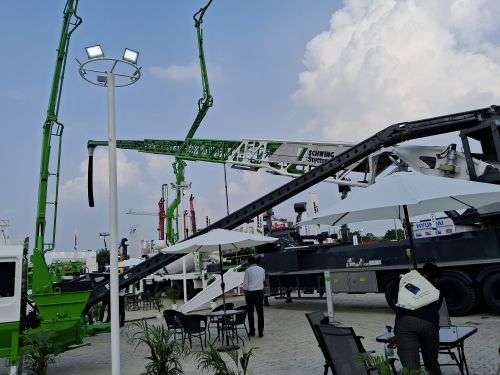
Aggregate dust settled into the deep creases of worn leather boots at the Greater Noida exhibition grounds as the afternoon heat forced a quiet, pragmatic reckoning among fleet owners who have spent three decades buying machinery on pure instinct. The polite corporate jargon of the opening days evaporated entirely under the heavy glare of the midday sun. It was rapidly replaced by the hard scraping of clipboards, the clicking of digital calculator screens, and the low hum of cooling fans on SANY’s 3555E electric tipper.
For the mining contractors huddled around the massive 8×4 frame, tracing the paths of high-voltage orange cables that route energy from a 400 kWh lithium-iron-phosphate battery pack, the conversation had completely divorced itself from environmental virtue signaling. The focus turned entirely to the cold reality that diesel theft and rising fuel logistics are draining operating margins faster than a blown hydraulic seal can empty a fluid reservoir.
Delivering 550 horsepower and 2,900 Nm of instant torque, this machine aims to match the brute pulling capacity of traditional internal combustion engines. It relies on a 60-minute CCS2 fast-charge cycle to prove that alternative powertrains can survive the unforgiving cycle times of local aggregate pits. Alongside it, SANY highlighted the sheer scale of electrified bulk haulage by fielding its massive SKT115E electric dump truck, a 115-tonne gross vehicle weight behemoth fitted with a 621 kWh battery pack capable of carrying a 70-tonne payload in iron-ore and coal corridors.
Haulage Heavyweights
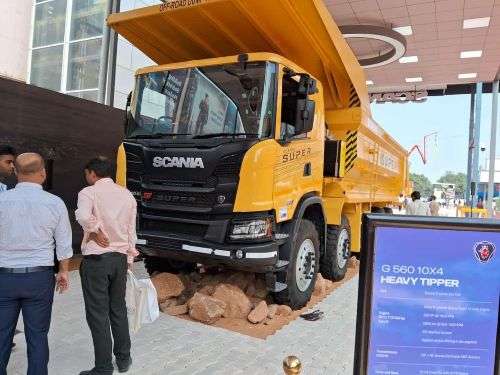
Down at Stall OB05, Scania countered the electric surge with the arrival of heavy internal combustion refinement. The team unveiled the imposing G 560 Super 10×4 Mining Tipper to expand its specialized Super portfolio across the sub-continent.
Designed specifically to shrug off the punishment of deep pit extraction, this ten-by-four titan pairs a 13-litre Super engine churning out 560 horsepower and 2,800 Nm of torque with three steerable axles. It features a 71-ton technical gross vehicle weight rating and a high-abrasion Hardox 450 steel rock body capable of heaping 32.5 cubic meters of blasted granite without buckling under the impact.
Mine operators ran their hands along the heavy steel chassis rails, calculating real-world viability. They focused on how the promised fuel-efficiency gains of the Super powertrain offset the upfront capital expenditure when running triple-shift haulage circuits where every percentage point of unburned diesel translates directly into preserved balance-sheet equity.
Metro Foundations
Urban civil works projects have a notorious reputation for exposing the supply chain vulnerabilities of domestic contracting firms. Apollo Techno addressed this reality directly by rolling out its massive DW 235 diaphragm wall drilling rig.
Entirely designed and manufactured within domestic borders to handle the high-density urban strata encountered during metro excavation loops, this heavy-duty piling setup sat next to the company’s V2 horizontal directional drilling system. It drew heavy interest from project engineers who are exhausted from waiting six months for European replacement parts to clear customs while their active worksites sit completely idle.
The push toward domestic autonomy resonated down the corridor to Hall H7. There, vendor TWF India demonstrated high-performance trench shoring systems and specialized piling components engineered explicitly to prevent structural soil collapses within these deep city utility cuts.
Compact Maneuvers
Tight city bypass patches and narrow highway utility installations leave zero space for massive turning radiuses. Escorts Kubota answered this problem by staging a tight obstacle course for its Hydra 12 Pick-n-Carry crane and the BLX75 backhoe loader.
Operators watched these compact units thread their way through simulated lane blockades. The demonstration proved that a nimble footprint can still deliver high lifting capacity and rapid hydraulic cycling speeds without gridlocking three lanes of morning commuter traffic.
This focus on compact urban utility matched the product strategy of Tata Hitachi. The company used the wire to detail the launch of its NX30 neo and ZAXIS 40U mini excavators, which are short-radius tail-swing platforms built to slip into narrow pipeline trenches where standard excavators would simply strike surrounding concrete barriers.
Lifting Smart
Over at Outdoor Booth E05, Action Construction Equipment (ACE) staked out its home turf with an aggressive four-product showcase that directly targets lifting safety and site mechanization. The highlight was the F 150 Ultra pick-and-carry crane, packed with three internal digital safety systems that actively monitor operating radii and automatically intervene before tip-overs can occur.
Alongside it, ACE rolled out the 60-meter-jib FT 6040 flat-top tower crane equipped with anti-collision sensors for congested high-rise construction. They also brought out the CEV V-compliant AX 124 backhoe loader delivering a 4,000 kg dipper tearout force, and the fully localized ASL electric scissor lift series driven by zero-maintenance AC brushless motors.
Across the way in Hall 16, XCMG set up its Green Machine pavilion at Stall B21. The manufacturer fielded high-efficiency electric loaders, heavy-duty mobile cranes, and intelligent excavators designed to push high-speed infrastructure automation directly into the Indian corridor.
Paving Lineups
Preventive road maintenance has historically been a fragmented process in the sub-continent, but InfraServe Global bridged that operational gap by introducing five dedicated infrastructure products in a single comprehensive rollout. The lineup featured the Etnyre RoadSaver slurry sealer and the Etnyre Black-Topper Centennial asphalt distributor.
It also included an enclosed mastic asphalt kettle, and two stationary concrete pumps capable of moving 50 and 70 cubic meters per hour. This engineering mix gives highway crews a turnkey fleet built specifically to extend the life of existing asphalt surfaces before catastrophic base-layer failures can take hold.
Farther down the outdoor lot, Venus Techno Equipment complemented this concrete handling push by running technical buyer briefings. Their presentations detailed their newly expanded line of regional concrete transport mixers and batching sub-components.
Quarry Reinforcement
At Outdoor Stall OF10, HD Hyundai Construction Equipment India addressed the grueling mechanical wear of domestic aggregate extraction with three distinct machine introductions. The centerpiece was the R145L Quarry SMART tracked excavator.
This model is heavily reinforced with extra structural steel plating across the boom and undercarriage to survive brutal impact stress cycles in regional stone quarries. They flanked this quarry rig with the HX33A mini excavator for municipal pipe laying.
They concluded by introducing the heavy HL655A wheel loader, a 5.5-tonne capacity unit engineered with accelerated hydraulic cycle times. The machine is optimized to clear out bottlenecked bulk material transfers at coastal ports and coal depots.
Green Mining
SDLG stepped firmly into the heavy mining discussion by displaying a 12-machine aggregate and road fleet headlined by a 23-tonne pure electric excavator and heavy electric wheel loaders. The vehicles generated intense dialogue around operating metrics for tight spaces.
Running traditional diesel machinery within enclosed spaces like railway tunnels, deep quarries, or underground urban sub-levels introduces massive secondary costs for ventilation and exhaust scrubbing systems. This operational hurdle is completely removed by clean drivetrains.
Going pure electric eliminates the exhaust scrubbers from the equation while offering an immediate path toward zero local emission compliance. Fleet managers analyzed the lack of idle vibration, noting the structural benefits for high-duty cycles.

Telematics Value
The physical presence of heavy iron dominated the skyline, but the most critical shifts occurred on digital dashboards. This trend was highlighted by JCB India’s continuous demonstrations of its LiveLink telematics platform across a 10-machine layout.
Fleet owners who built their businesses on raw gut feeling stood inside the cab mockups, watching real-time engine telemetry, active payload weights, and idling alerts transform into clear smartphone notifications. They realized that the most effective tool for protecting narrow profit margins isn’t thicker steel plating, but knowing exactly when an operator is letting a machine sit idle for four hours.
To reinforce this heavy-excavation segment, JCB also introduced the JCB NXT 225XT Excavator. This model is engineered structurally to balance severe digging forces with low fuel consumption values during extended commercial trenching runs.
Crushing Mobility
Down at Stand OE30, Propel Industries targeted the massive fuel waste caused by continuous quarry trucking by showcasing its expanded range of track-mounted mobile crushing and screening plants. The focus centered on removing the haul loop bottleneck entirely.
By mounting crushing jaws and screening decks onto heavy-duty crawler tracks, these plants can literally crawl across blasted rock straight to the excavation face. This allows operators to crush aggregates right where they fall.
This process eliminates the endless haul truck loops that quietly drain an aggregate operator’s cash reserves. Managers noted that deleting the haul step changes the math on wear costs and cycle efficiency.
Driveline Muscle
Tata Motors focused its press platform on the components that keep these massive fleets moving, rolling out a complete grid of CPCB IV+ compliant industrial aggregate packages that span engine displacements from 0.7L to 3.3L alongside power gensets stretching to 125 kVA. The engines are optimized for high dust tolerances.
To address the frequent mechanical failures that occur when heavy haulers tackle brutal quarry gradients, they introduced the HR 210 Live Axle. This represents the nation’s first high-localization hub reduction axle engineered structurally to survive high-torque loading loops without shearing gear teeth.
Engineers crowded the assembly display to analyze the internal planetary gear layouts. The high local manufacturing content ensures rapid parts replacement arrays for regional aggregate haulage operations.
Mobilization Assets
Inside Hall 17, Jindal Infrastructures focused on large-scale site mobilization by presenting an updated portfolio of ground engineering solutions, heavy equipment rental networks, mobile cranes, piling rigs, and aerial work platforms. The strategy is designed to help contractors rapidly scale up their equipment footprint without tying up massive amounts of upfront capital.
This material handling narrative extended into Hall H12. There, Spartan Engineering ran live demonstrations of its latest Vertical Logistics & Rebar Processing Solutions, showcasing heavy-duty structural steel bending and cutting rigs built specifically to accelerate high-rise building reinforcement cycles.
Constant Backup
Data centers, high-volume ports, and continuous-duty infrastructure grids operate on the absolute rule that a single second of power failure is a commercial disaster. Cummins India met this challenge by highlighting its QSK60-powered G34 (2000 kVA) and G37 (2500 DCC) high-horsepower genset solutions.
These massive power systems couple strict CPCB IV+ emission compliance with hybrid Battery Energy Storage Systems (BESS). The design allows industrial sites to smooth out peak load demands while maintaining immediate, high-load backup capacity.
Offloading Speed
Bulk material logistics at cement processing hubs, industrial ports, and massive crushing plants live and die by terminal cycle times. JEHEL kept its Hall 11 arena busy with live, high-impact demonstrations of its Hydraulic Truck Tipplers, stationary rock-breaker arms, and heavy-duty bucket scrapers.
By using high-volume hydraulic cylinders to rapidly tilt entire transport trucks and discharge their payloads into subterranean processing bins within minutes, these systems eliminate costly offloading bottlenecks. The fast cycle times prevent the traffic jams that frequently back up logistics lines for miles outside regional manufacturing facilities.
Localized Bearings
The supply chain disruptions of the past few years have taught heavy equipment manufacturers that reliance on international ports is a structural gamble. Schaeffler India answered this issue by showcasing its sensor-fitted smart bearings and electric linear actuators.
The division confirmed that it has reached an 80 percent localization milestone across its five domestic manufacturing hubs. This strategic pivot toward domestic independence was mirrored closely by NBC Bearings.
The company issued a formal wire release launching an entirely new portfolio of heavy-duty solutions including specialized bearing housings, induction heaters, manual pullers, and automatic single-point lubricators. This ensures that domestic factories can source critical driveline components without enduring weeks of customs clearance delays.
Battery Chemistries
Taking direct aim at the physical durability problems that have historically plagued electric commercial vehicles on unpaved roads, Microvast Power issued an operational roadmap detailing heavy-duty battery pack solutions engineered specifically for off-highway mining vehicles and harsh construction environments.
The corporate brief acknowledged that passenger-car cell assemblies shatter under continuous rock vibrations and high thermal stress. Their ultra-fast charging, high-cycle cell architectures are built to survive the relentless operational beating that mining fleets face every single day.
Synergistic Lift
Liebherr Group occupied a massive 792-square-meter footprint at Booth E01 to present a coordinated operational update that shifted the conversation away from standalone iron toward integrated component synergy. The technical layout drew significant scrutiny from asset managers.
Their technical briefings detailed how pairing deep-cycle crawler excavators with specialized extreme-duty mobile cranes creates a continuous operational loop. This combined fleet strategy is capable of handling the accelerated, non-stop infrastructure project schedules that define the modern industrial landscape.
Continuous Wear
The final layer of site survival comes down to the heavy consumables that interface directly with rock and dirt, a space that JK Tyre and DOZCO addressed through major commercial updates on Day 3. The business of moving earth still depends entirely on tough metallurgy.
While JK Tyre utilized the show floor to roll out four specialized Off-The-Road (OTR) tire profiles and secure long-term original equipment manufacturer supply agreements, parts supplier DOZCO ran live-fitment engineering demonstrations for heavy hydraulic rock breakers and ground-engaging attachments.
The technical interactions reminded the crowds that high-tech instrumentation means nothing if the teeth shear off. These heavy-wear formulations and live-fitment engineering minimize downtime for fleets operating in brutal ground conditions.
Final Thoughts
This iteration of the exhibition signals a permanent structural break from the historical copy-paste product strategies of global equipment suppliers. The sheer density of highly specialized platforms—whether it is an automated batching plant engineered to design out human enclosed-space liability or heavy mining truck frames built explicitly around regional high-voltage grid restrictions—demonstrates that the domestic construction equipment corridor is no longer treated as a clearinghouse for yesterday’s Western or East Asian diesel surpluses.
We are watching an industrial matrix mature in real time, defined by an aggressive push toward 80 percent localization limits and data architectures that treat raw machine telemetry with the same urgency as mechanical horsepower metrics.
For the contractors holding the purse strings, the day’s true takeaway is that the threshold for field survival has risen significantly. The future belongs exclusively to factories that can deliver severe-duty mechanical resilience without trapping fleet owners inside fragile, over-extended global replacement logistics lines.