For decades, Bharat’s inability to design and manufacture a powerful indigenous aircraft engine has been cited by critics as proof of the limits of its defence-industrial capability. The Kaveri story, however, is beginning to tell a very different tale.
The pessimists may have had plenty of ammunition in the past. Kaveri did not meet the thrust requirements for the Tejas and was eventually delinked from the fighter programme. The project battled difficult problems involving thrust-to-weight ratio, thermal management, materials and high-temperature components. Those failures were real and should not be whitewashed. But neither should they be allowed to obscure what three decades of painstaking development have created.
The most important point is this: Bharat did not abandon the engine dream. It learnt from it.
The Kaveri programme has produced nine full-scale prototype engines and four core engines and accumulated more than 3,200 hours of testing. It has undergone altitude testing and flight trials on an Ilyushin IL-76 flying test bed in Russia. Government records have described it as the first indigenously developed military gas-turbine engine to undergo flight testing, with technologies from the programme feeding subsequent engine-development efforts.
That is not failure. It is an expensive, frustrating and extraordinarily difficult education in one of the most demanding technologies on earth.
A modern fighter engine is not merely a collection of rotating blades. It requires mastery of compressors, turbines, combustion, cooling, metallurgy, single-crystal materials, precision manufacturing, control systems and the ability to make thousands of components survive extreme temperatures and stresses. The countries that possess this knowledge do not constitute an open club. They guard it because a sovereign fighter without a sovereign engine remains dependent at one of the most strategically sensitive points in the entire weapons chain.
That is why Kaveri matters.
The present dry Kaveri derivative is not being presented as a miracle engine ready to power a frontline fighter tomorrow. Its approximately 49–51 kN thrust makes it more appropriate for unmanned applications, including potential use in programmes such as Ghatak. DRDO has already described the derivative as having reached the stage for in-flight testing, while high-altitude testing of the derivative has also been conducted in Russia.
And this is precisely where the pessimists need to look again.
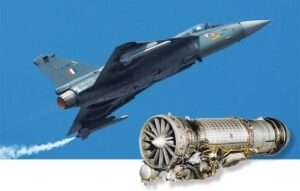
A technology demonstrator that can evolve into a family of engines is strategically more important than a single engine model. The knowledge accumulated in Kaveri’s compressors, turbines, combustion systems, materials and testing infrastructure becomes the foundation for the next generation.
That next generation is where the real game begins.
The objective of developing a more powerful Kaveri architecture with afterburning capability is to move towards the thrust class required for future combat aircraft. If Bharat succeeds in translating that ambition into a reliable, production-ready engine, the implications will extend far beyond Tejas. It would strengthen the technological foundation for future fighters, unmanned combat aircraft and other high-performance platforms.
More importantly, it would change the relationship between Bharat and foreign engine suppliers.
Today, buying a fighter is one thing. Having the sovereign capability to design, manufacture, upgrade and sustain its engine is another. The latter gives a country strategic freedom that cannot simply be purchased through an import contract.
Therefore, those celebrating every Kaveri setback as evidence that Bharat can never build a world-class jet engine should perhaps reconsider their argument.
The Kaveri is not a finished victory. It is something more consequential: a hard-earned technological base from which victory can eventually be built.
Bharat must now refuse both complacency and cynicism. It must invest relentlessly in materials science, precision manufacturing, private-sector participation, testing infrastructure, and the next-generation engine architecture. The objective must be uncompromising: not merely to make an engine, but to master the entire ecosystem behind it.
When that happens, Bharat will no longer merely operate aircraft powered by other nations’ technology.
It will power its own.
And that is the threshold that separates a major military power from a genuinely strategically autonomous aerospace power.