



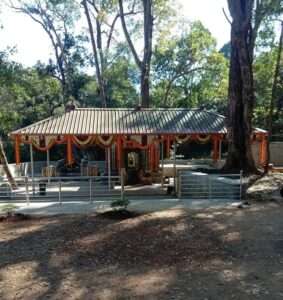
Nagarathi Durgaparameshwari Temple is a revered shrine in Hiliyana near Avarse in Udupi district. The ancient temple is associated with the ancient coastal Karnataka traditions of Shakti and Naga worship and, according to local tradition, with Nagarathi, one of the five Nagakanyas connected with the sacred traditions of the region.
The presiding deity is Sri Durgaparameshwari, worshipped as a powerful and compassionate form of Goddess Durga. The temple also preserves the ancient Naga tradition that is deeply rooted in the religious culture of coastal Karnataka.
The temple follows the traditional style of coastal Karnataka shrines, with a simple and serene setting and architectural elements suited to the region’s climate and customs.
The religious identity of Nagarathi is closely connected with the Naga and Shakti traditions of the Udupi region. Local tradition associates the shrine with Nagarathi, one of the five Nagakanyas whose story is preserved in the wider sacred traditions of coastal Karnataka.
According to the sacred tradition, King Shankachooda of Nagaloka had five daughters – Devarathi, Nagarathi, Charurathi, Mandarathi and Neelarathi. The five Nagakanyas were devoted to Lord Subrahmanya and travelled towards Kailasa with the desire to marry him.
At the entrance to Kailasa, however, they were stopped by Nandi. When they attempted to proceed, Nandi became displeased and cursed them to take the form of serpents. The five divine sisters descended to earth and began to suffer in the forests of the Sahyadri region.
One day, Sage Vyaghrapada discovered them during a devastating forest fire. Through his divine vision, he understood their true identity and told them that their suffering would end through the intervention of a noble king.
That king was Devavarma, who had himself been wandering through the forests after losing his kingdom. Finding the five serpents in distress, he gathered them carefully in a cloth and carried them with him.
But as he continued his journey, the serpents slipped away and disappeared into the forest, each finding its own sacred place. Among them was Nagarathi, whose name became associated with the sacred traditions of the region.
The story is further connected with the worship of Goddess Durga. When the land was threatened by evil forces, the divine power of the Goddess was invoked. Durgaparameshwari manifested as the supreme protector and assured her devotees of her eternal presence.
Thus, the tradition of Nagarathi became intertwined with the worship of Durgaparameshwari. The shrine represents the coming together of two ancient traditions of coastal Karnataka – the worship of Shakti and the worship of the Nagas.
For generations, devotees have continued to worship Nagarathi Durgaparameshwari as the protective Mother Goddess and guardian of the land, preserving the memory of the divine Nagakanya whose story became part of this sacred landscape.
Navaratri and other annual festivals dedicated to Durgaparameshwari are celebrated with devotion. Traditional Naga-related worship and local rituals also form part of the temple’s religious practices.


