



Today is significant as it marks the anniversary of the India-China War, which began on October 20, 1962.
As a soldier who took part in the 1962 war with China, I do not look back at that conflict merely as a chapter in military history. It remains a painful reminder of a national debacle, one that exposed the consequences of strategic misjudgment, inadequate preparedness and misplaced trust. Sixty-four years later, the questions remain uncomfortable, and some remain unanswered.
What territory did India lose to China? Can it ever recover the territory that was lost? Was China the aggressor, or did India’s own political and military miscalculations contribute to the catastrophe? And why, after more than six decades, does the Modi-led NDA government continue to keep the Henderson Brookes–Bhagat Report on the 1962 India-China War classified?
These are not questions that can be dismissed as political point-scoring. Nor can the Congress-led political establishment escape scrutiny by invoking the passage of time. Equally, the present government must explain why a report commissioned to examine one of independent India’s most consequential military reverses remains beyond public scrutiny.
For those of us who wore the uniform during that period, 1962 is not simply a date in a textbook. It is a reminder of what can happen when national aspirations are not matched by military preparedness and sound strategic judgment.
Irrefutable Facts: The Territorial Cost
The Government of India has officially stated that China continues to occupy approximately 38,000 square kilometres of Indian territory in Ladakh. In addition, Pakistan illegally ceded approximately 5,180 square kilometres of Indian territory in the Shaksgam Valley, in Pakistan-occupied Jammu and Kashmir, to China under the so-called Sino-Pakistan Boundary Agreement of March 1963. India does not recognise this arrangement.
These figures represent a continuing strategic and territorial challenge. They must not, however, be confused with the additional territory India supposedly lost during the 1962 war. The 38,000-square-kilometre figure describes the territory under Chinese occupation; it does not establish that the entire area was captured during the war itself.
The question of recovering territory is even more complex. Military history offers few grounds for believing that territory occupied by a powerful adversary can be recovered through wishful thinking or political rhetoric. Any attempt to alter the present situation by force would carry grave risks. A long-term national objective must therefore be supported by diplomatic leverage, military preparedness, economic strength and sustained development of border infrastructure.
To promise the recovery of every inch of lost territory by 2047 or 2049 without a credible strategy would be irresponsible. Equally, accepting the status quo as permanent would be an abdication of national responsibility. India must protect its territorial claims while building the capabilities necessary to defend its interests.
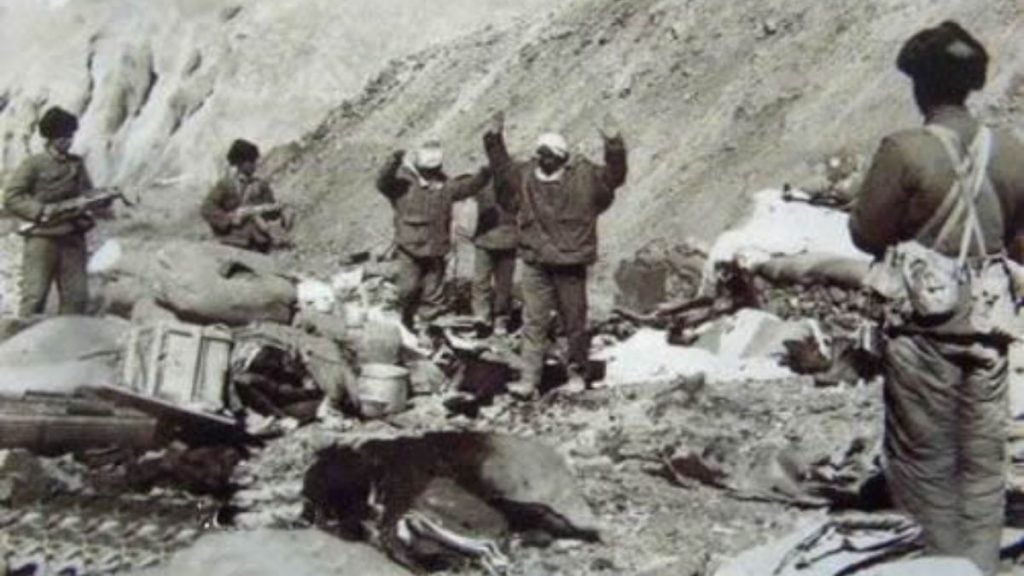
Is China Really the Aggressor?
To understand the 1962 debacle, we must examine the historical background of the India-China boundary dispute rather than view the conflict in isolation.
The People’s Republic of China, established in 1949, maintained that Tibet was an integral part of China. Beijing also challenged several boundaries inherited from the colonial era, describing them as products of a period when China was weak and foreign powers imposed unequal arrangements.
The status of Tibet became central to the emerging dispute. British expeditions, treaties and negotiations during the early twentieth century complicated the region’s political position. Following the fall of the Qing dynasty in 1911, Tibet exercised substantial de facto autonomy, although its international status remained contested.
Two competing boundary alignments subsequently assumed particular significance in the western sector. The Johnson Line, proposed in the nineteenth century, placed Aksai Chin within Jammu and Kashmir, while the McCartney–MacDonald proposal of 1899 placed much of Aksai Chin on the Chinese side. Independent India adopted the former alignment as its boundary position.
Yet, India’s claims were not matched by an adequate physical presence across these remote and difficult areas. Limited infrastructure, harsh terrain and logistical constraints made sustained patrolling and military deployment exceptionally difficult.
China, meanwhile, built the Xinjiang–Tibet Highway through Aksai Chin during the 1950s. India’s discovery of the road and the delay in responding effectively to its strategic implications became major issues in the deterioration of bilateral relations.

The eastern sector presented another complication. At the 1914 Simla Conference, British India and Tibet agreed upon the boundary associated with the McMahon Line. China did not accept the arrangement as a binding settlement. The resulting disagreement would eventually become one of the principal flashpoints in 1962.
For a soldier, a map is never merely a set of lines. A boundary on paper has meaning only when a country possesses the ability, infrastructure and determination to defend its claims on the ground. That was one of the hard lessons of the Himalayan conflict.
Another defining episode occurred in September 1950, when China’s representative in Delhi communicated Beijing’s position that Tibet should be regarded as part of China, with responsibility for its defence, trade and foreign relations passing to the Chinese government.
In October 1950, Chinese forces entered Tibet. Tibet appealed to the United Nations, but India did not mount an effective international campaign to prevent the consolidation of Chinese control. India had to balance its concerns about Tibet against the wider diplomatic circumstances of the time.
In May 1951, Tibetan representatives signed the Seventeen Point Agreement with the People’s Republic of China. The agreement authorised the presence of the People’s Liberation Army and the establishment of Chinese central government authority in Tibet. Tibetan representatives signed under considerable pressure, and the agreement’s legitimacy subsequently became deeply contested.
Geopolitics and Nehru’s Strategic Miscalculation
The international environment of the 1950s and early 1960s was shaped by the Cold War. The United States and its allies sought to contain the expansion of communism through alliances such as NATO, CENTO and SEATO. Pakistan joined CENTO and SEATO, adding another strategic complication to India’s security calculations.
The Chinese Civil War, the Korean War, the Hungarian uprising of 1956, the Suez Crisis, the Berlin Crisis of 1961 and the Cuban Missile Crisis of 1962 illustrated the volatility of the period.

Against this background, Prime Minister Jawaharlal Nehru placed considerable faith in diplomacy, non-alignment and the Panchsheel principles of peaceful coexistence. His vision sought to establish India as a leading voice of the newly independent world, free from rigid alignment with either Cold War bloc.
But ideals cannot substitute for strategic preparedness. Peaceful intentions, however sincere, cannot guarantee that another state will reciprocate them.
On 29 April 1954, India signed the agreement on trade and intercourse between the Tibet region of China and India, commonly associated with Panchsheel. Nehru hoped that mutual respect for sovereignty and territorial integrity, non-aggression and peaceful coexistence would provide the foundation for stable relations with China.
The tragic flaw was not the pursuit of peace itself. It was the apparent failure to prepare adequately for the possibility that Beijing might pursue its territorial objectives through coercion and military force.
The political slogan of Hindi-Chini Bhai-Bhai acquired a significance far beyond diplomacy. It encouraged public optimism at a time when developments on the ground demanded sharper scrutiny. The belief that friendship and shared anti-colonial credentials would restrain Chinese ambitions proved disastrously misplaced.
India’s championing of non-alignment at the 1961 Belgrade summit further reflected Nehru’s preference for diplomacy as the principal instrument of international influence. Yet, as subsequent events demonstrated, diplomatic stature could not compensate for weaknesses in intelligence assessment, military logistics and operational preparedness.
Chinese Intrusions and India’s Failure to Respond
Chinese intrusions and confrontations along the disputed frontier were reported at several locations during the 1950s, including Barahoti, Damzan, Nilang, Shipki La, Khurnak Fort and areas in the eastern frontier.
These developments should have prompted a more urgent reassessment of India’s border policy. Instead, New Delhi repeatedly struggled to reconcile reports from the frontier with its larger diplomatic expectations.
The Tibetan uprising of 1959, which spread from eastern Tibet to Lhasa, further transformed the regional situation. The Dalai Lama fled to India, placing additional strain on bilateral relations. The Chinese authorities subsequently repudiated the earlier Seventeen Point Agreement, while the Tibetan government-in-exile rejected the legitimacy of Chinese rule.
The deterioration was unmistakable. Yet, political confidence in the relationship continued to compete with the warnings emerging from the frontier.
From a military perspective, the fundamental issue was not whether India should pursue peaceful relations with China. It was whether the country had prepared for the possibility that those relations could collapse into open conflict. The events of 1962 supplied a devastating answer.
The Major Landmarks of the 1962 War
The India-China War began on 20 October 1962, when the People’s Liberation Army launched coordinated attacks in the western and eastern sectors. The conflict exposed serious weaknesses in India’s military preparedness, logistics, leadership and operational planning.
In Ladakh, Chinese forces sought to consolidate their position in the western sector and exert pressure on Indian posts. Indian positions at Sirijap on the northern bank of Pangong Tso were lost. Other posts and areas, including those around the Hot Springs–Kongka La region, witnessed Chinese advances or the withdrawal of Indian forces.
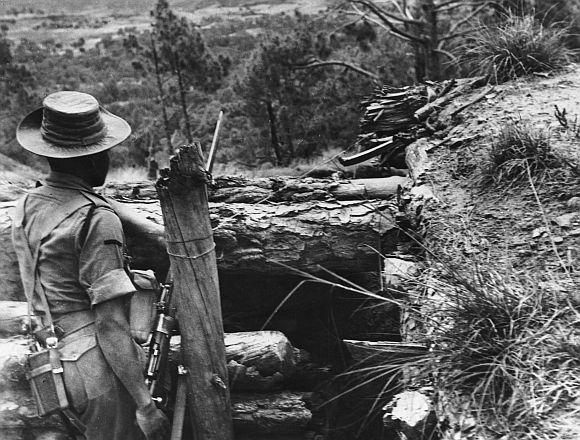
The fighting around Rezang La stands out as one of the most remarkable episodes of Indian military courage. Indian troops fought with extraordinary determination against overwhelming odds. Their resistance helped prevent the Chinese from capturing Chushul and its strategically important airfield during the battle.
As a soldier who experienced that war, I cannot discuss the territorial and strategic consequences without acknowledging the courage of the men who fought under the most difficult circumstances. The bravery of the rank and file was never the central deficiency of the Indian Army. The larger failures lay in the conditions under which those men were expected to fight, the resources available to them and the decisions that shaped their deployment.
In the eastern sector, the Chinese offensive overwhelmed Indian positions in the North-East Frontier Agency, now Arunachal Pradesh. Tawang fell in October 1962. Subsequent fighting and withdrawals around Se La, Bomdila and other positions revealed the difficulties faced by Indian forces in maintaining a coherent defensive line.
The operations were marked by confused orders, difficult communications, inadequate logistical support and the challenges of fighting in mountainous terrain. Indian soldiers displayed courage, but courage alone could not compensate for inadequate preparation or flawed operational direction.
The Chinese declared a unilateral ceasefire on 21 November 1962. In the eastern sector, they announced that their forces would withdraw to positions 20 kilometres behind the line they claimed, with the withdrawal to begin on 1 December. In the western sector, China retained control of Aksai Chin, consolidating its strategically vital link between Xinjiang and Tibet.
For India, the outcome was a military and diplomatic shock. The war had demonstrated the danger of allowing political assumptions to shape military planning, rather than ensuring that military capabilities were sufficient to support national policy.
The Strategic Consequences
China’s control of Aksai Chin secured a vital military corridor connecting Xinjiang and Tibet. The territorial dispute also became intertwined with the emerging strategic relationship between China and Pakistan. Pakistan’s 1963 agreement with China over the Shaksgam Valley added another dimension to India’s security concerns.
The consequences extended well beyond the immediate battlefield. India faced a more heavily militarised and contested frontier, with the Line of Actual Control remaining disputed in several sectors. The unresolved boundary question continues to influence defence planning, diplomacy and infrastructure development.
In retrospect, the 1962 war was a national humiliation of the gravest order for a country with an ancient civilisation and aspirations to become a major international power. The defeat exposed a painful gap between India’s diplomatic ambitions and its military capabilities.
The Chinese unilateral ceasefire and withdrawal in the eastern sector, following the advances made by the PLA, further underlined the limits of Nehru’s claim to international leadership. India’s standing suffered, and the assumption that moral authority alone could secure national interests was severely tested.
But history should not be reduced to the humiliation of a nation or the condemnation of a single leader. The more important task is to understand how the political and military establishment failed, why warnings were not acted upon adequately, and what institutional lessons must be learned.
That brings us back to the Henderson Brookes–Bhagat Report.
Commissioned after the war to review the Army’s operations, the report remains classified. In 2014, portions were published online by journalist Neville Maxwell, but the Government of India maintained that the document contained sensitive material with continuing operational relevance.
The question is no longer simply why India lost the 1962 war. It is why the country has been unable to make the full lessons of that defeat accessible to its citizens after more than six decades.
As a veteran of that war, I believe that remembering the courage of our soldiers must go hand in hand with examining the mistakes made by those who sent them into battle. Respect for the Army does not require silence about failures. On the contrary, a professional military institution grows stronger when it studies its defeats honestly and ensures that the same mistakes are not repeated.
The report may contain sensitive operational details that warrant protection. But that should not prevent a serious review of what can safely be declassified. National security must remain paramount; so must the national interest in understanding a defining moment in our history.
Why, then, must the Henderson Brookes–Bhagat Report remain hidden from public scrutiny? (To be concluded.)

