P.A. Rama Rao
Having worked as a journalist in Delhi for a decade, from 1989 to 1999, I had the privilege of witnessing and reporting several significant events that shaped the political and national landscape. Yet, among the many memories I carry from those years, one stands out for its sheer rarity: a Member of Parliament speaking in Telugu in the Rajya Sabha.
It was a moment that left a lasting impression on me, not merely because of its novelty, but also because it raised a larger question about our attitude towards our mother tongue, particularly among those elected to represent the people.
Parliament provides facilities for simultaneous translation, enabling members to speak in their respective mother tongues after giving prior notice. In principle, therefore, there should be little hesitation in using one’s own language in either House. Yet, during my years of reporting, I seldom came across Telugu-speaking MPs exercising this option. On a few occasions, I recall members from Punjab and West Bengal speaking in their mother tongues. Strangely, however, I do not remember witnessing a similar instance involving a member from the Telugu-speaking states.
As I regularly covered the Lok Sabha and reported on many important parliamentary proceedings, this absence did not escape my attention.
One day, my colleague, Mrs Radha Vishwanath, brought me news that a Rajya Sabha member had given prior notice of his intention to speak in Telugu. She asked whether I would be interested in covering the speech.
My response was immediate. Here was an opportunity to report something that went beyond the routine proceedings of Parliament. I readily agreed to take it up.
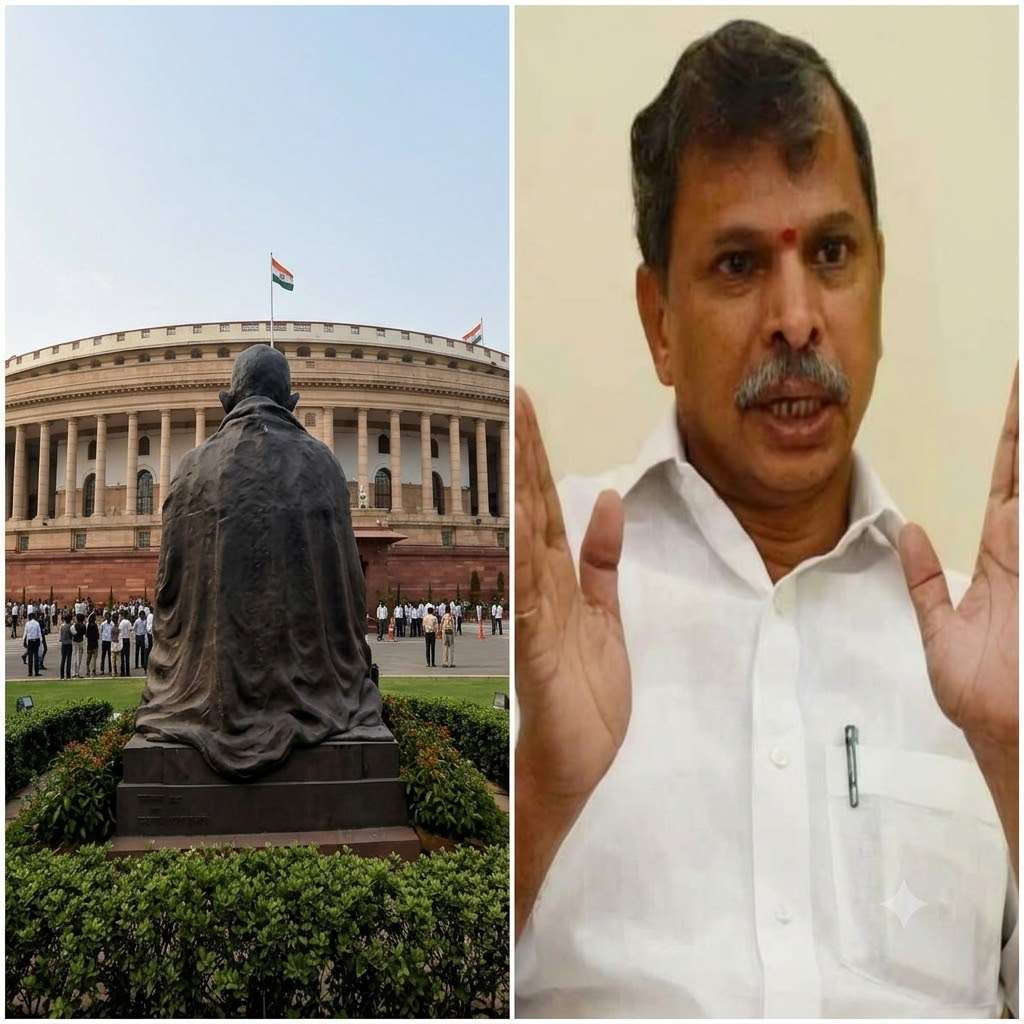
The member was Mr N. Tulasi Reddy, whom I recall as belonging to the Telugu Desam Party, though I would not claim certainty about his party affiliation after so many years. He had chosen to speak in Telugu during a discussion on an important subject, possibly the Union Budget or another significant debate.
What followed was a memorable experience.
The member spoke in fluent, colloquial Telugu, maintaining an uninterrupted flow and using idiomatic expressions that gave his speech a natural, distinctly Telugu flavour. He raised important issues and offered suggestions, making his contribution substantive as well as linguistically engaging. It was not simply a matter of a member switching from English or Hindi to Telugu; it was a reminder that a language spoken by millions could find a dignified and effective place in the country’s highest legislative forum.
For a journalist, the occasion was too unusual to be treated as just another parliamentary speech.
Back in the office, I wrote a detailed account of the proceedings. Besides reporting the issues raised by the member, I described the fluency, idiomatic richness and significance of his Telugu address. I wanted readers to appreciate not only what he had said, but also why his choice of language deserved attention.
The desk at Andhra Bhoomi immediately recognised the report’s news value. The newspaper published it prominently on the front page, spread across five columns, under the headline “Eguva Sabha Lo Telugu Jaaluvaarina Vela” — When Telugu Flowed in the Upper House. Deccan Chronicle, too, gave the event prominent coverage.
The response from colleagues was encouraging. The News Editor and a few sub-editors at Andhra Bhoomi called to appreciate the report and my initiative in highlighting an event that might otherwise have passed with little notice.
For me, it was a rare journalistic moment. In my ten years of reporting from Delhi, and in the years that followed, I do not recall another occasion when I heard Telugu being spoken in either House of Parliament.
That rarity, however, also left me with a lingering question.
A substantial number of MPs from the Telugu-speaking states are well versed in their mother tongue. Many demonstrate remarkable command over the language while addressing election meetings, public gatherings and other forums. Their speeches can be forceful, persuasive and rich in expression. Why, then, should Parliament be any different?
With due respect to the Telugu literary figures and cinema personalities who entered Parliament as MPs, I have often wondered why more of them did not choose to speak in Telugu. Their public standing and familiarity with the language could have made such interventions particularly meaningful.
Speaking in one’s mother tongue need not be an assertion against any other language. Nor should it be seen as a rejection of English or Hindi. It is simply an exercise of a linguistic right that Parliament itself facilitates.
Our languages are living repositories of culture, history and collective experience. When elected representatives use them in Parliament, they affirm that India’s democratic institutions can accommodate the country’s extraordinary linguistic diversity.
That single Telugu speech I witnessed decades ago remains vivid in my memory. It was an occasion for professional satisfaction, certainly, but it also prompted a question that remains relevant: if our representatives do not confidently use their mother tongue in the nation’s legislature, who will take the lead in giving it greater visibility and recognition? (To be continued…)