

Political criticism is intrinsic to parliamentary democracy. So is the Opposition’s right to question the government of the day. But when political rhetoric begins to overshadow facts, particularly while discussing individuals whose professional accomplishments are a matter of public record, it deserves closer scrutiny.
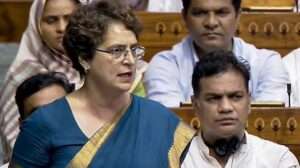
The controversy erupted during the parliamentary debate on the Public Examinations (Prevention of Unfair Means) Amendment Bill, 2026, when Congress leader Priyanka Gandhi Vadra questioned the composition of the high-powered Task Force constituted by the Narendra Modi government to recommend technology-driven reforms to India’s examination system. The six-member panel was tasked with suggesting measures to make public examinations transparent, credible and resistant to organised paper leaks that have affected the future of millions of students across the country.
Questioning the government is legitimate. Questioning whether examination reforms are adequate is equally legitimate. But questioning the competence of the experts entrusted with the task requires equal responsibility and factual accuracy.
The panel is headed by Nandan Nilekani, co-founder of Infosys and the principal architect of India’s digital public infrastructure revolution through Aadhaar. Ironically, it was the Congress-led UPA government that entrusted him with one of independent India’s most ambitious technological projects. Today, Aadhaar forms the backbone of scores of welfare delivery mechanisms and digital services across governments of different political persuasions.
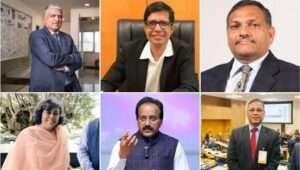
Former ISRO Chairman S. Somanath hardly needs an introduction. Under his leadership, India scripted historic achievements in space exploration, including the Chandrayaan-3 mission that made India the first country to successfully land near the Moon’s south pole. His experience in managing highly secure, technologically sophisticated and mission-critical systems is precisely the kind of expertise that examination reforms demand.
Former Intelligence Bureau Director Tapan Deka brings decades of experience in national security and intelligence gathering. Examination paper leak rackets are no longer localised crimes but organised networks involving technology, logistics and financial transactions spread across states. Few would dispute the value of having national security expertise while designing mechanisms to counter such organised malpractice.
Professor V. Kamakoti, former Director of IIT Madras, is among India’s foremost computer scientists and cybersecurity experts. Anita Karwal has served as Union Education Secretary and Chairperson of CBSE, giving her unparalleled insight into India’s school and examination ecosystem. Amrit Lal Meena contributes extensive administrative and logistical experience acquired through years of public service. Together, the panel represents technology, education administration, cybersecurity, intelligence, logistics and governance—the very disciplines that examination reforms require.
The Prime Minister has made it clear that the task force’s mandate is to recommend measures that maximise the use of technology while strengthening transparency and restoring public confidence in examinations. Simultaneously, Parliament is considering amendments to strengthen anti-paper leak legislation by providing for faster investigations, special fast-track courts and stricter penalties against offenders.
One may disagree with the government’s policies. One may even disagree with the recommendations that eventually emerge from the task force. Such debates are both healthy and necessary in a democracy. What deserves reconsideration, however, is the tendency to dismiss eminent professionals without engaging with either their credentials or the substance of their work.
Parliamentary debates are at their best when they challenge ideas with better ideas. If there are better-qualified experts available, their names and credentials can certainly enrich the discussion. But reducing accomplished professionals to political talking points does little to strengthen either the Opposition’s argument or public confidence in democratic institutions.
At a time when millions of students and their families are anxiously seeking credible solutions to examination malpractices, the national conversation deserves more facts and less political grandstanding. Merit must remain above politics, irrespective of which government appoints it.