



The Supreme Court’s directive asking the Centre to extend relief to those below 18 years of age identified by the police for inclusion in the FIRs being prepared in connection with the recent Jantar Mantar agitation by the social media-based Cockroach Janta Party (CJP) is welcome. More importantly, however, is the apex court’s unequivocal observation that those with criminal antecedents ought not to be spared. Compassion, after all, cannot come at the cost of justice. The two observations must be read together and not selectively. Mercy for misguided youth and zero tolerance for criminality is perhaps the most sensible constitutional balance that could have been struck. There can be no denying that young minds are often swayed by emotion, political sloganeering and social media narratives. If some students and minors found themselves in the midst of an agitation, they deserve an opportunity for introspection and course correction. A democratic society must always leave room for reform, particularly when it comes to the young. But the same generosity cannot be extended to hardened offenders merely because they chose to wear the cloak of political activism. It is nobody’s case that every protestor is a criminal. Equally, it cannot become anybody’s case that every person participating in a protest automatically becomes immune from the consequences of unlawful conduct. The rule of law cannot have two yardsticks—one for ordinary citizens and another for those claiming political sanctity. Reports indicate that the Delhi Police have identified nearly 2,800 individuals who participated in the agitation. Details of cases registered against several of them have also entered the public domain. During a televised debate, a senior police officer even spoke about identifying an individual facing multiple criminal cases, including serious offences. If such allegations are ultimately established through due process of law, no amount of political posturing can justify seeking a blanket withdrawal of cases. That is precisely why the Supreme Court’s caveat assumes significance.
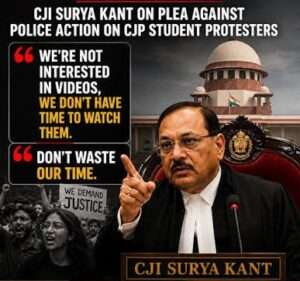
What is equally intriguing is the shifting stand adopted by the CJP leadership. Having reportedly reached an understanding with two Union Ministers to call off the agitation after securing the resignation of the Union Education Minister and relief for students, some of its spokespersons were seen, within hours, threatening to revive the protests unless cases against all detainees were withdrawn. Democracy certainly accommodates dissent. It cannot, however, be reduced to a perpetual politics of ultimatums. One hopes that the Supreme Court’s directive will now persuade all stakeholders to act with restraint and responsibility. Yet, many citizens may feel that the occasion also warranted a larger message to the nation’s youth. Constitutional freedoms are precious, but they are not without constitutional limitations. Freedom of expression is not freedom from responsibility. Political disagreement is legitimate; abusive language directed against constitutional functionaries is not. Whether one supports or opposes a government is immaterial. Respect for constitutional institutions remains non-negotiable in a constitutional democracy. Prime Ministers will come and go. Home Ministers will come and go. Governments will change. But the dignity of constitutional offices must endure. The nation’s youth must learn the difference between dissent and disorder, between activism and anarchism, and between criticism and crudeness. If minors have been shown compassion because of their age, society must also remind them that rights are inseparable from responsibilities. Parents, teachers and political organisations have an equal obligation to inculcate constitutional values among the young. There are also concerns being raised regarding the alleged participation of foreign nationals in what was essentially a domestic political agitation. If such participation is established, it deserves appropriate scrutiny strictly in accordance with Indian law. India’s democratic institutions are robust enough to tolerate criticism, but questions touching upon national sovereignty can never be treated casually. The Supreme Court’s directive, therefore, deserves appreciation not merely for what it has granted but also for what it has refused to concede. It has chosen reform over retribution for minors, but accountability over expediency for criminal elements. That is how constitutional democracies ought to function—with compassion for the young, firmness against criminality, and unwavering respect for the rule of law.
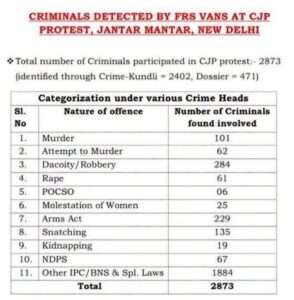



Yes. SC has rightly ordered not to give relief to known registered criminals. Even all others involved in violence with proven evidence should not be relieved unconditionally. They should be sent to counselling centres and their parents are involved in ensuring that in future if their children’s participation in any protests resulting into violence will be dealt with seriously in accordance with the law.