


M.S. Sparsha
Ask any Indian who made the country’s first motion picture and the answer, almost instinctively, is Dadasaheb Phalke. And rightly so. His Raja Harishchandra (1913) occupies an honoured place in our cinematic history as India’s first full-length feature film.
But history sometimes forgets its earliest dreamers.
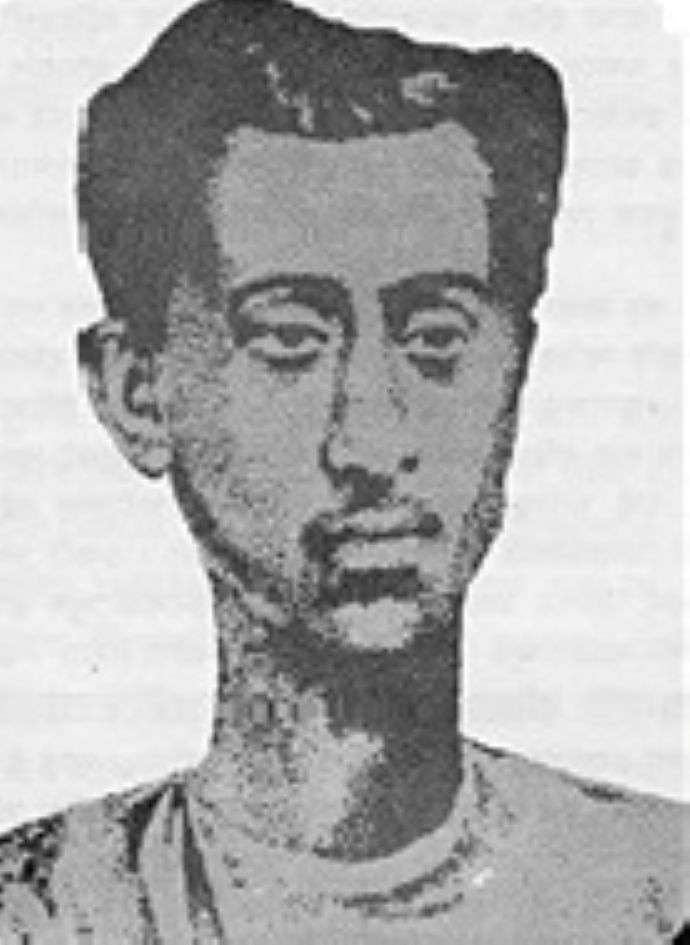
Twelve years before Phalke ever bought a camera, an extraordinary Indian in Calcutta was already experimenting with the magic of moving images. He was filming theatre productions, documenting political movements, recording surgical procedures for medical education and producing what are believed to be some of the world’s earliest advertising films. Yet, today, his name barely finds a mention outside scholarly circles.
He was Hiralal Sen—the forgotten pioneer whose life’s work vanished in flames.
Born in 1868 in Manikganj, now in Bangladesh, Hiralal Sen was not destined for cinema. He was the son of a successful lawyer and was expected to pursue a respectable profession. Cinema itself had not yet been born as an industry, making such ambitions almost unthinkable.
But Sen was captivated by light and movement.
His life changed forever in 1898 when a travelling French exhibitor brought the Urban Bioscope to Calcutta’s Star Theatre. Audiences marvelled at the flickering images projected on the screen—brief glimpses of distant lands that seemed magical for their time.
While others watched in wonder, the 30-year-old Sen saw something else—a possibility.
Why should Indians merely watch the world through foreign eyes? Why couldn’t India tell its own stories?
That question would make him one of India’s greatest unsung heroes.
Armed with borrowed money, unrelenting determination and boundless curiosity, Sen ordered a camera and film stock from London. At a time when there were no filmmaking schools, no manuals and no established cinematic conventions, he taught himself an entirely new art form.
What followed between 1898 and 1913 was nothing short of remarkable.
Long before Indian cinema found its commercial footing, Sen brought his camera to Calcutta’s celebrated theatres. He filmed live performances of Bengali classics such as Alibaba and Sitaram, creatively stitching scenes together into multi-reel productions. These were among India’s earliest experiments in narrative filmmaking.
His vision extended beyond entertainment.
Recognising cinema’s commercial possibilities decades before modern advertising was born, Sen founded the Royal Biograph Company and produced promotional films for Indian brands, including Jabakusum Hair Oil and B.K. Paul & Company’s Edward’s Tonic. Historians regard these productions among the world’s earliest advertising films—a remarkable achievement that predates the sophisticated visual marketing industry we know today.
Sen was equally conscious of his times.
When Bengal was partitioned by the British in 1905, sparking massive protests across the region, he carried his cumbersome camera equipment into public rallies led by nationalist leader Surendranath Banerjee. In doing so, he became one of India’s earliest documentary filmmakers, preserving moments of political awakening on celluloid.
His pioneering spirit did not stop there.
He persuaded doctors at Calcutta’s Campbell Medical College to permit the filming of surgical procedures for educational purposes, making him one of Asia’s earliest practitioners of scientific filmmaking.
The range of his work remains astonishing even by contemporary standards—feature productions, documentaries, advertisements, educational films and political reportage. Had these films survived, they would have transformed our understanding of Indian cinema’s origins.
Yet, history is often unkind to pioneers.
Foreign film syndicates began dominating Calcutta’s growing entertainment business. Independent filmmakers like Sen found themselves overwhelmed by superior financial resources and expanding competition. His production house slipped into financial distress, and by 1917, he was penniless and battling terminal throat cancer.
Fate, however, had reserved its cruellest blow.
On October 24, 1917, a devastating fire engulfed a warehouse owned by his brother in Calcutta. Stored inside were the master reels containing virtually every film Hiralal Sen had created over two decades.
Thousands of feet of irreplaceable nitrate film stock—India’s earliest filmed theatre productions, political documentaries, advertisements and educational recordings—were reduced to smoke within hours.
Imagine losing not merely a life’s work, but an entire chapter of a nation’s cultural memory.
Sen received the tragic news while lying on his deathbed. A few days later, he passed away, knowing that every physical trace of his pioneering achievements had disappeared forever.
History remembered those whose creations survived. It forgot those whose masterpieces perished.
Dadasaheb Phalke’s immortal contribution deserves every honour bestowed upon him. But Hiralal Sen deserves his rightful place alongside the great pioneers of Indian cinema. He was among the first Indians to understand that moving images could educate, inspire, inform and preserve history itself.
Today, when we sit in multiplexes watching films on giant screens, binge-watch web series on digital platforms or pause briefly to view advertisements on our mobile phones, we seldom realise that an Indian visionary imagined these possibilities more than a century ago.
Hiralal Sen built a visual universe before India knew what cinema could become.
His films may have turned to ashes, but his legacy refuses to burn.
Some heroes are remembered because history preserves their work. Others survive because time eventually rediscovers their greatness.
Hiralal Sen belongs to the latter.
And India owes him its remembrance.


“The Man Who Filmed India Before Cinema Was Born” is a remarkable piece of historical storytelling that brings to light a forgotten chapter of India’s cinematic heritage. Instead of merely repeating familiar narratives, the author uncovers the inspiring journey of an unsung pioneer, reminding readers that the foundations of Indian cinema were laid by visionary individuals long before the industry formally came into existence. The article reflects meticulous research, historical accuracy, and an engaging narrative style that keeps readers absorbed from beginning to end.
The author deserves sincere appreciation for transforming history into a compelling and enjoyable read. The writing balances facts with storytelling, making complex historical details accessible to readers of all ages. Such articles not only preserve our cultural memory but also inspire younger generations to value the pioneers whose contributions often remain overshadowed by mainstream history.
Congratulations to the author for this outstanding work. Your dedication to uncovering forgotten stories and presenting them with clarity, passion, and authenticity is truly commendable. Articles of this calibre enrich public knowledge and strengthen our appreciation of India’s remarkable historical legacy. I look forward to reading many more such insightful and thought-provoking pieces from your pen.
Great information.
Definitely this unsung hero deserves all the respect and recognition for his great work .
Kudos to the author for the informative and interesting narration.