Lakshmanrao Upadhayula
The hymns attributed to the sage Vishwamitra in the Tristubh and Gayatri metres of the Rigveda reveal a profound vision in which devotion, wisdom, and cosmic order unite in perfect harmony. Every mantra is more than a prayer; it is a disciplined expression of consciousness that seeks to align human life with the eternal rhythm of the universe. The Vedic seers perceived creation as an interconnected reality where every force of nature reflected the presence of the Supreme Truth. Their invocations were therefore not merely appeals for material blessings but sacred efforts to establish harmony between humanity, nature, and the divine.
Vishwamitra invokes Mitra and Varuna as the guardians of truth, justice, and universal order. Their protection extends equally to all, even to those regarded as enemies, revealing that divine compassion transcends human divisions. The sage prays that the community may remain free from the aggression of youthful adversaries and flourish under their immeasurable glory. Their abundant gifts of food and prosperity symbolize not only physical nourishment but also the sustaining grace that preserves moral and spiritual life. In the Vedic vision, food itself is sacred, for it is the visible manifestation of divine generosity flowing through the cycles of nature.
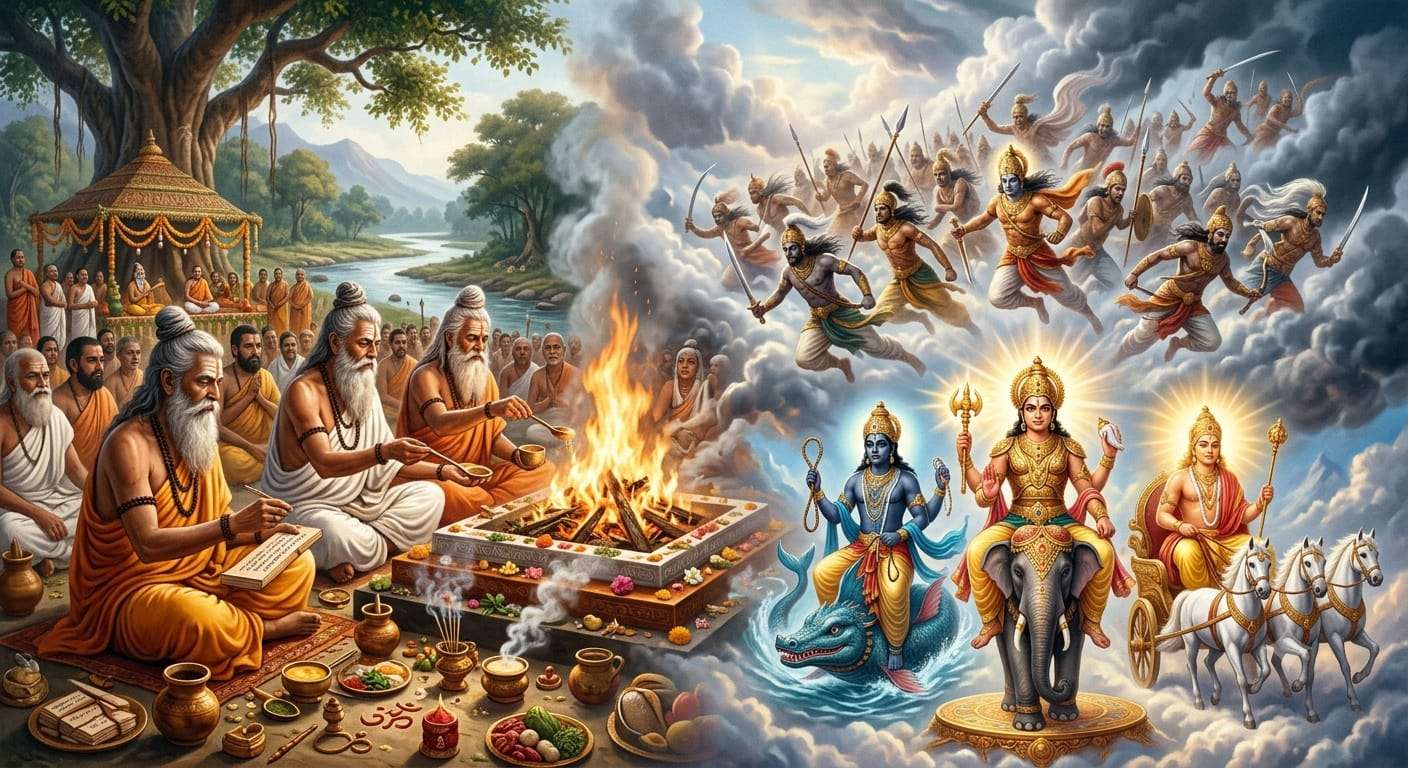
Indra and Varuna are praised together as mighty protectors who unite strength with righteousness. The patrons of sacrifice seek wealth from them, not for selfish indulgence but for sustaining families, communities, sacred duties, and acts of generosity. The repeated invitation offered to these deities reflects the Vedic understanding that divine presence is welcomed through purity of intention, disciplined worship, and unwavering faith. True prosperity arises when courage, justice, and gratitude become the foundations of human action.
The Marut hosts, radiant powers of the atmosphere, are requested to hear the sacred hymns resounding through both heaven and earth. Their presence symbolizes the dynamic energies that move through creation, sustaining life with rain, vitality, and renewal. The prayer for worthy offspring, flourishing cattle, and enduring wealth reflects the Vedic ideal of complete prosperity, where righteous descendants continue the sacred traditions while material abundance supports spiritual responsibilities. The worshipful consorts of the gods are also invoked to preserve harmony, fertility, and auspiciousness within the household and society.
The divine feminine receives equal reverence in these hymns. Hotri, associated with the sacred fire, Bharati, radiant with the brilliance of Surya, and the other revered goddesses embody wisdom, eloquence, nourishment, and sacred inspiration. Their presence reminds the worshipper that creation flourishes through the harmonious union of masculine and feminine principles. Vedic spirituality recognizes that divine power manifests equally through compassion, knowledge, strength, and creative abundance.
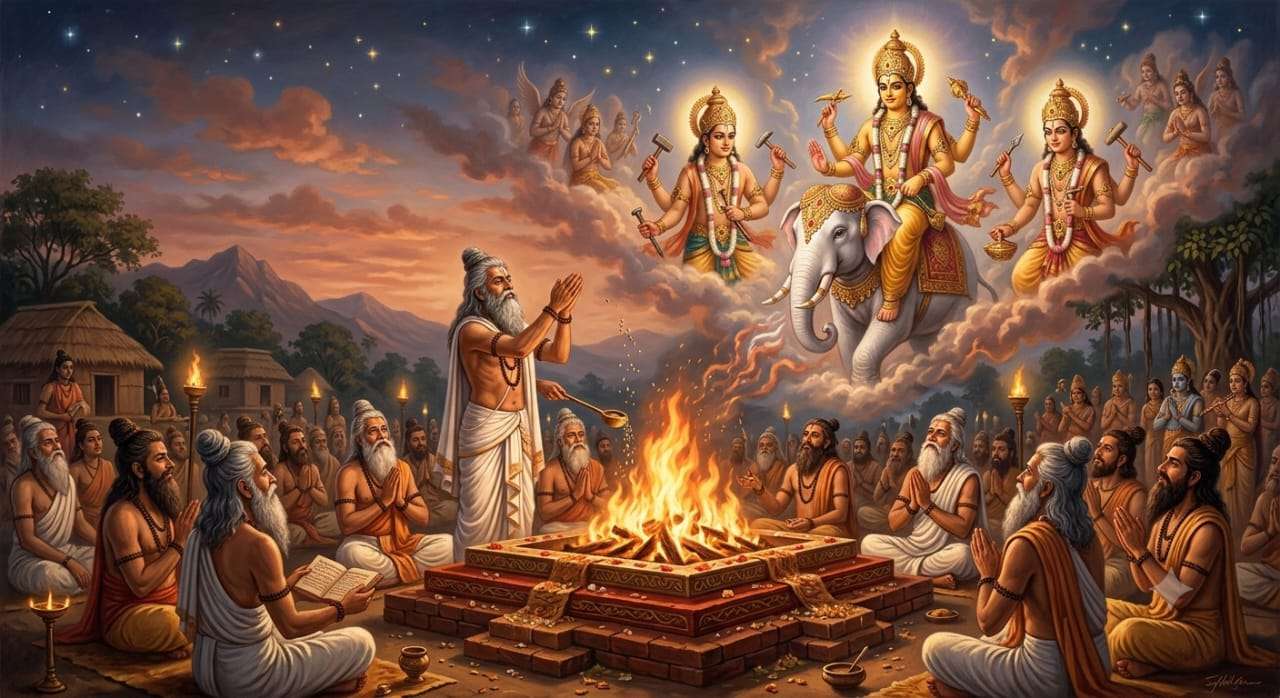
Brihaspati, the lord of sacred wisdom and divine speech, is glorified as the benefactor of gods and humanity alike. He is invited to accept the pure offerings prepared in the sanctified atmosphere of the yajna and to bless the patrons with prosperity and righteous success. The Ritvijas, learned masters of sacred rites, perform their duties through precise recitation of Vedic hymns, demonstrating that every syllable, gesture, and offering must harmonize with eternal truth. Their disciplined service reflects the scientific precision embedded within Vedic ritual, where accuracy, order, and purity were considered indispensable for spiritual realization.
The seeker approaches Brihaspati not merely for victory over external enemies but for strength to overcome ignorance, selfishness, and inner weakness. He is celebrated as the bestower of desired fruits, the unfailing guide whose wisdom cannot be rejected. His association with the cosmic order signifies that true success is achieved through knowledge governed by righteousness rather than through force alone. The Vedic sages understood that the greatest conquest is mastery over one’s own mind.
Pushan, the luminous nourisher and guide, is praised with charming and radiant hymns. Just as a child instinctively runs toward the loving embrace of its mother, the devotee offers heartfelt praise that naturally seeks the divine presence. Pushan inspires noble thoughts, directs human intentions toward virtue, and protects travelers upon both earthly and spiritual paths. His guidance symbolizes the inner illumination that leads every sincere seeker from uncertainty to wisdom.
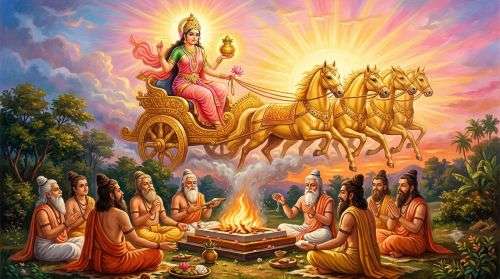
The celebrated Gayatri meditation reaches its highest philosophical expression by contemplating the supreme radiance of Savita, the divine source who illumines all worlds. The worshipper meditates upon that pure and transcendent light, praying that it may awaken the intellect and guide every thought toward truth. This timeless prayer reflects remarkable psychological insight, recognizing that the transformation of human consciousness begins with the purification of thought. The disciplined union of meditation, contemplation, and ethical living forms the foundation of genuine enlightenment.
The Adhvaryus, endowed with intelligence and ritual mastery, perform every sacrificial act with complete unity of thought, speech, and action. Their discipline demonstrates that spiritual practice demands both inward concentration and outward precision. The visionary priest prepares the sacred path leading to Soma, through which the gods enter the sanctified altar. This profound symbolism teaches that divine realization becomes possible only when the inner altar of the heart is purified through sincerity, knowledge, and self-control.
Soma is invoked as the sacred source of vitality, nourishment, health, and longevity. His blessings extend equally to priests, cattle, wildlife, and all humanity, reflecting the Vedic understanding that every form of life participates in the same cosmic order. The prayer seeks strength to overcome those who obstruct righteous actions, affirming that truth ultimately triumphs over every force of disorder. Nourishment is viewed not merely as physical sustenance but as the sustaining energy that enables wisdom, compassion, and righteous living.
Mitra and Varuna are again praised for their pure and auspicious deeds. The sage prays that cows may yield abundant milk, symbolizing prosperity, nourishment, and ecological harmony, while homes overflow with sweetness like honey, representing joy, peace, and contentment. Their blessings cause offerings to flourish, strengthen communities, and inspire ever deeper recitation of sacred hymns. Wealth, in the Vedic understanding, reaches perfection only when it supports virtue, learning, hospitality, and compassionate service.
The concluding invocation welcomes Mitra and Varuna into the sacrificial altar through the sacred hymns of Jamadagni and the inspired chants of Vishwamitra. As they partake of the Soma offering, the merit of righteous action expands, bringing harmony between heaven and earth. These ancient hymns reveal a civilization where spirituality and disciplined observation coexisted without conflict. The precision of Vedic metres, the ordered structure of ritual, the reverence for natural forces, and the pursuit of moral excellence together express a scientific temperament rooted in careful observation, disciplined practice, and profound philosophical inquiry. The Rigvedic seers perceived the universe as a living expression of divine intelligence, inviting every generation to seek prosperity through righteousness, knowledge through contemplation, and liberation throu