Shrikant Rao
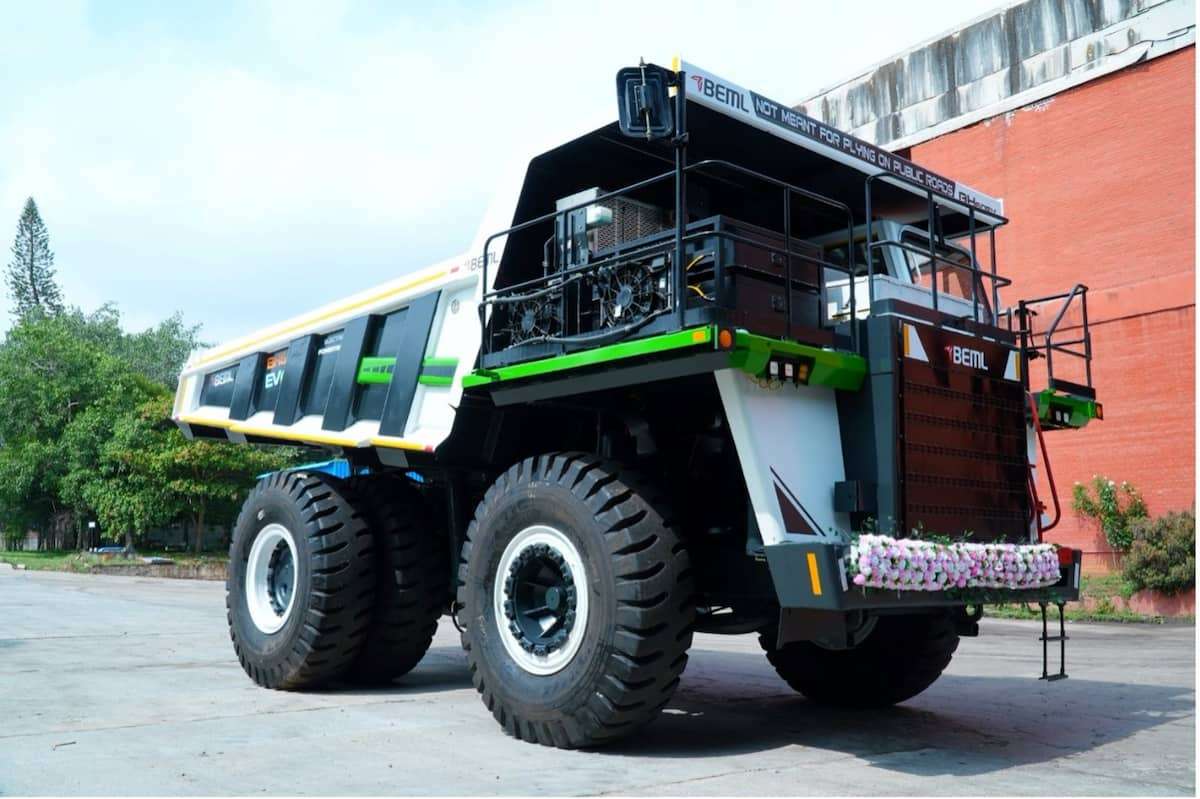
The global heavy mining truck industry has officially fractured here in the iron-red murrum—the punishingly abrasive, gravelly laterite soil peculiar to Mysore—where the sudden arrival of BEML Limited’s new BH60-EV battery-electric mining dump truck has forced long-standing market leaders to completely rethink their fleet projections.
This transition is governed not by green optics, but by a brutal equation of pure hauling power, battery temperature control, and whether a remote mine’s power grid can charge a fleet of giant electric machines without knocking out the local electricity supply.
Globally, the international mining community views this southern Indian procurement battle as the decisive testing ground for electric mining trucks. For decades, heavy equipment manufacturers looked exclusively to the multi-billion-dollar iron ore reserves of Western Australia’s Pilbara region or the high-altitude copper mines of northern Chile to dictate technology trends, landscapes where Caterpillar and Komatsu are currently trialling massive 250-ton electric architectures. By aggressively scaling the 60-to-100-ton class instead, India is pioneering the exact weight category that dominates the broader, rapidly developing mining infrastructure stretching from the gold fields of South Africa’s Witwatersrand to the coal deposits of Indonesia’s East Kalimantan, signalling that the global dependency on massive Western-engineered diesel engines is structurally winding down.
Heavy Inertia
For half a century, the global heavy mining truck industry operated on a delightfully simple, brutal recipe: forge a rigid steel chassis the size of a small house, drop in a diesel engine that drinks fuel like a commercial jetliner, and let the state-backed monopolies pay the bill. If you were a public sector company like BEML, your kingdom within the sprawling open-cast pits of Coal India Limited was essentially protected by the massive amount of money required to build heavy iron and the slow pace of government buying guidelines.
The sheer physics of moving fifty-five metric tons of rock uphill out of a deep pit means that these trucks cannot simply borrow technology from light commercial vehicles, forcing engineers to redesign the entire powertrain around massive electric motors that deliver maximum torque from a dead stop. This necessity turns the engineering floor into a high-stakes gamble where the wrong choice in battery chemistry or cooling systems can sideline a multi-million-dollar fleet for weeks, a risk that traditional fleet managers used to standard diesel repairs are highly hesitant to accept. Consequently, the initial phase of this transition has been marked by an intense period of field trials, where theoretical calculations about energy density are being brutally tested against the harsh reality of abrasive dust, torrential monsoons, and operators who treat machinery with zero tenderness.
Private Ambition
While BEML was busy treating electrification as a distant corporate milestone, a nimble private outsider from Coimbatore named Propel Industries looked at the quarry sites they already dominated and realized that the simpler architecture of electric motors allowed them to bypass the barrier of diesel engine manufacturing entirely. By the time the state-backed giant finally rolled its first indigenous electric prototypes out of the Mysore complex, Propel had already quietly deployed more than two hundred of their multi-axle electric tippers into active service, effectively executing a brilliant guerrilla campaign right under the nose of the establishment.
According to Propel’s managing director, V. Senthilkumar, the company channelled its specialized site expertise into custom-designing electric systems that insulate owners from volatile fuel costs while extracting the absolute highest returns in active pits. This strategy directly targets the immediate operational realities on the ground rather than waiting for long-term policy mandates, anchoring their platform expansion firmly in demanding construction and pit environments where commercial uptime is the only metric that truly matters.
This commercial friction is happening against a backdrop of intense global pressure from Chinese heavyweights like SANY Heavy Industry and XCMG Group, both of whom long ago recognized that the fastest way to run an electric mining fleet was to reject slow plug-in charging and instead build automated robotic bays capable of hot-swapping a massive battery pack in under six minutes.
Product Pipeline
The commercial threat is compounding rapidly as the product pipelines of these disrupters shift from experimental pilot programs to full commercial scale. Propel has broken out of its entry-level niche by introducing a massive 90CED 90-ton class electric dumper and is currently testing the 470 eTR, a 55-tonne electric tractor-trailer engineered to boast a 350-kilometre single-charge range for long-haul mine logistics.
Simultaneously, SANY is aggressively scaling up its international footprint by globally debuting the SKT115E Electric Mining Truck and the SKT145Ei autonomous pure electric platform, focusing heavily on high-speed liquid-cooled charging systems and “cabless” structural designs to remove human operators from hazardous pits entirely.
Autonomy Shift
Concurrently, XCMG has transitioned from selling individual pilot trucks to deploying fully integrated autonomous ecosystems. Their pipeline is anchored by the ZNK95, an 85-tonne autonomous, cabless battery-electric haul truck paired with a proprietary 5G autonomous haulage system designed to run continuously in extreme environments via automated 6-minute battery swapping stations.
To ensure the loading loop matches this velocity, XCMG is pairing the fleet with the newly developed XC9150-EV, a monstrous 15-ton rated capacity fully electric wheel loader utilizing a massive 1,011 kWh onboard battery pack.
Structural Dogma
BEML’s engineering response has been proudly contrarian, opting for a heavy-duty, one-piece rigid frame architecture that costs double up front but promises to outlast three consecutive Chinese wide-body chassis, banking heavily on the fact that long-haul public sector contracts will eventually value twenty-year structural longevity over immediate private-sector return on investment. Reflecting this institutional mindset, BEML’s Chairman and Managing Director, Shantanu Roy, noted that the launch represents a crucial evolutionary leap toward next-generation electric mobility for heavy industry, proving the state firm’s unique capability to construct heavy-iron setups optimized for high-stress extraction zones. The strategy deliberately ties the vehicle’s structural endurance directly to India’s aggressive carbon-reduction targets, seeking to anchor BEML as the definitive partner for coal players who must fulfill their immense raw output mandates sustainably.
This insistence on structural over-engineering creates a fascinating commercial paradox where the premium product must justify itself to accountants who are increasingly seduced by the low entry price of modified highway tippers. The strategic gamble rests on whether the brutal haul roads of major mining operations will systematically snap the lighter frames of the newcomers, vindicating BEML’s heavy-iron philosophy before the nimble disrupters capture the entire commercial market.
Agnostic Iron
To counter this infrastructure deadlock, the Western heavyweights are deploying entirely different technical strategies, banking on a “power-agnostic” approach to protect their multi-decade dominance over the world’s largest mine sites. Caterpillar is actively field-testing its Cat 793 XE Early Learner battery-electric trucks in the brutal iron ore environments of Western Australia in partnership with Rio Tinto and BHP. Rather than focusing solely on static charging stations, Caterpillar’s active development pipeline is prioritizing its new Dynamic Energy Transfer system, an electrified rail technology capable of feeding power to trucks while they are moving up the haul road.
Similarly, Komatsu is readying its legendary 930E ultra-class haul truck for a modular, power-agnostic commercial production run. The upcoming 930E architecture utilizes a common chassis designed to accept whatever power source becomes viable over a 20-year lifespan, seamlessly swapping between standard diesel, pure battery-electric modules, or hydrogen fuel cell systems. By ensuring the truck can transition to zero emissions later in its life cycle, Komatsu is preventing mining conglomerates from freezing capital expenditure while the industry waits for regional green energy grids to mature.
Grid Lock
The broader challenge shifts from the vehicle chassis itself to the surrounding infrastructure, as mining companies discover that purchasing an electric truck is infinitely easier than securing the required electricity supply in the middle of a remote jungle or desert pit. A single fleet of ten megawatt-charging dumpers can easily demand more power during peak charging cycles than a medium-sized manufacturing town, turning heavy truck sales representatives into impromptu power grid consultants who must negotiate with state electricity boards just to get a vehicle commissioned.
This infrastructural bottleneck has inadvertently created a secondary market for localized energy storage solutions, where used battery packs are being repurposed into static pit-side charging banks to buffer the immense electrical draw.
Tariff Shields
Domestically, the immediate survival of these Indian platforms is heavily engineered by aggressive trade protections designed to blunt the Chinese battery-swapping blitzkrieg before it colonizes Indian pits. Under updated custom duty mandates and stringent anti-dumping duties levied against heavy off-road machinery parts from China, imported wide-body electric tippers face an immediate cost penalty at the port of entry. Furthermore, India’s rigorous structural engineering codes for public sector tenders act as an invisible barrier, since government-backed operations mandate minimum safety and structural lifespan qualifications that effectively disqualify modified highway chassis. This protectionist framework gives BEML and Propel a vital domestic incubator, ensuring they can iron out early operational bugs within a highly insulated environment while their Chinese competitors face escalating bureaucratic and financial hurdles.
Export Fronts
This domestic insulation is rapidly translating into direct global export readiness, as Indian manufacturers eye the lucrative mid-tonnage mining corridors stretching across sub-Saharan Africa and Southeast Asia. Mine operators in nations like Zambia, the Democratic Republic of Congo, and Indonesia are increasingly caught between the exorbitant premium of Western diesel equipment and the logistical anxieties of Chinese battery-swapping ecosystems that require massive, specialized site overhauls.
Propel is already using its pre-existing international aggregate footprint to pitch its 60-ton and 90-ton electric variants as plug-and-play capital assets, while BEML leverages its historical diplomatic ties in defense and industrial supplies to offer complete financing packages backed by export-import banks. By providing rugged, high-capacity machines that rely on standardized, scalable fast-charging loops, Indian builders are positioning themselves as the perfect pragmatic middle ground for emerging economies that want to decarbonize their mineral extraction without handing full systemic control of their infrastructure over to a foreign power.
The Mineral Paradox
The ultimate systemic irony underpinning this entire industrial pivot is that these zero-emission fleets are being built to dig up the exact raw materials required to sustain their own existence. A single 1,011 kWh battery pack configuration requires immense volumes of lithium, cobalt, nickel, and refined copper—minerals that are currently blasted and hauled out of the earth by traditional diesel-guzzling legacy mega-fleets. By racing to electrify the mid-tonnage mining corridors, BEML and Propel are not merely selling heavy equipment; they are competing to lock down the critical machinery infrastructure that controls the frontline extraction points of the global green transition. The winner of this engineering street fight in the Indian murrum will ultimately hold the keys to the most cost-efficient, self-sustaining logistical loops on earth, dictating the baseline cost of the raw commodities that will power the civilian economies of the next half-century.
New Realities
This operational friction ensures that the transition will not be a sudden, overnight revolution but rather a grinding war of attrition where the legacy players slowly adapt their supply chains to support high-voltage electronics alongside heavy hydraulics. The mechanical simplicity of these new trucks means that thousands of traditional engine components will eventually disappear from mine warehouses, fundamentally altering the high-margin aftermarket parts business that has historically sustained the profitability of major heavy equipment dealerships worldwide. For the technicians on the ground, the grease-stained overalls of the diesel era are gradually giving way to the insulated safety gloves and diagnostic laptops required to service high-voltage battery modules.
Pacing Gains
In the interim, the true differentiator will be the sophisticated software algorithms that manage energy consumption in real-time, dictating exactly how hard a driver can accelerate up an incline to prevent thermal runaway in the battery cells while maximizing the kinetic energy recaptured during the descent. The trucks are effectively transforming into data centers on wheels, transmitting thousands of telemetry data points per second to remote command centers that predict component failures before a physical breakdown can stop production. This digital layer adds yet another layer of complexity that legacy manufacturers must master if they hope to prevent tech-forward upstarts from capturing the high-value services segment of the industry.
Final Verdict
Ultimately, this industrial shakeup is the best thing that could have happened to the heavy equipment sector, because by forcing a legacy defense and rail behemoth to match strides with an agile domestic upstart and battle-tested Chinese imports, it has transformed a historically slow-moving market into a high-velocity lab for zero-emission engineering that will inevitably export these rugged lessons to the rest of the industrializing world. The dirt is no longer just a source of minerals; it has become the ultimate proving ground for the survival of the industrial fittest. Green heavy iron has finally arrived, and the race is no longer about who can build the biggest engine, but who can manage the power most intelligently.
The future is electric, and it weighs sixty tons.
BEML Limited has launched India’s first indigenous 60-ton electric dump truck, the BH60-EV, at its Mysuru Complex. This machine marks a major shift toward sustainable heavy equipment for the mining and infrastructure sectors.
A 1,000 kWh high-voltage lithium-ion battery pack powers the truck. It pairs with a high-efficiency Permanent Magnet Synchronous Motor. This combination delivers the massive torque and tractive effort needed for brutal mining tasks. Crucially, the drivetrain operates with zero tailpipe emissions.
The heavy-duty truck features a 54,500 kg payload capacity. It also carries a massive 36.4-cubic-metre rock body. Operationally, it cuts costs by 40% to 60% compared to diesel alternatives. Environmental benefits are equally steep. Each truck slashes carbon dioxide emissions by roughly 130 tonnes every year.
Operator safety remains a primary design focus. The vehicle features an ergonomic cabin with a integrated Roll-Over Protective Structure (ROPS). It utilizes sealed, oil-cooled disc brakes for reliable stopping power. An emergency steering system provides vital backup control during power failures.
To support the vehicle, BEML offers a complete charging-station solution. The system hooks directly into existing site grids and scales easily for entire fleets. This launch expands BEML’s growing electric line-up, following their 35-ton electric truck debut earlier in 2026.