MS Sparsha
In 1987, a young engineering graduate approached an artificial intelligence (AI) laboratory in Texas with his résumé. The laboratory turned him down. He offered to work at night. The laboratory said it had no office space. He said he would work wherever he could find a place. This time, they hired him.
Three weeks later, he had his own office. He would go on to spend seven-and-a-half years at the laboratory, helping shape some of the ideas that would influence the evolution of the internet.
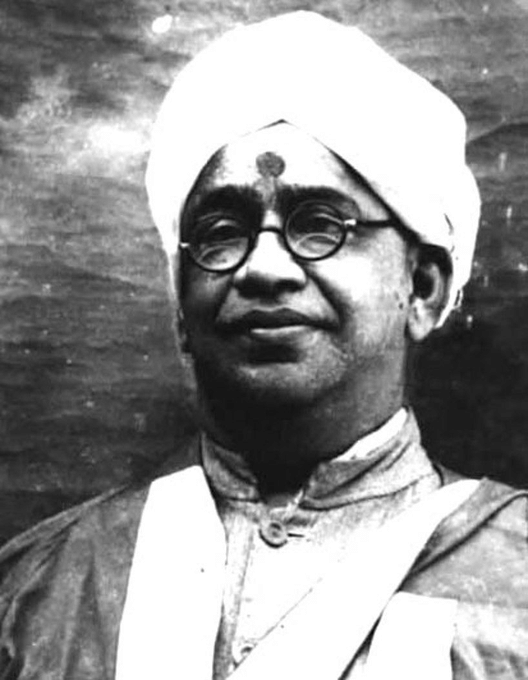
The young man was Ramanathan V. Guha, an Indian engineer whose contributions include the development of RSS, the technology that allows websites to distribute updates, and Schema.org, a vocabulary that helps search engines understand information on web pages. His story is a reminder that technological breakthroughs do not always begin with grand announcements. Sometimes, they begin with a determined young man who refuses to take no for an answer.
Guha had completed his BTech at IIT Madras in 1986 and was pursuing mechanical engineering studies at the University of California, Berkeley, when he applied to Microelectronics and Computer Technology Corporation (MCC) in Austin, Texas. He had taken just one course in artificial intelligence.
At MCC, computer scientist Douglas Lenat was leading an ambitious project called Cyc. Begun in 1984, Cyc sought to teach computers the everyday common sense that human beings acquire almost effortlessly. People understand that objects fall when dropped, that someone cannot be in two places at once, and that a penguin is a bird even though it cannot fly. Computers, however, needed such knowledge to be explicitly represented.
The challenge was to encode this vast body of ordinary knowledge in a form machines could use to reason about the world.
Guha not only joined the project but became its co-leader. He designed and built key components, including CycL, the formal language used to express its knowledge. He later co-authored a book on the project with Lenat.
His contribution went beyond writing software. While managing a team of 25 people across Austin and Palo Alto, and teaching Cyc courses at Stanford University and the University of Texas, Guha pursued doctoral research at Stanford. His subject was context: how a computer could handle statements that were true in one situation but false in another.
Consider the apparently simple statement, “Birds fly.” It is generally true, but not universally so. Penguins are birds, yet they do not fly. Without context, a computer might struggle to reconcile the two facts.
Guha’s solution helped Cyc accommodate such distinctions through what are called microtheories—collections of knowledge applicable within particular contexts. AI pioneer John McCarthy acknowledged Guha’s contribution, noting that he had incorporated contexts into Cyc, largely through microtheories.
But it was another challenge, years later, that would bring Guha’s work to millions of internet users.
In 1999, Netscape wanted to make its Netcenter portal more useful. Competing with Yahoo’s model of partnerships with major content providers posed a problem: smaller websites could struggle to secure such deals and remain invisible to users.
Guha developed the first RSS specification for Netscape. Launched on March 15, 1999, as My Netscape Network, the service allowed websites to publish feeds that could be incorporated into users’ personalised pages without negotiating individual partnership agreements. Netscape described it as the first open portal service.
Four months later, Dan Libby developed RSS 0.91, advancing the technology. Guha later recalled that Cricinfo, then a young cricket website, was the example he cited inside Netscape to illustrate the value of opening the portal to sites that might never secure a major partnership.
Yahoo adopted RSS in 2004, helping the technology gain wider acceptance.
Guha’s career would extend to other influential work, including Schema.org, which helps search engines interpret structured information published on websites.
Yet the most revealing part of his journey may remain that first rejection in Texas. Before his name became associated with technologies used across the internet, he was the young graduate willing to work at night, without an office, simply for an opportunity to contribute.
In a world that often celebrates overnight success, Guha’s story offers a different lesson: persistence may open the door, but the willingness to solve difficult problems is what keeps it open.
And sometimes, the person an institution initially turns away is precisely the person it should have made room for.