Lakshmanrao Upadhyayula
In this venerable hymn of the Śaunaka Gṛtsamāda, composed in the majestic Jagatī metre of the Rigveda, the seer invokes the divine powers through the imagery of flowing radiance, sacred fire, and the consecrated Soma. The expression “liquid Agni” signifies not merely the visible sacrificial flame, but the dynamic and fluid principle of divine energy permeating all existence. Agni is both the earthly fire kindled upon the altar and the subtle intelligence that transforms offerings into spiritual merit. He is the priest among gods, the messenger between realms, and the conscious force that conveys human aspiration to the celestial powers.
The Adhvaryu priests, versed in sacred action and ritual precision, prepare the Soma by pressing, filtering, and blending it with pure water and nourishing substances derived from the cow, the most revered symbol of abundance and life-sustaining grace. This process reflects not only ritual sanctity but a profound scientific temperament, for the Vedic sages understood that transformation requires purification, proportion, and disciplined order. Soma, in its highest sense, is the nectar of awakened consciousness. When offered into Agni, it becomes the fuel of illumination, invigorating both the sacrificer and the cosmic powers invoked.
Agni is invited to collect the oblations and strengthen himself through the offerings. This strengthening does not imply any deficiency in the divine, but reveals the reciprocal law of the universe: when human beings offer their devotion, discipline, and purified actions, the divine forces become more vividly manifest in their lives. Agni, thus nourished, grants the fruits of righteous desire and sustains the harmony between mortal and immortal realms. He consumes Soma in due seasons, indicating that sacred acts bear fruit when performed in accordance with cosmic rhythm and natural law.
The hymn recalls the gods and beneficent lords who were invited to previous sacrifices and are again summoned to partake of the freshly prepared Soma. This continuity emphasizes the Vedic vision of life as an ongoing dialogue with the divine. The sacred rite is never an isolated event, but a renewal of an eternal covenant between humanity and the universal powers. The priests prepare the offerings with care, affirming that divine grace descends where reverence, purity, and consistency are maintained.
The horses of Agni symbolize the vital energies that carry consciousness forward. Their satisfaction signifies the harmonious regulation of the senses and life forces. The healing herbs are invoked so that they may strengthen all beings and cause harm to none. In this prayer, the Vedic seers reveal an ecological and medicinal understanding of nature: plants are not inert matter, but living reservoirs of cosmic intelligence, endowed with the capacity to heal and sustain life when approached with wisdom and gratitude.
Agni, having consumed Soma within the sacred precincts, becomes the purifier who is fully satisfied by the offerings. He accepts the oblations and transforms them into subtle energies that uplift both the sacrificer and the cosmos. As the “gold-bestower,” Agni confers not merely material wealth, but the golden brilliance of insight, purity, and spiritual realization. The mention of the fourth vessel alludes to the deeper states of consciousness beyond waking, dreaming, and deep sleep, pointing toward the transcendent awareness wherein immortality is intuited.
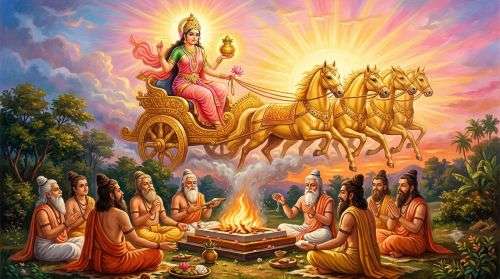
The divine Aśvins are then invoked. Their swift chariot moves wherever thought and devotion direct it. As celestial physicians, they sweeten the offerings and bestow nourishment, vitality, and restoration. Their drinking of Soma symbolizes the activation of healing forces within body and mind. They respond quickly to sincere prayer, bringing harmony to the individual and the world.
Agni is further praised as the sacred fuel, the oblation, and the divine recipient of worship. He is the provider of dwellings, both external and internal. Outwardly, he sustains homes and communities; inwardly, he establishes the purified heart as the dwelling place of divine presence. The hymns composed by enlightened seers are expressions of gratitude and revelation, carrying the vibration of truth through sound and metre.
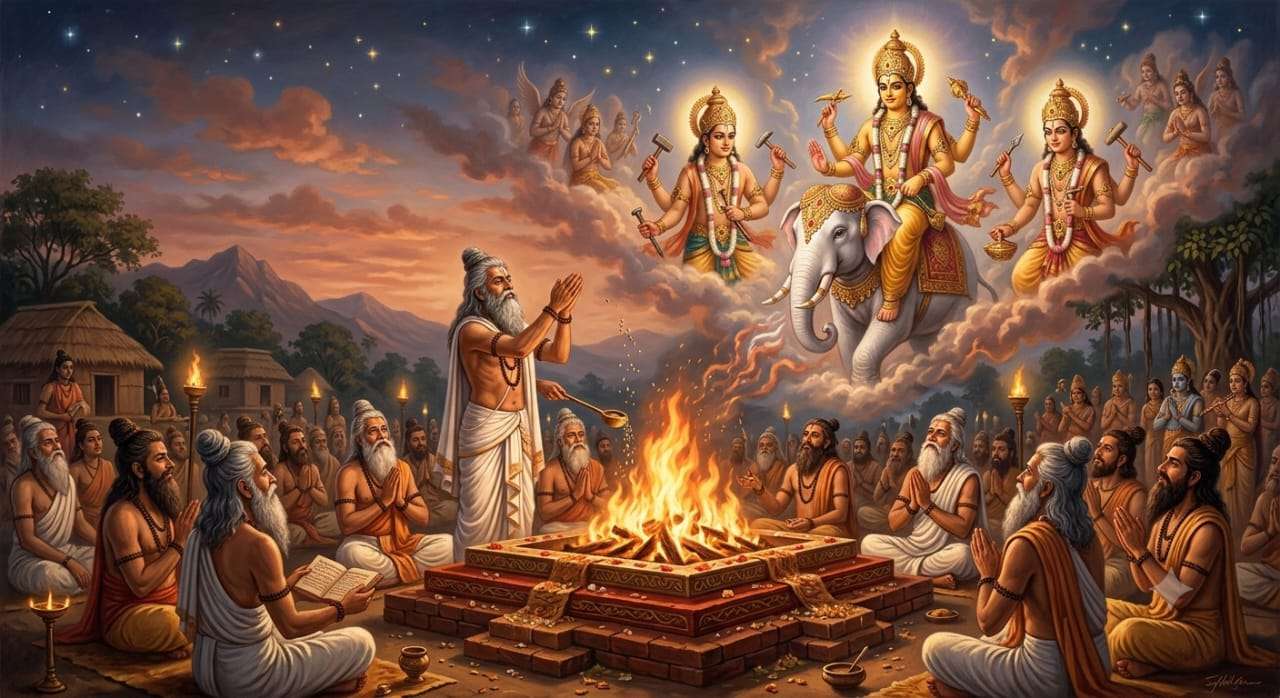
Finally, the Ribhus and the Viśve Devas are invited to partake of the Soma. The Ribhus represent mastery, ingenuity, and the power to refine the ordinary into the extraordinary. The Viśve Devas embody the totality of cosmic functions working together in perfect coordination. Their presence reveals the Vedic insight that every aspect of existence, from the smallest element to the grandest celestial force, participates in one interconnected sacrificial order.
This hymn presents the yajña as a profound synthesis of spirituality, ecology, psychology, and disciplined science. Fire transforms matter into energy; herbs heal; rhythm governs time; and consciousness is elevated through sacred sound and intentional action. The flowing Agni is the current of divine intelligence moving through all forms, while Soma is the bliss of awakened awareness. Together they reveal that when human life is aligned with truth, purity, and cosmic law, every action becomes an offering, every breath a hymn, and every moment a step toward immortality.