



Sri Yuga Narayana Perumal Temple is an ancient Vishnu temple situated at Melvenpakkam village in Ranipet district, Tamil Nadu. Traditionally known as Mahalakshmi Kshetram, the temple is unique for its manifestation of Goddess Mahalakshmi and Lord Narayana in an inseparable divine form, symbolising eternal love, harmony and prosperity. Devotees worship here seeking blessings for marital happiness, family unity and children.
The exact age of the temple is unknown. According to local tradition, the presiding deity has existed through all four Yugas. The temple is believed to be several centuries old, although its present structures have undergone renovations.
The presiding deity is Sri Yuga Narayana Perumal, accompanied by Sri Swatantra Lakshmi Nayika, a form of Goddess Mahalakshmi.
The divine couple appears in Anyonya Bhavam, representing their inseparable relationship. Another unusual feature is Adisesha depicted around the Lord’s neck like an ornament instead of serving as his customary divine couch.
The Lord is also affectionately called Pillaikaaragan Swamy, as devotees believe he blesses couples seeking children.
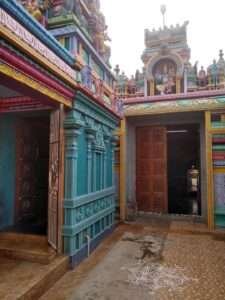
The temple follows traditional South Indian Vaishnavite architecture. Local accounts describe an earlier complex with an eleven-tier Rajagopuram, surrounding Mada streets and separate sanctums for the eight forms of Goddess Lakshmi.
Much of its former grandeur disappeared over time, and the temple was subsequently restored. Its present structure is comparatively modest, with the distinctive Lakshmi Narayana deity as its principal attraction.
Melvenpakkam was traditionally known as Mahalakshmi Kshetram because of the importance given to Goddess Lakshmi.
The temple reportedly remained neglected for several decades before devotees undertook its restoration. Sri Kanchi Mahaperiyava is traditionally believed to have meditated here in 1957. A major consecration was conducted in 2005, helping revive regular worship.
According to the temple’s sacred tradition, Lord Narayana and Goddess Mahalakshmi manifested together at Melvenpakkam in a self-manifested divine form. Unlike conventional representations where Goddess Lakshmi is seated separately on the Lord’s lap, here the divine couple appears in complete union, symbolising the inseparable nature of divine protection and compassion.
Local belief holds that Lord Narayana manifested in different sizes during the four Yugas. His form is said to have gradually diminished from a towering appearance in Satya Yuga to approximately two and a half feet in the present Kali Yuga, symbolising his continuing presence through the ages.
The temple is traditionally associated with Ashta Lakshmi, the eight manifestations of Goddess Mahalakshmi representing different forms of prosperity and well-being. It is believed that these divine manifestations unite in the form of Sri Mangala Lakshmi, blessing devotees with happiness, prosperity and spiritual progress.
Another interesting legend concerns Lord Hanuman. During his search for Goddess Sita in Lanka, Hanuman killed several demons guarding Ashoka Vana. According to local tradition, he later worshipped Lakshmi Narayana at Melvenpakkam to obtain relief from the spiritual consequences associated with these killings.
The Lord’s unusual depiction with Adisesha around his neck is also considered spiritually significant. Devotees believe worshipping this form helps overcome Naga Dosha and difficulties associated with Rahu and Ketu.
The most distinctive aspect of the temple is the divine couple’s Anyonya Bhavam, representing perfect harmony and affection. Couples experiencing marital difficulties traditionally worship here seeking mutual understanding, renewed affection and family happiness.
The Lord is also revered as Pillaikaaragan Swamy, with local traditions describing the blessings received by childless couples who prayed here with devotion.
Fridays are considered especially auspicious for worshipping Goddess Mahalakshmi. Devotees offer milk payasam and participate in special prayers and Thirumanjanam.
The temple is particularly visited by devotees seeking blessings for marriage, childbirth, family harmony and prosperity.


