



The Sacred Temple Celebrating the Divine Bond Between Lord Yama and His Sister Goddess Yamuna
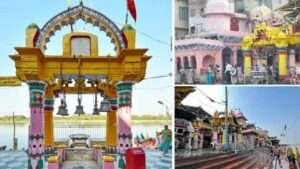
Sri Yamuna Dharmaraj Temple is a sacred temple situated near Vishram Ghat on the banks of the River Yamuna in Mathura, Uttar Pradesh. Dedicated to Lord Yama, the God of Death and Dharma, and his sister Goddess Yamuna, the temple holds special significance during Yama Dwitiya, also celebrated as Bhai Dooj/ Bhav Beez. Unlike most temples associated with Lord Yama, this shrine highlights his affectionate relationship with his sister and the blessings of longevity, protection and family harmony associated with their worship.
The temple is associated with ancient religious traditions of Mathura and the worship of Yamuna and Dharmaraj. Although its sacred associations are considered very old, the exact age of the present temple structure is not reliably documented.
The principal deities are Lord Yama, also known as Dharmaraj, and Goddess Yamuna, who are traditionally regarded as the children of Surya, the Sun God.
Lord Yama represents righteousness, justice and the consequences of human actions, while Goddess Yamuna symbolises purity, compassion and divine protection. Their worship together is particularly significant during Yama Dwitiya.
Located within the sacred surroundings of Mathura’s ghats, the structure reflects a modest North Indian architectural style, with greater emphasis on the worship of the deities than on elaborate ornamentation.
The nearby Vishram Ghat, with its stone steps descending towards the Yamuna, is an important pilgrimage centre where devotees perform sacred bathing rituals and offer prayers.
Mathura is one of India’s most ancient sacred cities, closely associated with Lord Krishna and the River Yamuna.
The worship of Yamuna and Dharmaraj has been preserved through local traditions and pilgrimage practices. Vishram Ghat is also traditionally believed to be the place where Lord Krishna rested after defeating Kamsa.
The temple is especially associated with Yama Dwitiya, when brothers and sisters visit the sacred river and seek blessings for long life and protection from misfortune.
According to Hindu tradition, Lord Yama and Goddess Yamuna were born to Surya, the Sun God, and his consort Sanjna. Yama became the divine judge responsible for maintaining Dharma and determining the consequences of human actions, while Yamuna descended to Earth as a sacred river, bringing purity and blessings to humanity.
Although they shared a deep bond of affection, Lord Yama was constantly occupied with his duties as the ruler of Yamaloka. Goddess Yamuna repeatedly wished that her brother would visit her home and accept her hospitality. However, because of his responsibilities, Yama could not fulfil her request for a long time.
Finally, on Kartik Shukla Dwitiya, the second lunar day of the bright fortnight of Kartika, Lord Yama visited his beloved sister. Overjoyed by his arrival, Goddess Yamuna welcomed him with great affection. She performed his aarti, applied a sacred tilak on his forehead, and offered him a delicious meal prepared with devotion.
Lord Yama was deeply touched by his sister’s love and hospitality. Pleased with her affection, he offered to grant her any boon she desired.
Goddess Yamuna did not ask for wealth, power or personal happiness. Instead, she requested that brothers and sisters who bathed together in her sacred waters on this auspicious day should receive divine protection from the fear of untimely death and the sufferings associated with Yamaloka.
Moved by her selfless request, Lord Yama granted the boon. He blessed the occasion and declared that those who honoured the sacred bond between brothers and sisters would receive his grace and protection.
Since then, this day has been celebrated as Yama Dwitiya or Bhai Dooj, symbolising the eternal affection between brothers and sisters. The sacred bathing tradition at Vishram Ghat in Mathura is believed to commemorate this divine meeting between Yama and Yamuna.
Yama Dwitiya (Bhai Dooj) is the most important festival associated with this temple. Every year, large numbers of brothers and sisters gather at Vishram Ghat, traditionally holding hands while taking a sacred dip in the River Yamuna.
Following the bath, sisters apply tilak to their brothers’ foreheads and pray for their longevity, health, and protection. Devotees then visit the Yamuna-Dharmaraj shrine and offer prayers to both deities.
The daily Yamuna Aarti at Vishram Ghat is another important spiritual tradition, attracting pilgrims throughout the year.


