


The ancient Sri Nrusimha Temple at Shankatirtha is on the banks of the sacred Godavari River, about 19 kilometres from Nanded in Maharashtra. Surrounded by the river, old ghats, and several ancient shrines, this relatively little-known temple is an important sacred centre dedicated to Lord Nrusimha. Shankatirtha itself is traditionally associated with the sacred Godavari and the right-turning conch shells found in its waters.
The temple is generally dated to the medieval period, broadly around the 12th–13th centuries. Its stone construction and architectural features reflect the temple-building traditions of the Deccan, with some descriptions associating it with the later Chalukyan period and others with the Hemadpanti tradition.
The presiding deity is Lord Nrusimha, the fourth incarnation of Lord Vishnu who appeared to protect Prahlada and destroy Hiranyakashipu.
The four-armed idol is seated peacefully on a Vajrapitha, holding the Shankha, Chakra, Gada and Padma. A small figure of Prahlada is seen at his feet. The Prabhavali behind the deity beautifully depicts the ten incarnations of Lord Vishnu.
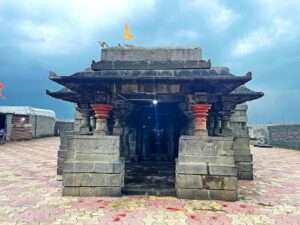
Built mainly of stone, the temple consists of a Mukhamandapa, Sabhamandapa, Antarala and Garbhagriha. Its carved pillars feature scenes from the Ramayana and Mahabharata, deities and Kirtimukhas.
The doorway of the sanctum has richly carved stone jambs, while the ceiling is dome-shaped. The temple complex is enclosed by an old stone fortification and a flight of steps leads down towards the Godavari ghat.
An ancient Mahadeva shrine stands beside the Nrusimha temple, with a black-stone Nandi and Shiva Linga, adding a Shaiva dimension to this Vaishnava sacred centre.
Shankatirtha has long been regarded as a sacred settlement on the banks of the Godavari. The village is also known for the presence of distinctive conch shells in the river region and for its ancient temples. Maharashtra’s official tourism publication describes the Shankatirtha area as being about 20 km from Nanded and notes the Chalukyan architectural character of its ancient temple heritage.
The most distinctive historical tradition of Sri Nrusimha Temple is its association with Adi Shankaracharya. According to local tradition and Shastric accounts recorded at the site, Shankaracharya visited Shankatirtha during his travels across Bharat. At that time, various philosophical schools were influential in the region. He is traditionally believed to have engaged scholars in philosophical discussions and established the worship of Lakshmi Nrusimha at this sacred spot.
Shankatirtha is regarded as a sacred tirtha on the Godavari, and its waters are traditionally considered especially holy for ritual bathing and worship. The name of the place is also associated with the presence of right-turning conch shells in the river, which are regarded as auspicious in Hindu tradition.
The most fascinating tradition associated with Sri Nrusimha Temple is its connection with Adi Shankaracharya. According to longstanding local and Shastric tradition recorded by the Shankara Jyoti Prakasha project, Adi Shankaracharya visited Shankatirtha during his extensive travels across Bharat.
During his stay, he is believed to have engaged scholars belonging to different philosophical traditions in discussions on Vedanta and other schools of thought. Tradition further associates his visit with the nearby Vimaleshwara and Kaleshwara sacred sites, suggesting that Shankatirtha was part of a larger spiritual centre during his journey through the Deccan.
The temple tradition particularly remembers Shankaracharya for the consecration of a Lakshmi Nrusimha idol at Shankatirtha. According to the local account, the original idol associated with his consecration was later accidentally immersed in the waters during a period of restoration. Another idol was subsequently installed at the temple.
An unusual feature connected with the Shankara tradition is found in the temple’s sculptural heritage. A figure of a Yati, or ascetic, is represented in the temple’s architectural decoration, and local tradition identifies this figure with Adi Shankaracharya. Hanuman is represented above the ascetic figure, adding to the symbolic association preserved by the temple tradition.
The presence of the ancient Mahadeva shrine beside the Nrusimha temple is also significant. The two shrines preserve Shaiva and Vaishnava worship within the same sacred complex, reflecting the broad Hindu tradition of worshipping different forms of the Divine. The local tradition associates this harmonious sacred landscape with the spiritual work of Shankaracharya.
The Godavari itself forms an essential part of the Sthalapurana of Shankatirtha. Pilgrims traditionally bathe at the sacred ghat before worshipping Lord Nrusimha. A traditional Godavari Parikrama associated with the region begins at the Markandeya Temple, proceeds to Shankatirtha and returns to the starting point, making the temple part of a wider sacred circuit along the river.
Nrusimha Jayanti is the principal festival celebrated at the temple. Special worship is performed for the deity and a palanquin procession is taken through the village with traditional music and devotional celebrations. Large numbers of devotees from Shankatirtha and surrounding villages participate in the festivities.

