



Sri Machenamma Thalli Temple is a unique village goddess temple located in Pedamallam village of Achanta Mandal in the Godavari region of Andhra Pradesh. Sri Machenamma Thalli is regarded as the protective village deity and is worshipped with great devotion by the people of Pedamallam and the surrounding villages. The temple is especially known for its unusual shrine and the sacred images of the goddess and her child.
According to local tradition, the temple has a history of about 400 years. The shrine has remained an important place of worship for generations, with its distinctive traditions continuing to be preserved by the local community.
The presiding deity is Sri Machenamma Thalli, worshipped as the mother and guardian of the village. A unique feature of the temple is that the stone images of Machenamma and her child are situated inside a pit about five feet deep. Only the upper portions of the images are visible to devotees. Machenamma Thalli is believed to protect the people and bless devotees who pray to her with faith.
The temple is very different from a conventional Hindu temple. It does not have a regular enclosed sanctum or a traditional gopuram. The shrine has openings above the sacred images so that sunlight and rain can fall directly on the goddess and her child. A traditional covering is provided around the shrine.
According to local belief, this unusual arrangement was made following the instructions of the goddess herself. When the villagers planned to construct a proper temple, Machenamma is said to have appeared in a dream and instructed them that sunlight and rain should reach her and her child. The villagers followed her wishes, giving the temple its distinctive appearance.
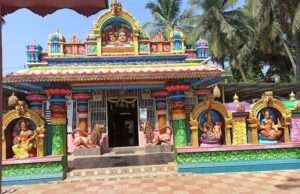
The history of the temple is closely connected with the traditional story of Machenamma, who is regarded as the daughter of Pedamallam. Over generations, the sacred spot associated with her became an important village shrine. Rather than changing it into a conventional temple, the villagers have preserved the original form and traditions associated with the deity.
According to the local sthalapurana, Machenamma was a young woman from Pedamallam who was deeply devoted to the goddess. After her marriage, her husband left on a pilgrimage to Kashi along with his teacher and other disciples. During his absence, Machenamma gave birth to a child.
When her husband returned after a long period, he was surprised to see the child and, according to the traditional story, doubted Machenamma’s explanation. She was deeply hurt by the suspicion and decided to return to her native village along with her child.
When she reached the boundary of Pedamallam, Machenamma prayed to Mother Earth to accept her if she was innocent. The legend says that the earth opened and she began to enter it along with her child. Her husband realised his mistake and tried to pull her back, but he could not save her. Machenamma and her child are believed to have become sacred stone forms within the earth.
The villagers later tried to remove the stone idols from the ground but were unsuccessful. The idols remained firmly in the earth, with only their upper portions visible. The villagers therefore decided to build a shrine at the same place and began worshipping Machenamma and her child.
The traditional account further says that when the villagers planned a larger temple, the goddess appeared in a dream and instructed them that she should continue to receive sunlight and rain. The villagers followed this divine instruction and constructed the shrine with an opening above the sacred idols. This belief explains the unusual architecture that continues to distinguish the Machenamma Thalli Temple from ordinary temples.
Special worship is performed at the temple on important auspicious days, while Sundays are considered particularly significant for worship. Devotees from Pedamallam and neighbouring areas visit the shrine, offer prayers and naivedyam, and seek the blessings of Machenamma Thalli. Annual celebrations and special occasions attract large numbers of devotees to the temple.

