



Sri Dhenugiri Lakshmi Narasimha Swamy Temple is situated on Avalabetta Hills in Mandikallu Hobli, Chikkaballapur district, Karnataka. Avalabetta is about 6 km from Mandikallu and is traditionally known as Dhenugiri. The name is derived from ‘Dhenu’, meaning cow, and ‘Giri’, meaning hill.
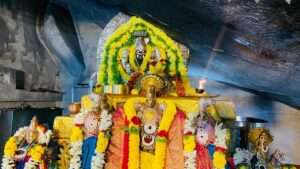
The temple is a small and traditionally revered hill shrine dedicated to Sri Lakshmi Narasimha Swamy. The main shrine is situated inside a natural cave-like formation beneath a large rock, giving the temple a distinctive character. A shrine dedicated to Lord Hanuman is located adjacent to the cave shrine.
The Sri Lakshmi Narasimha Swamy Temple at Avalabetta is traditionally regarded as a very ancient shrine, and several accounts describe it as being more than 1,000 years old. However, a precise construction date has not been established through a published inscription or authenticated archaeological record.
The presiding deity is Sri Lakshmi Narasimha Swamy, the form of Lord Vishnu accompanied by Goddess Lakshmi. Lord Narasimha is worshipped as the divine protector who appeared to save Prahlada and destroy Hiranyakashipu.
The main deity is a small idol of Lakshmi Narasimha enshrined within the natural cave shrine. A shrine dedicated to Lord Hanuman is situated beside the main shrine, adding to the Vaishnava character of the sacred place.
The temple has a simple cave-temple character and is closely integrated with the natural rock formation of the hill. The main shrine is sheltered beneath a large natural boulder, with the rock itself forming an important part of the sacred setting.
The sanctum is modest in size and houses the small idol of Sri Lakshmi Narasimha Swamy. The adjoining Hanuman shrine and the natural rocky surroundings add to the distinctive appearance of the temple.
The history of the temple is preserved mainly through local traditions and generations of worship rather than detailed written historical records. Sri Lakshmi Narasimha Swamy has long been revered by the surrounding villages, and the temple continues to hold an important place in the religious life of the region.
The history of the shrine is particularly connected with the sacred-cow tradition of Dhenugiri. The practice of offering the first milk of cows to the Lord is an important living tradition associated with the temple and reflects the continuing relationship between the deity and the surrounding village communities.
The Sthalapurana of Dhenugiri is associated with the sacred cow. According to local tradition, during the Samudra Manthana, or the churning of the cosmic ocean, many divine beings and sacred objects emerged from the ocean. Among them was the holy celestial cow.
It is believed that the sacred cow eventually came to this hill and landed at Avalabetta. A rock on the hill bears impressions that devotees traditionally identify as the hoof marks of the divine cow. These marks are regarded as sacred and form an important part of the temple’s Sthalapurana.
The association with the sacred cow is believed to have given the hill its traditional name, Dhenugiri. ‘Dhenu’ means cow and ‘Giri’ means hill, making Dhenugiri literally the ‘Hill of the Cow’.
The legend continued to be reflected in the life of the surrounding villages. Large numbers of cattle traditionally frequented the hill and grazed in its surroundings. The connection between the cattle and the sacred hill consequently became an important part of local religious tradition.
One of the most significant customs associated with the temple is the offering of the first milk of a cow to Sri Lakshmi Narasimha Swamy. Nearby villagers traditionally offer the first milk produced by their cows to the Lord as an expression of gratitude and devotion.
Narasimha Jayanti is the principal festival associated with Sri Lakshmi Narasimha Swamy and is observed with special prayers and worship. Devotees also visit the shrine on auspicious days associated with Lord Vishnu and Goddess Lakshmi.
Local traditions also include special worship during the month of Shravana, particularly on Saturdays. The temple continues to be a place of regular worship for devotees from the surrounding villages and nearby areas.


