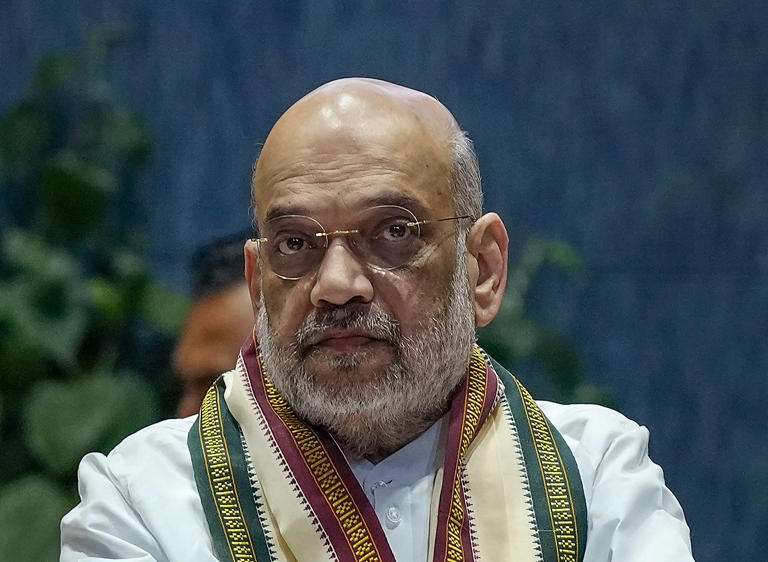
New Delhi: Union Home Minister Amit Shah on Saturday directed the high-level committee on demographic change to study the shift in population structure in border districts, officials said.
Chairing the meeting of the committee, Shah also asked it to visit border areas, metro cities, and industrial towns for an assessment of changes because of illegal migration and other unnatural causes, they said.
The Home Ministry had formed a high-level committee to assess demographic changes across India due to “illegal immigration and other unnatural causes” and suggest measures to address these challenges.
Headed by former Supreme Court judge Justice Prakash Prabhakar Naolekar, the panel includes the Census Commissioner Mritunjay Kumar Narayan, former IAS officer Durga Shankar Mishra, former IPS officer Balaji Srivastava and economist Dr Shamika Ravi. The Joint Secretary in the Foreigners Division-I of the MHA serves as the committee’s member secretary.
During the meeting, Shah reiterated the importance of the exercise, describing demographic change as a matter closely linked to national sovereignty, national security and law and order. He had earlier said that significant shifts in population patterns could also have far-reaching effects on social structures and the preservation of tribal communities.
According to the government, the committee has been tasked with conducting a comprehensive and scientific assessment of demographic changes occurring in different parts of the country. It will examine the causes behind such changes, identify emerging trends and recommend policy, legislative, and administrative measures to address them.
The panel’s mandate includes studying the impact of illegal immigration, cross-border activities, economic opportunities and socio-environmental factors that may influence population movements. It will also investigate what the government describes as abnormal settlement patterns and orchestrated migration.
As part of its work, the committee will analyse demographic shifts across religious and social communities, particularly in areas where population trends diverge significantly from broader regional or national patterns.
The panel is expected to deliberate on challenges arising from demographic changes and evaluate their social, economic, and security implications. Its findings will form the basis for recommendations aimed at creating a structured and long-term framework to deal with such issues.
Among its key responsibilities, the committee has been asked to propose a streamlined and permanent mechanism for the identification, detention and deportation of illegal immigrants residing in the country. The government has said the process should be legal, fair, and time-bound.
The committee’s recommendations are expected to help shape future policy responses to demographic changes and migration-related concerns, particularly in sensitive border areas and regions witnessing significant population shifts.