



The gloves are off, with political rivals indulging in increasingly cheap allegations and personal barbs against one another. But beyond the political slugfest, what are the realities, particularly regarding the performance of the Prime Ministers who have shaped independent India? After all, India’s present status in the comity of nations has been profoundly influenced by the strategic decisions — and, at times, blunders — of its Prime Ministers.
Viewed without prejudice or partisan bias, some Prime Ministers appeared more concerned with cultivating a personality cult or securing an enduring political legacy than with the larger interests of “We the People”, particularly the poor, and the nation’s long-term security interests. In the process, several decisions had consequences that continue to haunt India in the form of unresolved security challenges, economic distortions, social divisions and a deeply polarised political discourse.
Jawaharlal Nehru was India’s first Prime Minister and remained in office for more than 16 years, from 1947 to 1964. In his book Nehru’s 97 Major Blunders, first published in 2016, Rajnikant Puranik examined what he considered Nehru’s major failures under several heads, including the integration of princely states, external security, foreign policy, internal security, economy, misgovernance, political conduct and dynastic politics. Subsequent editions expanded the list considerably.
Among the principal criticisms levelled against Nehru are his handling of Jammu and Kashmir, the decision to internationalise the Kashmir issue, Article 370, his approach towards Tibet, the failure to settle the boundary question with China, the 1962 Himalayan debacle, the politicisation of the armed forces, opposition to the development of nuclear weapons, the Indus Waters Treaty, his handling of India’s relationship with China, neglect of the Northeast, the Licence-Permit-Quota system, excessive bureaucratisation, inadequate attention to agriculture, education and healthcare, the language question and the emergence of dynastic politics.
Lal Bahadur Shastri, despite his reputation for personal integrity and decisive leadership during the 1965 war, has also been criticised for the outcome at Tashkent. Indian forces had captured the strategically important Haji Pir Pass and other territory during the war, but these gains were subsequently returned under the Tashkent Agreement. Whether this amounted to a strategic blunder remains a matter of historical debate, but it is certainly a legitimate subject for scrutiny.
Indira Gandhi’s record presents another complicated chapter. The Congress split, nationalisation of banks and other industries, the Emergency, the concentration of political power, the elevation of Sanjay Gandhi, the handling of Punjab and the eventual Operation Blue Star, corruption and the controversial use of institutions of the State have all attracted severe criticism. Her decision to encourage Jarnail Singh Bhindranwale in the early stages of Punjab’s political crisis is particularly contentious and deserves examination in any assessment of the decisions that ultimately culminated in Operation Blue Star.
Rajiv Gandhi’s tenure was similarly marked by major controversies: the handling of the 1984 anti-Sikh violence, the Bhopal gas tragedy and its aftermath, the Shah Bano episode, the Ayodhya controversy, allegations of minority appeasement, the Bofors scandal and the Indian Peace Keeping Force intervention in Sri Lanka. The IPKF was sent to Sri Lanka in 1987 under the Indo-Sri Lanka Accord, initially to help implement the agreement and disarm the LTTE. Instead, Indian troops became embroiled in combat with the very organisation they had been expected to help disarm. The eventual withdrawal in 1990 remains one of the most controversial episodes of Indian foreign and military policy.
The episode also carried an extraordinary humiliation for India. On July 30, 1987, during a ceremonial farewell in Colombo, a Sri Lankan naval rating swung the butt of his rifle at Rajiv Gandhi. The Prime Minister instinctively ducked; the blow struck his shoulder rather than his head. Contemporary reports and parliamentary records confirm the incident.
Atal Bihari Vajpayee too had his share of strategic miscalculations. His Lahore Bus Yatra was a bold diplomatic initiative, but the Kargil conflict soon demonstrated the limitations of India’s peace overtures towards Pakistan. The failed Agra Summit was another reminder that diplomatic gestures cannot substitute for a realistic assessment of the adversary.
Manmohan Singh’s record cannot be assessed without reference to the controversies that engulfed the UPA years, including the 2G spectrum controversy, the coal allocation controversy and a series of other corruption allegations. His peace initiative with Pakistan, including the 2008 Sharm el-Sheikh meeting, also drew criticism for the manner in which Kashmir and terrorism were addressed in the joint statement.
Narendra Modi too is not beyond criticism. His unscheduled December 2015 visit to Lahore to meet Nawaz Sharif was a dramatic diplomatic gesture that produced little lasting benefit, while demonetisation remains one of the most consequential and controversial economic decisions of his tenure. The subsequent repeal of the three farm laws after prolonged protests was another instance where a major policy initiative was eventually withdrawn.
The point, therefore, is not that one Prime Minister alone committed blunders while others were infallible. Every Prime Minister has made decisions that deserve historical scrutiny. The real question is whether those decisions strengthened India’s security, economy, institutions and social cohesion — or created problems that succeeding generations were forced to confront.
India’s relatively slow economic development for decades cannot be attributed to one individual alone. The socialist model, the Licence Raj, excessive state control, bureaucratic restrictions, inadequate infrastructure and corruption all played a role. Similarly, persistent weaknesses in education and healthcare reflect decades of inadequate investment and poor policy execution. The shortcomings in defence preparedness and India’s prolonged dependence on imported military hardware also have deep historical roots.
On the external affairs front, India’s continuing security challenges with China and Pakistan are likewise the cumulative consequence of decisions taken over decades. Nehru’s idealistic approach to China, the handling of Kashmir, the 1962 war, the subsequent Pakistan conflicts, the Sri Lankan intervention and various diplomatic initiatives all form part of a complicated strategic history that cannot be reduced to the achievements or failures of any single Prime Minister.
The most controversial assessment concerns Nehru’s strategic outlook. Accounts of his early interaction with General Sir Robert Lockhart, India’s first Commander-in-Chief after Independence, quote Nehru as dismissing the need for a defence plan and arguing that India faced no immediate military threat. Such accounts have often been cited as evidence of the excessively idealistic approach to national security that characterised the early years of the Republic.
The subsequent events were a brutal reminder that strategic complacency carries a price. Pakistan-backed tribal forces invaded Jammu and Kashmir in October 1947, beginning the first Indo-Pakistan war. India eventually intervened militarily after the Maharaja’s accession, but the war ended with a ceasefire that left Pakistan in possession of a substantial part of the territory. The Kashmir dispute has remained unresolved ever since.
Nehru’s approach towards China produced an equally enduring legacy. The “Hindi-Chini Bhai-Bhai” optimism could not prevent the 1962 war, nor did it adequately prepare India for the military challenge posed by China. The consequences of that strategic misjudgment continue to influence India’s security calculations.
Shastri’s decision at Tashkent to return the territory captured during the 1965 war, including Haji Pir, remains debatable. Indira Gandhi, meanwhile, had a vastly stronger bargaining position after the 1971 war, with approximately 90,000 Pakistani prisoners of war in Indian custody. Critics argue that the Simla Agreement did not extract a final settlement of the Kashmir question despite India’s overwhelming leverage. That criticism deserves serious consideration, even though the agreement also converted the ceasefire line into the Line of Control and established a bilateral framework for resolving outstanding issues.
Rajiv Gandhi’s Sri Lanka policy was another costly misadventure. The IPKF intervention resulted in considerable Indian military casualties and eventually ended with its withdrawal without achieving the original political objectives. The episode remains a cautionary example of the dangers of military intervention without a sufficiently clear and achievable strategic end-state.
In retrospect, Lal Bahadur Shastri and Gulzarilal Nanda stand out for their relatively modest personal lifestyles. Nanda, in particular, is remembered for his austere life after leaving office. The contrast between such personal simplicity and the increasingly elaborate political cultures that followed is worth reflecting upon.
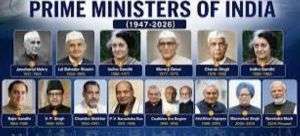
The larger lesson is that political leadership must ultimately be judged by consequences, not rhetoric, image-building or personality cults. Every Prime Minister — from Nehru, Shastri, Indira Gandhi, Rajiv Gandhi, Morarji Desai, V. P. Singh, P. V. Narasimha Rao, H. D. Deve Gowda, I. K. Gujral, Vajpayee and Manmohan Singh to Modi — should be subjected to the same rigorous historical scrutiny.
That is why political leaders, including Rahul Gandhi, would do well to study not merely the achievements but also the failures and strategic miscalculations of India’s Prime Ministers. Political arguments cannot be built merely on selective history, convenient outrage or allegations fired from the hip. If leaders shoot from the hip out of political desperation, they may ultimately expose not their opponent’s weakness but their own intellectual bankruptcy.
The media and the intellectual class have an equally important responsibility. Instead of viewing India’s history through myopic ideological lenses, they must provide a deeper and more balanced assessment of the achievements, failures, decisions and consequences of successive governments. The Aam Aadmi deserves to know not merely who claims credit for India’s successes, but who made the decisions that created its enduring problems.
Only such an honest reckoning can help the people understand why India finds itself where it is today — and what must be done to ensure that the mistakes of the past are not repeated.

