



As a senior citizen, a columnist of this exciting news portal—or e-paper, by whichever name one wishes to call it—and perhaps the eldest member of its Editorial Advisory Board, I beg to differ, albeit respectfully, with our Editor’s Special Edit describing Prime Minister Narendra Modi’s decision as a “surrender.”
Yes, I understand why the word was used. Tempers were running high. Political passions were overflowing. The resignation of Union Education Minister Dharmendra Pradhan, who had become the face of a raging controversy, naturally evoked strong reactions.
Yet, after over seven decades of watching Indian politics evolve—from one-party dominance to coalition compulsions and now decisive leadership—I have learnt one fundamental lesson: in politics, retreat is not always surrender. Sometimes, it is strategy. And at times, it becomes the most potent political weapon.
This, in my personal view, is one such moment.
Narendra Modi and Amit Shah have repeatedly demonstrated that they are willing to concede a battle if it helps them win the larger political war. Their politics has rarely been reactionary; it has invariably been calibrated. The present decision, therefore, must be viewed not in isolation, but in the larger political backdrop of what has unfolded over the past few weeks.
What was essentially a students’ agitation was fast slipping into a larger political movement. Political parties, sensing an opportunity, naturally attempted to jump onto the bandwagon. Nothing is surprising about it. Politics thrives on opportunities.
The Congress party was no exception.
Rahul Gandhi—whom I consciously refer to as Rahul Gandy, as I personally do not subscribe to the appropriation of Mohandas Karamchand Gandhi’s surname by the family—attempted to politically appropriate the movement by staging a separate dharna near the Prime Minister’s residence at a highly sensitive security zone. Ironically, several student groups themselves questioned such political interventions.
This is not the first time Congress has attempted political appropriation. One only needs to recall how former Bihar Chief Minister Nitish Kumar painstakingly attempted to stitch together an Opposition platform before the 2024 Lok Sabha elections, only to watch Congress eventually emerge as its principal political beneficiary.
Yes, Congress improved its tally substantially in Parliament. But numbers alone do not build trust. If anything, the post-2024 political developments demonstrated the trust deficit that Congress created among several of its allies. Political relationships with parties like the Aam Aadmi Party, the Samajwadi Party and even Mamata Banerjee’s Trinamool Congress increasingly became transactional rather than ideological.
Against this political backdrop, the Modi government’s present decision assumes greater significance.
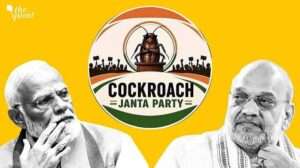
By conceding the demand, the BJP-led NDA government has achieved three political objectives simultaneously.
First, it has acknowledged the concerns of the agitating student community, irrespective of whether their numbers constitute a minuscule percentage of India’s overall student population.
Second, it has effectively taken the wind out of the Congress-led Opposition’s sails. The credit, politically speaking, would now belong either to the students or even to those social media-driven political formations spearheading the agitation—but certainly not to an Opposition desperately searching for an emotive issue to revive itself politically.
Third, and perhaps most importantly, it has prevented Parliament from becoming a permanent casualty of political theatrics. The Winter Session had virtually lost its opening week amidst repeated disruptions. The declaration of a Sansad March on the very first day of Parliament’s session was hardly coincidental. Politics, after all, is about timing.
Therefore, what appears to many as political capitulation may actually be another layer of the Modi-Shah Chanakya Neeti.
There is another dimension that deserves equal attention.
The Modi government has consistently projected itself as a government of aspirations—particularly the aspirations of India’s youth. It would have been politically and morally imprudent to allow a students’ agitation to snowball into a larger confrontation between the State and its young citizens.
The government perhaps realised that no victory over protesting students can ever be celebrated politically. There are occasions when empathy must prevail over ego.
This government has invested enormous political capital in building India’s startup ecosystem. Thousands of young entrepreneurs today are scripting extraordinary success stories. Skyroot Aerospace sending its first rocket into space using ISRO’s launch facilities was not merely a technological achievement; it symbolised the aspirations of a new India. Similar stories are unfolding in semiconductor technologies, drones, defence manufacturing, artificial intelligence and several frontier technologies.
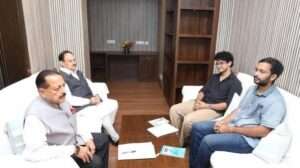
India’s youth today are creating wealth, building technologies and redefining entrepreneurship. Why then would any government willingly alienate even a small section of this demographic dividend?
That precisely explains this decision.
Dharmendra Pradhan may have become the political casualty of the moment, notwithstanding his role in introducing educational reforms and handling complex challenges during his tenure. Political sacrifices are neither new nor uncommon in parliamentary democracies. Ministers have resigned for far lesser reasons in mature democracies across the world.
Sometimes, individuals sacrifice office for institutional stability.
More importantly, I do not believe this is the end of the story. If one has carefully observed Narendra Modi’s political functioning over the past decade, retreat is invariably followed by regrouping and returning with stronger institutional and legal frameworks.
I have little doubt that the government will revisit larger structural issues relating to examinations, private coaching institutions, regulatory mechanisms and exploitative educational practices that have financially devastated countless middle-class families. The debate surrounding commercialisation of education and the psychological pressures imposed upon students remains far from over.
The tragic loss of young lives connected with examination-related stress is a matter deserving compassion and deeper societal introspection. The reasons may vary from case to case and must never become subjects of political exploitation.
Students cannot and should never become political pawns.
That, perhaps, is the larger message behind the government’s decision.
Therefore, I respectfully disagree with the characterisation of Narendra Modi’s decision as a “surrender”. History teaches us that great generals occasionally retreat—not because they are defeated, but because they understand the battlefield better than their adversaries.
In my considered view, this is not surrender. It is a calculated political retreat—temporary, strategic and perhaps necessary—which may eventually pave the way for far more substantive reforms in India’s educational ecosystem.
And if Narendra Modi’s political journey over the last twelve years has taught us anything, it is this—never mistake his silence for weakness or his retreat for defeat.


On reading this, the reader would be tempted to agree with it in toto. Yes, the game is not over. Perhaps my senility or being cynical because of age, I will go a step further. There is a saying in Telugu that suspicion was born before human being came into existence. That’s how we famously say that one doesn’t believe his own shadow fits my suspicion in this regard.
I strongly feel that right from the so called accidental remark from CJI to formation of CJP leading to DP’s resignation looks more like a well orchestrated musical drama and the next episode is on its way. I see a Raghav Chadha in CJP’s Dipke and a Anna Hazare in Sonam Wangchuk who might have been well tutored and trained (or even threatened) during his stay in Tihar jail.
This is just to ensure that people are made to remain as fools which they are, lest they become suddenly intelligent; they can push Rahul Gandhi into it and as usual show him his place of being a bigger fool. With due respect to NEET, statistically it constitutes that only 0.178 % of our population which is at stake. For such a small problem, such a big noise smacks of any viable reason of getting into such a big uproar. All politicians and parties are united when it comes to taking the people for a ride.
But the bottomline the game is still there to continue remains pretty valid and the duo of Mod-Shah will emerge stronger as time passes.