



As the seventeenth day of the Kurukshetra war drew to its close, the battlefield stood transformed into a desolate wilderness of shattered chariots, fallen elephants, broken banners, and lifeless heroes. The blazing wrath of Arjuna, guided by the wisdom and irresistible will of Sri Krishna, swept across the Kaurava ranks like a raging forest fire driven by a mighty wind. Wherever Arjuna’s celestial arrows descended, entire divisions vanished without a trace, leaving no path for survivors to follow. Drona, Karna, Shalya, Ashwatthama, and countless renowned warriors had, at different times, united their strength in desperate attempts to shield Jayadratha from the vow-bound son of Pandu. Yet Arjuna surpassed every obstacle, pierced every defensive formation, and fulfilled his solemn pledge by taking the life of Jayadratha before the sun disappeared beyond the horizon. Witnessing such an unimaginable feat, Duryodhana wondered in silent disbelief whether any ordinary human being could accomplish deeds of such overwhelming power.
Kripacharya, the venerable preceptor whose wisdom remained undisturbed even amidst ruin, surveyed the battlefield with sorrowful eyes. Turning toward Duryodhana, he spoke with profound concern. “The seventeen days of relentless warfare have exhausted our soldiers. Their spirits are broken, their confidence has faded, and fear has entered every heart. The warriors who stand with the sons of Pandu continue to draw strength from their unwavering faith in Arjuna, the son of Indra, whose enthusiasm remains untouched despite the endless bloodshed. Their determination has not diminished, while our ranks shrink with every passing hour.”
He continued with painful honesty. “Since the fall of Bhishma, the destruction of Drona, and the death of Karna, our army has become like a body deprived of sight, wandering without capable commanders to guide it. Arjuna now confronts only a greatly diminished force, and for him its destruction has become an effortless task. Among us remain Shalya, myself, Ashwatthama, Kritavarma, and a few surviving heroes, yet none can restrain the irresistible flood of arrows released by Arjuna. Even mighty Satyaki, bound to Krishna by blood and loyalty, fights with unyielding courage, while Bhima moves across the battlefield like the very embodiment of divine wrath. No assembly of surviving warriors can equal the unmatched mastery displayed by Arjuna.”
Kripacharya then reminded Duryodhana of Bhima’s terrible vow. “Bhima has already fulfilled one part of his solemn oath by slaying Dushasana. Yet his anger has not been satisfied. Until he breaks your thigh and completes his pledge, he will never lay down his mace. His mighty shoulders still carry the burden of that promise. Therefore, before further destruction overtakes us, make use of the compassionate and forgiving nature of Dharmaraja Yudhishthira. This is the most suitable moment to seek reconciliation and restore peace.”
The wise Brahmin gently appealed once more. “Do not allow anger to cloud your judgment because of my words. Likewise, let the Pandavas also cast aside resentment. This dreadful war was born from needless enmity, and because of it the noblest kings of Bharata have perished. Countless rulers whose glory illuminated the earth now lie upon this battlefield. Prolonged anger destroys the very one who nurtures it. War is justified only when strength, fortune, and favourable circumstances remain. When the enemy stands inspired, united, and filled with confidence, wisdom teaches that peace through negotiation is the noblest course. Such has always been the judgment of our revered ancestors.”
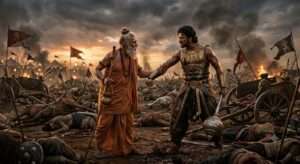
Kripacharya’s voice grew even more compassionate. “Almost every great warrior who stood on our side has fallen. The burden of preserving what remains now rests entirely upon you. Accept the path of reconciliation before complete self-destruction consumes the Kuru race. The wise declare that needless destruction of one’s own people is among the gravest of sins. Reflect carefully, O King. Wealth, sovereignty, and ambition possess no meaning for one who no longer lives. Preserve your life today, and tomorrow kingdoms may again be won. A living king can recover lost fortunes, but the dead inherit nothing except silence.”
He then spoke of Yudhishthira’s noble character. “Dharmaraja is incapable of allowing pride to govern his heart. Compassion is the foundation of his kingship. If peace is sought sincerely, he will surely restore to you an honourable share of the kingdom. He will continue to honour Dhritarashtra as his father and Gandhari as his revered mother. His devotion toward his elders has never diminished despite every injustice he has endured. Such reconciliation would preserve the honour of your family and safeguard the remaining members of your dynasty.”
Kripacharya added with confidence, “Sri Krishna Himself will never reject a sincere proposal for peace. Once Krishna and Yudhishthira determine that reconciliation serves righteousness, Bhima, Arjuna, Nakula, and Sahadeva will willingly accept their decision. Therefore abandon jealousy, cast aside pride, and seek peace while time still permits it. I do not speak these words because I fear battle or desire to preserve my own life. I speak only for your welfare. If you refuse this counsel, regret will surely follow.”
Thus Sanjaya narrated to the grief-stricken Dhritarashtra how Kripacharya, overcome with compassion and wisdom, offered this final appeal for the survival of the Kuru house. Hearing every word, Duryodhana sighed deeply, opened his eyes, and looked steadily upon his revered teacher before replying with respectful firmness.
“O revered Brahmin,” Duryodhana said, “I know well that your heart seeks only my welfare. Your affection and friendship have inspired every word you have spoken. No one who truly loves another can remain silent in the face of danger. I honour your wisdom completely. Yet your proposal finds no place within my heart.”
He continued with painful remembrance. “How can the Pandavas ever accept reconciliation after all that has happened? By deceitful dice we robbed Yudhishthira of his kingdom and shattered his spirit. Before the assembled kings we humiliated Draupadi in an act that still cries out to heaven for justice. When Sri Krishna Himself came seeking peace, we rejected His sacred mission. Abhimanyu, still a youth, was surrounded by many great warriors together and slain unfairly. Bhima fulfilled his fearful oath by tearing open the chest of Dushasana and drinking his blood before all. He has openly vowed to break my thighs. Knowing all these wounds, tell me honestly—how can such men ever embrace peace with me?”
Duryodhana’s voice then rose with unwavering resolve. “My ambition has never been to enjoy a kingdom granted through another’s mercy. My desire has always been to rule the earth by my own strength, surrounded by loyal friends, victorious over my enemies, and honoured by every king. If that destiny can no longer be achieved, then battle alone remains my rightful path. I shall never stretch out my hand for a throne received through compassion. The only road still open before me is war. Therefore my decision is final. I shall continue the battle against the sons of Pandu. Do not mistake my refusal for disrespect toward your noble counsel.”
His spirit burned with the pride of a Kshatriya. “Glory, fame, courage, and earthly power are never permanent. Since they cannot endure forever, it is better to defend them with honour than surrender them through weakness. My immediate duty is to stand before the sons of Dharma and meet them in battle. Cowardice has no place in a warrior’s life. Let fear be abandoned. If victory is denied, then let heroic death become my companion, for such a death leads brave warriors to the highest worlds where Bhishma, Drona, Karna, and the other mighty heroes have already gone.”
Finally, Duryodhana declared, “I seek nothing beyond the fulfilment of my warrior’s duty. Supported by the surviving chariot heroes who still stand beside me, I shall march into battle and either destroy the sons of Pandu or lay down my life upon the sacred field. Let destiny judge the outcome.”
When the assembled kings heard these fearless words, their hearts, though burdened by repeated defeats, were once again filled with martial enthusiasm. They praised Duryodhana’s steadfast courage, cast aside despair for the moment, and prepared themselves for the final day’s conflict. Faces once shadowed by grief brightened with renewed determination as they readied their weapons for the approaching dawn. Thus Sanjaya gently narrated these solemn events to King Dhritarashtra, seeking to lighten, however slightly, the immeasurable weight of sorrow pressing upon the aged monarch’s heart.

