



Kashi Vishweshwara Swamy Temple is located at Kadugodi, near Whitefield in Bengaluru Urban District, Karnataka. It is one of the oldest surviving Shiva temples in eastern Bengaluru and has been the spiritual centre of the locality for nearly a thousand yearsThe temple is believed to have been built around 1030 CE during the reign of the Chola emperor Rajendra Chola I, making it approximately 1,000 years old. Ancient stone inscriptions preserved within the temple establish its Chola-period origin, making it an important historical and religious monument of Karnataka.
The presiding deity is Sri Kashi Vishweshwara Swamy, worshipped in the form of a sacred Shiva Linga. The temple also houses shrines dedicated to Goddess Parvati, Lord Ganesha, Lord Subrahmanya, Nandi Bhagavan and other deities worshipped according to Shaiva traditions.
The temple is constructed in the traditional Dravidian architectural style using granite stone. It consists of a Garbhagriha (Sanctum Sanctorum), Ardha Mandapa, Maha Mandapa, and a separate Nandi Mandapa facing the sanctum. Although built during the Chola period, its architectural features also reflect the influence of the earlier Western Ganga dynasty. Ancient inscriptions engraved on the temple walls provide valuable historical information, while later renovations have carefully preserved the temple’s original character.
Nearly a thousand years ago, the region around present-day Kadugodi was covered by dense forests through which the Dakshina Pinakini River flowed. During the reign of Rajendra Chola I, land was granted for the construction of a Shiva temple at this sacred location. Temple inscriptions identify the presiding deity as Rajadhi Raja Bhangisvaram, confirming royal Chola patronage. As the temple attracted priests, devotees, and settlers, a small village gradually developed around it.
The descendants of the temple’s earliest priestly family continue to serve the temple even today. Over the centuries, the shrine became the religious and cultural centre of the surrounding regionLong before Kadugodi became a bustling suburb of Bengaluru, the area was known for its vast forests and peaceful surroundings. In those days, the only prominent structure in the region was the ancient Shiva temple established under the patronage of Rajendra Chola I. Since the temple stood amidst a dense forest, the local people referred to it as “Kadu Gudi,” meaning “Temple in the Forest” in Kannada. Over time, this name gradually evolved into Kadugodi, the name by which the locality is known today. Ancient records also mention the area as Aranyapuri, meaning “City of the Forest.”
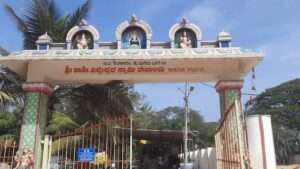
As generations passed, the temple became a revered place of worship for devotees from Karnataka, Tamil Nadu, and Kerala. Many devotees who were unable to undertake the long pilgrimage to Kashi (Varanasi) worshipped Lord Shiva here with the same devotion they would offer at Kashi Vishwanath. According to long-standing temple tradition, the original Shiva Linga was lost many centuries ago. To ensure that worship continued uninterrupted, a sacred Shiva Linga was ceremonially brought from Kashi and consecrated in the sanctum according to Vedic rituals. From that time onward, the deity came to be worshipped as Sri Kashi Vishweshwara Swamy.
Devotees believe that sincere prayers offered before Lord Kashi Vishweshwara remove obstacles, grant peace, prosperity, and spiritual progress. Even today, the temple remains the spiritual heart of Kadugodi, preserving a tradition of worship that has continued for nearly a millennium.
Maha Shivaratri is celebrated with great grandeur through special Abhishekas, Rudrabhisheka, Alankara, devotional singing, and night-long worship. Other important observances include Pradosha Puja, Shravana Mondays, Kartika Deepotsava, Makara Sankranti, Ugadi, and Navaratri. During these festivals, thousands of devotees visit the temple to seek the blessings of Sri Kashi Vishweshwara Swamy and participate in the traditional rituals that have been followed here for centuries.


