



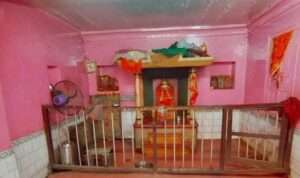
Jyeshta Gauri Temple is located at Sapt Sagar Mohalla near Maidagin and Bhoot Bhairav in Varanasi; the Jyeshta Gauri Temple is one of the nine sacred Gauri temples of Kashi. The shrine is dedicated to Goddess Jyeshta Gauri and forms part of the traditional sacred geography of Varanasi.
The exact age of the present temple structure is not clearly documented. However, the worship of Jyeshta Gauri in Kashi is of great antiquity and is described in the Kashi Khand of the Skanda Purana.
The presiding deity is Goddess Jyeshta Gauri, one of the nine forms of Gauri worshipped in Kashi. She is regarded as an auspicious form of Goddess Parvati and is associated with good fortune, prosperity and honour. In some regional traditions, she is also identified with Goddess Mahalakshmi.
The temple is a modest traditional shrine situated within the narrow lanes of the old Sapt Sagar neighbourhood. Its importance lies more in its ancient religious association than in the size or grandeur of its architecture. The surrounding area retains the traditional character of old Varanasi, with several historic shrines located nearby.
Jyeshta Gauri is one of the Nav Gauri temples of Kashi, each representing a sacred form of Goddess Gauri. These shrines are traditionally visited as part of the Gauri Yatra, particularly during Navratri.
The Jyeshta Gauri shrine is specifically mentioned in the Kashi Khand, Chapter 63, where the greatness of the Goddess and the benefits of her worship are described. The present temple at Sapt Sagar continues this old tradition of Gauri worship in Kashi.
According to the Kashi Khand, Lord Shiva describes the greatness of Jyeshta Gauri to Goddess Parvati. He explains that devotees who worship her with devotion can attain honour and an elevated position in life.
The Goddess is especially associated with women who seek freedom from misfortune. The tradition states that a woman who approaches Jyeshta Gauri with sincere devotion can be blessed with saubhagya, meaning auspiciousness and good fortune. For this reason, she became particularly revered by women praying for marital happiness and the welfare of their families.
Jyeshta Gauri also has an important place in the wider Gauri worship traditions of Maharashtra and North Karnataka. There, the Goddess is worshipped during the three-day Jyeshta Gauri Vrat in Bhadrapada. Although the regional rituals differ from the Kashi tradition, both preserve the ancient idea of seeking the Goddess’s blessings for family prosperity, protection and well-being.
Jyeshta Gauri Puja or Vrat is also observed during Bhadrapada by communities in Maharashtra, North Karnataka and other parts of India.
The Jyeshta Gauri Vrat is traditionally observed for three days.
On the first day, known as Avahan or Sthapana, the Goddess is invoked and her idol is ceremonially installed.
The second day is dedicated to the main puja. Devotees offer prayers and traditional offerings to the Goddess, while the Vrat Katha describing her victory over the demons is recited. Married women also perform Haldi-Kumkum as part of the observance.
On the third day, Udwasan or Visarjan rituals are performed, bringing the vrat to a close, followed by immersion of the idol in a water body.
The Gauri Yatra during Navratri is an important occasion when devotees visit the nine Gauri shrines of Kashi, including Jyeshta Gauri.

