Lakshmanrao Upadhyayula
In the ancient vision of the Rigvedic seers, the sage Vishwamitra invokes Indra through the majestic cadence of Tristubh Chandas, inviting the divine lord to descend into the sacred arena of yajña. The hymn reflects a profound relationship between humanity and the cosmic powers that sustain existence. Indra is called to guide his resplendent chariot toward the holy sacrificial ground, for the Soma prepared there has belonged to him from primordial times. The sacred offering is not merely a ritual substance but a symbol of divine inspiration, spiritual vitality, and the eternal exchange between the celestial and earthly realms.
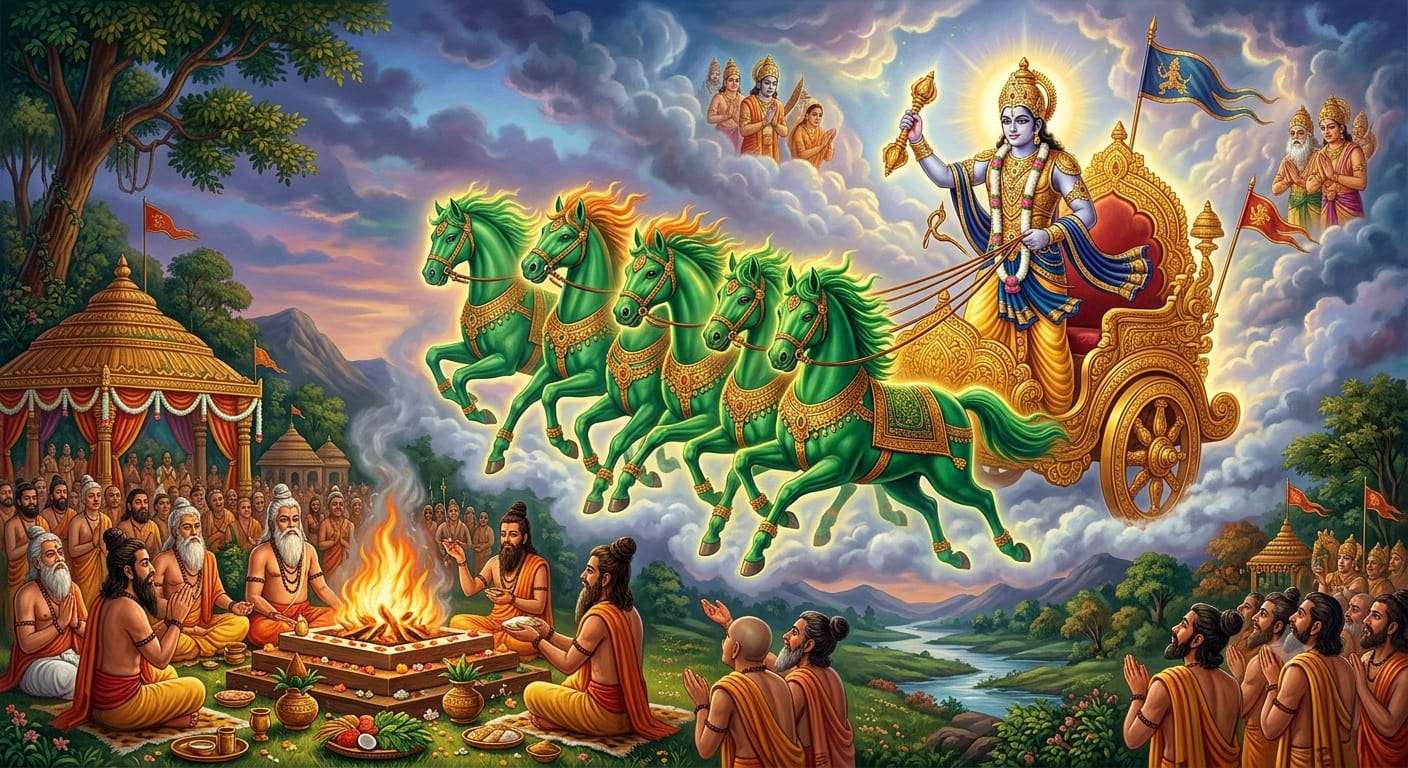
The sage requests Indra to unharness his beloved and faithful horses beside the consecrated Kusha grass that adorns the sacrificial enclosure. The Ritvijas, learned priests entrusted with the preservation of sacred order, invoke him through melodious hymns and precise ritual actions. Their chants are not viewed merely as words but as vibrations aligned with cosmic principles. In the Vedic understanding, sound possesses creative power, and the recitation of hymns establishes harmony between the visible world and the unseen realms. Thus, Indra is invited to partake of Soma and to bless the gathering with his divine presence.
Indra, the mighty sovereign who transcends the generations of ancient peoples, is urged to arrive swiftly with his noble steeds. The priests long for divine companionship, recognizing that true prosperity arises when human endeavor is united with divine guidance. Every ritual of the day is dedicated to this sacred communion. The invitation reflects a spiritual aspiration that extends beyond material gain, seeking the presence of divine wisdom, courage, and protection within the community.
The luminous Indra is called to a yajña dedicated to abundance, nourishment, and flourishing life. Clarified butter, sanctified food, and carefully prepared offerings are presented with reverence. In Vedic thought, food is sacred because it sustains life and reflects the generosity of the cosmic order. By offering the finest provisions to the deity, the worshippers acknowledge their dependence upon divine grace. The act of sacrifice symbolizes gratitude and reinforces the reciprocal relationship between humanity, nature, and the divine powers governing creation.
The hymn further praises Indra’s swift and vigorous horses, whose healthy limbs and harmonious movement carry the divine lord to the sacred precincts. These twin steeds symbolize disciplined energy and the dynamic forces of nature. Their movement may also be understood as representing the balance of complementary powers operating throughout the universe. The chariot itself signifies the ordered progression of cosmic law, while the horses embody the energies that propel both physical and spiritual advancement.
Indra is revered as the embodiment of noble companionship and protective leadership. The yajña is attended by kings, sages, and worshippers who seek his blessing. The Vedic hymns resounding through the sacrificial ground are offered not only for praise but also as expressions of truth. Listening to these hymns signifies the acceptance of righteousness and the preservation of cosmic harmony. Indra’s presence among the assembled participants affirms the sacred bond between governance, wisdom, and divine authority.
The sage then offers a deeply personal prayer, seeking empowerment through divine favor. He asks Indra to establish him as a protector of the people, a leader guided by wisdom, and a seer radiant with spiritual brilliance. He prays to become a worthy creator and preserver of sacred Soma rites and requests imperishable wealth. In the Vedic perspective, true wealth encompasses not only material prosperity but also knowledge, virtue, reputation, and the capacity to serve society. Such blessings enable an individual to contribute to the welfare of the community and uphold dharma.
Indra’s invincible Hari horses are celebrated as destroyers of hostile forces and bearers of divine power. The imagery of the horses soaring through the sky and traversing every direction evokes the expansive reach of natural forces such as wind, storms, and celestial movement. From a scientific perspective, these poetic descriptions reveal the keen observational abilities of the Vedic sages, who perceived patterns in nature and expressed them through symbolic language. The horses represent energies that operate across the cosmos, linking earthly phenomena with divine agency.
The hymn describes Indra as the eager enjoyer of Soma and the fulfiller of worthy aspirations. The Soma, purified through careful ritual procedures, is presented for his satisfaction. The golden bird that brings Soma symbolizes the transmission of divine knowledge from higher realms to human consciousness. Spiritually, Soma signifies illumination, inspiration, and the awakening of higher awareness. The joy associated with Soma reflects the bliss that arises when the mind aligns with truth and the soul experiences communion with the divine.
Empowered by Soma, Indra defeats forces that obstruct harmony and righteousness. These enemies may be understood both as external adversaries and as inner obstacles such as ignorance, fear, greed, and falsehood. The Vedic vision consistently portrays spiritual growth as a battle against disorder. Indra’s victories symbolize the triumph of enlightened consciousness over chaos and confusion. Through divine strength, obstacles are overcome and pathways to prosperity are opened.
The hymn also praises Indra as the releaser of life-giving waters. He reveals the rain-bearing clouds and causes rivers to flow, thereby sustaining agriculture, animals, and human civilization. This imagery reflects a profound understanding of nature’s cycles and humanity’s dependence upon them. The Vedic sages recognized rainfall as essential for survival and viewed it as an expression of divine benevolence. Indra’s connection with storms and rain illustrates the intimate relationship between spiritual reverence and ecological awareness.
As lord of strength and courage, Indra flourishes in the midst of battle and stands as a symbol of victorious determination. His immense wealth signifies the inexhaustible resources of the cosmos and the abundance available through righteous living. His sharp yet compassionate vision reflects the ideal balance of justice and mercy. The hymn honors him as the creator of perfect harmony, the guardian of sacred order, and the protector of those who seek refuge under his care.
Thus, the prayer of Vishwamitra emerges as far more than a ritual invocation. It is a profound expression of humanity’s yearning for divine companionship, wisdom, prosperity, and protection. The hymn integrates spiritual insight, ethical aspiration, and careful observation of natural phenomena into a unified vision of reality. Through the sacred language of the Veda, Indra appears as the power that sustains order, releases abundance, conquers adversity, and guides humanity toward a life of harmony with both the cosmic and moral laws that govern existence.