


Special Correspondent
The Hyderabad Cricket Association (HCA) has spent enough time dealing with controversies, committees, allegations and administrative battles.
The time has come to ask a much more fundamental question:
What kind of cricketing system does Hyderabad want to build for the next generation?
The answer cannot be another cosmetic administrative reform.
It cannot simply be another change of office-bearers.
And it certainly cannot be a system in which private coaching academies, influential individuals or informal networks become the unseen gatekeepers of state-team selection.
The answer must be a complete rebuilding of the talent pipeline.
Let merit become the most powerful lobby
Hyderabad cricket does not need another lobby.
It does not need another coterie.
It does not need another system in which money or proximity to influential individuals becomes more important than performance.
What it needs is a system in which merit itself becomes the most powerful lobby.
That is where the parallel with the Prime Minister’s education initiative becomes relevant.
If quality preparation can be made more accessible to students so that economic circumstances do not determine access to opportunity, HCA too can create a credible alternative to the private cricket-academy ecosystem.
Also read: https://orangenews9.com/hcas-selection-pipeline-needs-a-reality-check-part-ii/
The objective should not be to eliminate private academies.
That would neither be practical nor desirable.
Good private academies should be partners in the development of the sport.
But they should not become the gatekeepers of Hyderabad cricket.
The principle should be simple:
Private academies can prepare players. HCA must select players.
Rebuild the Academy of Excellence
The most obvious starting point is the HCA’s own Cricket Academy of Excellence.
The Academy should be transformed into the central talent-development institution for Hyderabad cricket.
It should be professionally managed and adequately funded.
It should have modern cricketing infrastructure, qualified coaches, fitness and sports-science experts, video-analysis facilities, nutrition support and mental-conditioning programmes.
But infrastructure alone is not enough.
The Academy needs a completely transparent talent-identification system.
Scouts should be sent regularly to districts.
Trials should be conducted openly.
Performance data should be recorded digitally.
Players should be monitored over a period rather than judged exclusively on one trial.
And the eventual state-team selection should be based on a broad and demonstrable body of evidence.
The Academy should also create scholarships for talented youngsters who cannot afford private coaching.
That would immediately change the equation.
A youngster would no longer have to ask:
“Can my parents afford the academy?”
He could instead ask:
“Can I prove that I am good enough?”
That is the question every merit-based sporting system should ask.
Take cricket beyond Hyderabad
The Association must also recognise that Telangana’s cricketing talent does not begin and end in Hyderabad.
There is enormous potential in districts and smaller towns.
But a talented youngster from a rural background may have to make an impossible choice: cricket or education, family or opportunity, savings or training.
That is unacceptable if HCA genuinely wants to develop cricket across the state.
The Association should create district-level talent pathways and establish regular scouting and trials.
Promising players should be brought into structured development programmes.
Where necessary, HCA should provide accommodation or temporary residential facilities for selected rural talent.
Scholarships could cover coaching, equipment, nutrition and other essential expenses.
This would not merely improve cricket.
It would democratise opportunity.
A youngster from Nalgonda, Adilabad, Khammam or any other district should not have to relocate to Hyderabad merely to be noticed.
Selection should become auditable
The selection system also needs structural reform.
HCA should introduce clear conflict-of-interest rules covering selectors, coaches, support staff and administrators.
Anyone with a continuing commercial relationship with a private academy should disclose it.
Where a direct conflict exists, recusal should be mandatory.
Selection criteria should be published.
Trial scores should be preserved.
Performance statistics should be digitally recorded.
Selection meetings should be properly documented.
Where technology permits, the process should be auditable.
None of this removes human judgement from cricket.
Selectors will always have to judge temperament, technique, fitness, potential and performance.
But transparency ensures that judgement does not become an excuse for arbitrary decision-making.
The BCCI opportunity
HCA should also examine whether the substantial resources available through the wider cricketing ecosystem are being directed sufficiently towards player development.
Whatever funds and facilities are available to the Association should ultimately translate into better cricketers, better infrastructure and broader access to the sport.
The Academy of Excellence should be one of the principal beneficiaries of this investment.
Money should follow the player-development objective—not merely administrative structures.
Every rupee invested in Hyderabad cricket should ultimately answer one question:
What did it do for the next cricketer?
The ultimate test is performance
At the end of the day, however, all discussions about committees, academies, selectors and administrators must lead to one question:
How are Hyderabad’s teams performing?
Hyderabad has a proud cricketing history.
It has produced outstanding players who went on to represent India.
There was a time when Hyderabad was one of the country’s most productive cricketing centres.
The decline did not happen overnight.
It is the cumulative result of institutional decisions, weakening grassroots structures, changing priorities and, arguably, the failure to build a robust and transparent talent pipeline.
Therefore, the answer cannot be another short-term patch.
It must be rebuilding from the bottom.

A chance to reset
The present arrangement, with the Single Member Committee overseeing the Association and a new elected leadership in place, provides an opportunity for a genuine reset.
The HCA should use it.
Rather than merely fighting yesterday’s battles, it should start building tomorrow’s system.
Strengthen the Academy of Excellence.
Professionalise its management.
Fund it adequately.
Take talent identification to the districts.
Provide scholarships and residential support for deserving players.
Recruit coaches transparently.
Introduce conflict-of-interest rules.
Digitise performance records.
Publish selection criteria.
Create independent selection mechanisms.
And make every selection decision defensible on cricketing merit.
If this is done sincerely, private academies will continue to exist and can continue to prosper.
But they will no longer control the pathway to state representation.
That is the real lesson HCA can draw from the education-sector parallel.
When an expensive private ecosystem becomes too powerful around a merit-based public system, the answer is to create a stronger, credible, affordable and transparent alternative.
Education needs that alternative.
Hyderabad cricket needs it too.
Build cricketers, not merely committees
For too long, the debate around HCA has been dominated by administration.
Who controls the Association?
Who occupies which position?
Which group supports whom?
Who gets the advantage?
Those questions may matter politically.
But they do not win cricket matches.
Players do.
And players are produced by systems.
If HCA genuinely wants to restore Hyderabad’s lost cricketing glory, it must therefore move beyond managing cricket and start building cricketers.
The Cricket Academy of Excellence can become the vehicle.
District cricket can become the talent reservoir.
Transparent selection can become the safeguard.
And merit can become the only currency that matters.
The Association does not need to tell parents where they should send their children.
It needs to give them a better option.
It does not need to fight private academies.
It needs to make its own Academy impossible to ignore.
And it does not need to promise that every child will make the state team.
It needs to guarantee that every genuinely talented child has a fair chance to try.
That is the real meaning of merit.
That is the real meaning of opportunity.
And, ultimately, that is how Hyderabad can begin rebuilding the cricketing culture that once made it one of India’s great talent-producing centres.
The choice before HCA is therefore remarkably simple:
It can continue to manage cricket—or it can start building cricketers.
If it chooses the latter, the lost glory of Hyderabad cricket may not merely be remembered.
It can be rebuilt. (Concluded)
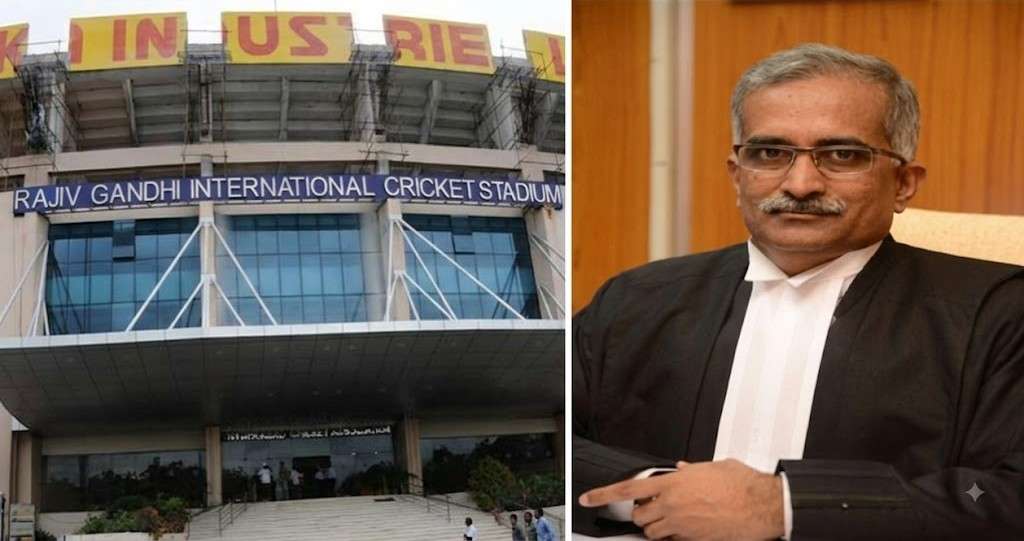



Selectors should also be held accountable. If a team fails miserably then who is to be blamed? HCA is not even able to afford selectors from HCA for women. They hire selectors from railways every year . So there is no accountability since they don’t report to HCA . They are under the pay role of Railways