Special Correspondent
If Hyderabad cricket genuinely wants to restore its lost glory, it must have the courage to examine not merely who occupies the offices of the Hyderabad Cricket Association (HCA), but how the entire talent-to-selection pipeline functions.
It is easy to speak about systemic reform in abstract terms. It is considerably harder to identify where the system may be vulnerable.
That is precisely the conversation HCA needs to have.
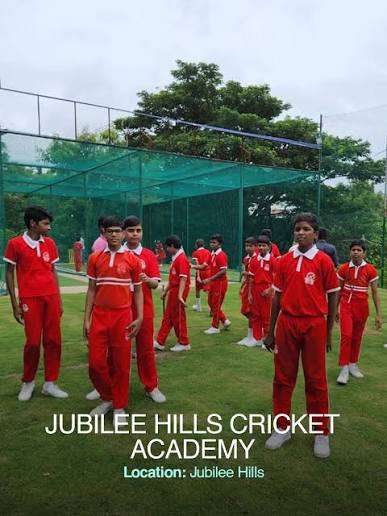
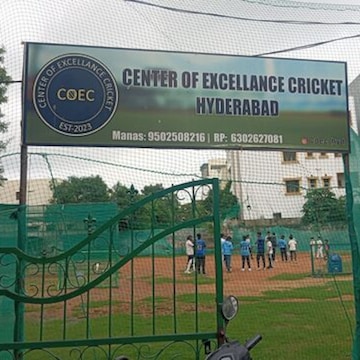
The mushrooming of private cricket academies is not, by itself, a problem. On the contrary, many of these academies are producing technically competent young cricketers and providing facilities that may not otherwise be available.
The problem begins when coaching, mentoring and selection start operating too close to one another.
That is when the question of conflict of interest becomes unavoidable.
Who controls the pipeline?
There are persistent concerns within the Hyderabad cricket fraternity about the functioning of cricket operations, including allegations of close links between individuals involved in the system and certain private academies. There have also been concerns raised about umpire allocations, delays or incompleteness in match-score information reaching selectors, and questions surrounding player registration, age, eligibility and district affiliation.
These are matters that should not simply be dismissed—or automatically accepted as fact.
They require something much more useful:
an independent examination of the system.
If the allegations are baseless, an impartial review will establish that and restore confidence.
If there are genuine weaknesses, the same review can identify and correct them.
Either way, HCA benefits.
What is dangerous is allowing rumours to circulate season after season without either investigation or transparency.

Also read: https://orangenews9.com/shouldnt-hca-take-a-cue-from-modis-initiative-part-i/
Building, not badmouthing
There was apparently a time when the institutional response to the growth of private coaching was to discourage youngsters from attending private academies and to run down institutions outside the HCA fold.
That approach was bound to fail.
Discouragement is not a strategy. Denigration is not excellence.
If HCA wants the Cricket Academy of Excellence to become the principal talent-development institution, it must make the Academy so good that parents and players choose it voluntarily.
Better coaches.
Better pitches.
Better fitness facilities.
Sports science.
Video analysis.
Nutrition.
Mental conditioning.
Competitive exposure.
Professional management.
Most importantly, measurable results.
Parents need not be persuaded through propaganda. They need to be persuaded through outcomes.
Selectors with an academy past
The issue of conflict of interest deserves particularly serious attention.
A selector who has previously worked for, coached at or received income from a private academy may be perfectly honest and professionally competent. But if that individual subsequently participates in selecting players from the same academy, questions will inevitably arise.
This is not necessarily an allegation against anyone’s integrity.
It is a question of institutional credibility.
A sensible HCA conflict-of-interest policy should therefore require selectors, coaches and selection-related officials to disclose their professional and financial associations with private academies.
Where a genuine conflict exists, recusal should be mandatory.
In particularly sensitive circumstances, individuals with continuing commercial interests in player development may need to be kept away from selection panels altogether.
The objective should not be punishment.
It should be prevention.
A selection system should not merely be fair; it should be visibly fair.
The ‘Super 30’ question
Several academies now promote elite mentoring programmes under labels such as “Super 30” and similar branding.
Again, there is nothing inherently wrong with an academy offering specialised programmes to a smaller group of players.
But the HCA should ask a legitimate question:
What precisely distinguishes these programmes from ordinary coaching—and does access to them provide an advantage beyond coaching itself?
If these programmes are simply better technical and scientific training, there is little to object to.
But if elite mentoring becomes a parallel pathway to selectors, coaches and state-team opportunities, then the issue changes completely.
The Association is entitled to examine whether a commercially available programme is merely selling better coaching—or selling the perception of better access.
When mentoring becomes a pipeline
Even more troubling are reports of coaches or selectors running special mentoring batches outside the formal HCA system, with players from such batches subsequently finding their way into state teams.
Again, these reports require verification rather than assumption.
But the principle is straightforward.
If the same person privately mentors a child and later participates in deciding whether that child makes the state team, the separation between coach and gatekeeper becomes blurred.
That is an institutional risk regardless of whether any improper act has occurred.
For parents, it creates an uncomfortable perception: perhaps access to the person who trains the child is also access to the person who influences the child’s selection.
HCA should not allow such ambiguity to remain.
The TG20 connection
A similar question arises in relation to coaches and support staff associated with TG20 franchises who are reportedly also involved in the state cricket set-up.
If an individual has received payment from a franchise and subsequently participates in coaching, supporting or influencing state-team selection, HCA should examine the possible conflict.
The same applies if such individuals simultaneously operate private mentoring programmes.
Again, this is not about declaring anyone guilty.
It is about asking whether the system has adequate safeguards.
A professional sports organisation should not wait for a controversy before establishing conflict-of-interest rules.
It should establish them precisely to prevent controversy.
The most uncomfortable question
Perhaps the most damaging allegation circulating in cricketing circles is that selectors are merely figureheads and that influential academies or intermediaries actually determine who gets selected.
If that allegation is untrue, HCA should have every reason to disprove it through transparency.
If there is no manipulation, publish the selection criteria.
Maintain the performance data.
Document trials.
Record selection meetings.
Disclose conflicts.
Create an auditable process.
The strongest defence against an allegation of manipulation is not an angry denial.
It is a transparent system that makes manipulation difficult.
That is the standard HCA should now adopt.
Hyderabad cricket does not need another controversy.
It needs credibility.
And credibility begins when every young cricketer can believe that the person standing opposite him at a trial is judging his performance—not his academy, his parents’ ability to pay or his proximity to someone powerful.
That is the foundation on which the next generation of Hyderabad cricket must be built.