For decades, India’s defence story was dominated by a familiar criticism: a nation with immense talent and ambition remained heavily dependent on foreign suppliers for critical military platforms. While Bharat’s scientists at the Defence Research and Development Organisation (DRDO) have steadily shattered that stereotype through indigenous missiles, radars, and strategic weapon systems, another transformation has been quietly unfolding—the rise of Bharat’s private defence manufacturing sector. This week, that transformation reached a historic milestone. The successful maiden flight of the first fully “Made-in-Bharat” Airbus C295 military transport aircraft from Vadodara is not merely another aviation achievement. It is a defining moment in Bharat’s journey from being a defence importer to becoming a defence manufacturer. The significance of this accomplishment extends far beyond a single aircraft. For the first time, a full-scale military transport aircraft is being manufactured in Bharat by the private sector through Tata Advanced Systems Limited in partnership with Airbus. More importantly, the achievement comes four months ahead of schedule—a rarity in major defence programmes and a reflection of growing industrial maturity. The story began in 2021 when Bharat signed a ₹21,935-crore contract for 56 C295 aircraft to replace the Bharat (Indian) Air Force’s ageing Avro-748 fleet. The first 16 aircraft were manufactured in Spain and delivered directly. The remaining 40 are being built entirely in Bharat at the Vadodara assembly line. This is where the real story lies. Over 85 percent of the aircraft’s structural components are being sourced domestically. More than 13,000 individual parts are being manufactured in Bharat through a network of 37 local suppliers. This is not simple assembly work. It is the creation of an aerospace ecosystem that did not exist a decade ago. Critics often dismiss the “Make in Bharat” initiative as a slogan. The C295 programme demonstrates what happens when policy intent is backed by long-term industrial planning. The Modi government’s decision to open the defence sector to private participation has fundamentally altered the landscape. The result is visible not only in missiles, drones, and artillery systems but now in aircraft manufacturing itself. The Bharat (Indian) Air Force stands to gain enormously.
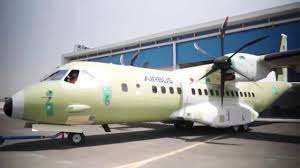
The C295 is a versatile tactical airlifter capable of carrying up to 71 troops, 50 paratroopers, or substantial cargo loads. It can be rapidly converted into a flying medical evacuation platform carrying 24 stretchers and medical attendants. Its rear loading ramp enables quick deployment of supplies, vehicles, and personnel. Yet its greatest strength lies in where it can operate. Bharat’s military challenges are increasingly concentrated in difficult terrains—from the icy heights of Ladakh to the remote valleys of Arunachal Pradesh and Sikkim. Conventional transport aircraft often face limitations in such regions. The C295, however, is specifically designed to operate from short, unprepared, sandy, grassy, or dirt runways. Its rugged landing gear and powerful turboprop engines make it ideally suited for Advanced Landing Grounds near sensitive border regions. Equally significant is the inclusion of an indigenous Electronic Warfare Suite developed by Bharat’s public sector entities. In modern warfare, survivability is as important as mobility. The system can detect hostile radar emissions, warn pilots of missile threats, and deploy countermeasures such as flares and chaff to defeat incoming attacks. Every aircraft built for Bharat will carry this indigenous defensive shield. The timing could not be more relevant. China’s military infrastructure build-up along the Line of Actual Control and Pakistan’s continuing military modernisation demand faster logistics, rapid troop movement, and greater operational flexibility. The C295 will significantly enhance Bharat’s ability to reinforce remote sectors at short notice. Most importantly, this aircraft represents something larger than defence preparedness. It symbolizes Bharat’s emergence as a nation capable of designing supply chains, building industrial ecosystems, mastering advanced manufacturing, and integrating public and private sector capabilities. The maiden flight over Vadodara was not merely a test of an aircraft. It was a test of Bharat’s growing confidence in its own capabilities. The aircraft soared successfully. So did modern Bharat’s aspirations.