Wing Commander’s alleged espionage: National security cannot become collateral damage of personal weakness
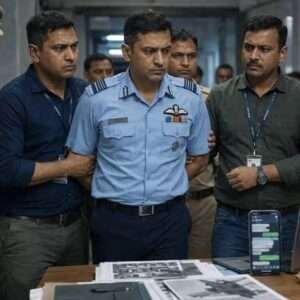
The reported arrest of a serving Indian Air Force Wing Commander for allegedly leaking classified defence information to Pakistani intelligence operatives is not merely another espionage case. It is a deeply disturbing reminder of how vulnerable even the most critical institutions of national security can become when individuals entrusted with extraordinary responsibilities succumb to personal weaknesses, greed or emotional manipulation. When the person allegedly compromising national security wears the uniform of the Indian Air Force, the gravity of the betrayal becomes immeasurably greater.
Bharat is operating in an exceptionally challenging security environment. With Pakistan continuing to pose a threat on the western-front, China maintaining its strategic ambitions along the northern and eastern borders, Bangladesh adding to regional uncertainties and internal security challenges persisting, the country cannot afford even the smallest breach in its defence preparedness. In such circumstances, the loyalty and integrity of every individual entrusted with classified information are non-negotiable.
What makes this particular case especially disturbing, in my personal view, is the alleged nature of the information compromised. According to reports, the Wing Commander was honey-trapped by a Pakistani intelligence operative through social media and intimate exchanges, allegedly after investigators identified vulnerabilities arising from his personal circumstances. He is accused of sharing classified documents, including details relating to his unit’s war plans, drone capabilities, aerial operations and military installations. More alarmingly, investigators have reportedly examined allegations that he attempted to install data-stealing software on the mobile phones of colleagues and superiors.
If these allegations are established in court, this would be far more than an individual’s indiscretion or a lapse in professional judgment. It would represent a conscious breach of trust that could potentially expose the lives of fellow personnel, compromise operational preparedness and provide an adversary with information that could be exploited during a military confrontation.
In my view, no personal crisis, marital dispute, financial difficulty or emotional vulnerability can ever justify such conduct. Nobody is compelled to join the armed forces. Those who voluntarily choose a military career understand that they are accepting obligations that ordinary professional employment does not impose. They take an oath of allegiance to the Constitution and the nation, knowing fully well that their responsibilities extend beyond themselves and their families. They are entrusted with the security of millions of Indians. That trust cannot be treated as a disposable commodity.
The timing is particularly significant. Operation Sindoor demonstrated the importance of intelligence, technological superiority, operational secrecy and precision in modern warfare. The ability of the Indian armed forces to strike designated targets while protecting their own operational capabilities depends heavily on safeguarding classified information. Any disclosure of operational plans, drone capabilities or deployment details can potentially undermine an advantage painstakingly built through years of training, investment and sacrifice.
And this is not an isolated warning. The October 2026 Visakhapatnam espionage investigation, code-named Operation Firewall, reportedly brought 18 suspects, including 13 naval personnel, under the scanner. Two persons were arrested in connection with allegations of sharing sensitive information with Pakistani intelligence operatives. Investigators have described the use of fabricated female identities, social-media friendships, honey-trapping, financial inducements and WhatsApp-related tactics. Earlier, an IAF administrative employee was also arrested over alleged leaks of sensitive defence information. These cases reveal a disturbing pattern: hostile intelligence networks are increasingly exploiting personal vulnerabilities and digital platforms to penetrate India’s defence establishments.
In my view, the armed forces must treat this as a serious institutional threat rather than merely a series of individual disciplinary failures. Counter-intelligence surveillance, digital security audits, periodic vulnerability assessments and mandatory awareness programmes must become integral to military administration. Personnel handling sensitive information should also be subject to stringent security protocols, regardless of rank or seniority. A star on the shoulder cannot become a substitute for scrutiny.
The question of punishment, however, deserves equal seriousness. If the Wing Commander is convicted after a fair trial of deliberately passing classified military information to an enemy intelligence agency, I would argue for the harshest punishment permitted by law, with no misplaced sympathy or institutional indulgence. In my personal view, deliberate espionage that endangers national security deserves the strongest possible deterrent. The consequences of such betrayal cannot be measured merely in terms of the documents leaked or money received. They must also be assessed in terms of the potential human cost and strategic damage.
The demand for capital punishment may understandably arise in public anger over such allegations. However, the present Official Secrets Act, 1923, prescribes imprisonment of up to 14 years for spying involving defence and military affairs under Section 3; it does not prescribe the death penalty for this offence. Any change in punishment would require legislative consideration. What must certainly not happen is a weak investigation, an avoidable procedural delay or a compromise in prosecution.
I would also question whether the existing arrangements for dealing with such cases within the armed forces need a thorough review. Military discipline and operational security demand specialised handling. Courts martial and the ordinary criminal justice system have legally defined jurisdictions, and the appropriate forum must be determined under the applicable service laws. There is a strong case for ensuring that military expertise, confidentiality and operational considerations are fully protected throughout the proceedings. But this cannot mean bypassing due process or denying an accused person a fair trial.
In my view, the larger message must be unmistakable: the uniform carries honour, responsibility and an extraordinary degree of public trust. Anyone who deliberately betrays that trust for personal gratification, money or emotional indulgence must face the full consequences of the law. There can be no VIP treatment for a senior officer, no institutional cover-up and no soft-pedalling because the accused happens to belong to an elite service.
Our soldiers guard the borders under the most hostile conditions, often sacrificing their lives without a second thought. Their sacrifices deserve better than to have their security compromised by someone sitting in a protected military establishment and allegedly handing over secrets to the enemy.
A soldier may fall in battle while defending the nation. But if an officer deliberately supplies the enemy with the means to endanger his own comrades, that betrayal strikes at the very foundation of the armed forces. The nation must ensure that justice is delivered with the seriousness such a betrayal demands.