


There appears to be a curious political fantasy among sections of the Congress-led Opposition: that if Narendra Modi is sufficiently provoked, cornered, personally attacked, and subjected to relentless street agitation, he might eventually lose his patience and take the country back to the dark days of the Emergency imposed by Indira Gandhi in June 1975. Perhaps some Opposition leaders are even hoping that history will repeat itself, giving them an opportunity to revive their political fortunes by portraying themselves as defenders of democracy. But they seem to be overlooking one fundamental distinction. Modi is not Indira Gandhi, and 2026 is certainly not 1975.
In my view, the expectation that Modi would react to political provocations in the same manner as Indira Gandhi reflects either a serious misunderstanding of his political temperament or a deliberate attempt to create an atmosphere of fear and uncertainty. Modi has faced far more sustained political hostility, personal vilification and institutional scrutiny than most contemporary political leaders. Yet, despite repeated provocations, he has neither resorted to the authoritarian methods associated with the Emergency nor shown any inclination to abandon the democratic framework through which he acquired power.
There is, first, a fundamental difference in the political journeys of the two leaders. Indira Gandhi inherited a political establishment dominated by the Nehru family and gradually consolidated power around herself. Modi, on the other hand, rose from an extraordinarily modest background, beginning as a tea seller, becoming an RSS pracharak, working through the organisational structure of the BJP, serving as Gujarat Chief Minister and eventually emerging as the party’s prime ministerial candidate in 2014. His rise was neither an inheritance nor the product of dynastic entitlement. It was the outcome of years of political organisation, electoral success and the confidence reposed in him by his party and, subsequently, the electorate.
In my view, this distinction is important because it goes to the very heart of how the two leaders understand political authority. While Indira Gandhi increasingly treated political power as something that had to be protected at any cost, Modi’s political legitimacy has repeatedly been renewed through elections. He has faced three successive Lok Sabha electoral mandates as Prime Minister, in 2014, 2019 and 2024. One may agree or disagree with his policies, political style or decisions, but the democratic legitimacy of his leadership cannot simply be wished away.
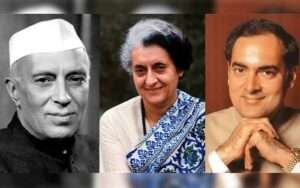
The circumstances surrounding Indira Gandhi’s elevation to the Prime Minister’s office in 1966, following the death of Lal Bahadur Shastri, and the subsequent concentration of authority around her are matters of recorded political history. So, too, are the internal conflicts within the Congress, the Allahabad High Court’s 1975 judgment setting aside her election from Rae Bareli, and the political crisis that followed. Rather than accepting the judicial verdict and facing its political consequences, she chose to proclaim the Emergency, suspending fundamental rights, imposing press censorship, arresting Opposition leaders and curtailing democratic freedoms.
That remains one of the darkest chapters in independent Bharat’s history. The Constitution continued to exist, Parliament continued to function in a restricted manner, and official pronouncements continued to speak of national discipline and stability. But the spirit of democracy was severely compromised. Thousands of political opponents were detained, newspapers were subjected to censorship, and citizens discovered that their fundamental freedoms could be suspended at the convenience of those wielding power.
The irony is that the Congress, which today frequently invokes the Constitution and lectures the country on democratic values, still carries the historical responsibility for that period. It cannot erase the Emergency from public memory simply by carrying pocket-sized copies of the Constitution or accusing its political opponents of undermining democratic institutions.
The Nehru-Gandhi family’s subsequent political journey also offers interesting contrasts. Rajiv Gandhi became Prime Minister following Indira Gandhi’s assassination in 1984, amid a wave of sympathy and political consolidation. After his assassination in 1991, sections of the Congress leadership sought to bring Sonia Gandhi into the political leadership, but she initially declined. Her eventual entry into active politics, the controversy surrounding her foreign origins, and the dramatic resignation of Sharad Pawar, P.A. Sangma and Tariq Anwar from the Congress in 1999 exposed the deep divisions within the party. These are not allegations invented by political opponents; they are part of the Congress’s own political history.
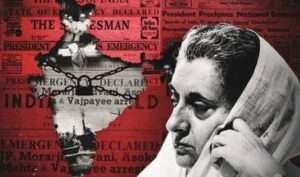
Coming back to the Emergency, Indira Gandhi’s decision was not merely a response to Opposition protests. It followed a serious political and constitutional crisis, with Jayaprakash Narayan emerging as a rallying point for an unusually broad coalition of Opposition forces cutting across ideological differences. The movement challenged her authority at a time when her own electoral legitimacy had come under judicial scrutiny. Her response was to use the enormous powers of the state to protect her political position.
Can the present Congress-led Opposition genuinely recreate such circumstances? More importantly, should anyone expect Modi to respond by making the same catastrophic mistake? In my view, that is nothing short of political daydreaming.
Modi has repeatedly demonstrated that he understands the difference between political confrontation and constitutional responsibility. Consider the controversy surrounding the 2002 Gujarat riots and the prolonged legal scrutiny that followed. Whatever political arguments continue to be raised, the investigations and judicial proceedings did not result in a finding of criminal liability against him. The courts, including the Supreme Court, have dealt with the relevant proceedings. He did not need to silence his critics or interfere with the judicial process to secure his legal position.
Similarly, the Ram Janmabhoomi dispute, one of the most emotionally charged and politically consequential issues in modern India, ultimately reached its conclusion through the judicial process. The BJP and its leadership accepted the Supreme Court’s final verdict rather than attempting to dictate the outcome through street mobilisation. The fact that the political implications were enormous makes the importance of respecting the judicial process even more significant.
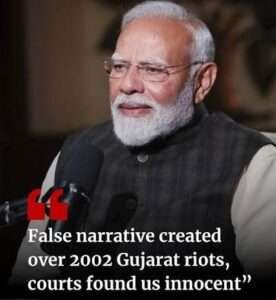
This is precisely why attempts to provoke Modi through personal insults, abusive slogans and attacks extending even to his deceased parents are unlikely to produce the desired political outcome. Political disagreement is legitimate. Criticism of the Prime Minister is an essential component of democracy. But there is a difference between holding a government accountable and attempting to humiliate a democratically elected leader into making an avoidable political or constitutional blunder.
Since losing power at the Centre in 2014, the Congress and sections of its Opposition partners have repeatedly attempted to challenge the Modi government through street mobilisation. The protests against the Citizenship Amendment Act, the Shaheen Bagh agitation, the prolonged farmers’ protests against the three farm laws and, more recently, the allegations surrounding ‘vote chori’ and demands for the resignation of the Chief Election Commissioner have all become major political flashpoints.
Each of these issues deserves examination on its own merits. A democratic government cannot expect unquestioning acceptance of every decision, and peaceful protest is a legitimate constitutional right. Equally, allegations of electoral manipulation or institutional wrongdoing must be supported by credible evidence and pursued through appropriate legal and constitutional mechanisms. The right to protest does not confer the right to pronounce allegations as established facts.
In my view, the Opposition’s greatest weakness is not necessarily its ability to organise protests but its apparent inability to convert public anger, where it exists, into a credible alternative political programme. Repeatedly questioning institutions, challenging electoral outcomes and portraying every adverse political development as evidence of a conspiracy may generate temporary headlines, but it does not automatically create public confidence.
There is also a troubling contradiction when political parties invoke the Constitution while appearing to question the legitimacy of institutions entrusted with implementing it. The Election Commission, the judiciary, Parliament and other constitutional authorities must remain open to criticism, but such criticism should be supported by facts, reasoned arguments and constitutional remedies. Personal attacks and intimidation cannot substitute for evidence. Nor can street pressure become an alternative to parliamentary democracy.
The Opposition must also recognise that political alliances are not necessarily permanent arrangements built on a common vision. They are often temporary understandings held together by electoral calculations and the shared objective of defeating a common opponent. The differences between the Congress and several of its regional allies have repeatedly exposed the fragility of such arrangements.
Take the Samajwadi Party. Akhilesh Yadav’s political calculations and his priorities for the 2027 Uttar Pradesh Assembly elections and the 2029 Lok Sabha polls will naturally be guided by his party’s interests. If regional allies begin prioritising their own political survival over the Congress’s national ambitions, what remains of the much-publicised Opposition unity?
The Trinamool Congress, too, has its own political calculations and challenges. Mamata Banerjee’s relationship with the Congress has never been free of contradictions. The political fortunes of regional parties are ultimately determined by their own organisational strength, leadership and electoral performance. The Congress cannot automatically assume that its allies will subordinate their interests to the Gandhi family’s political ambitions.
The BJP-led NDA, meanwhile, has demonstrated an ability to retain its political relevance despite the challenges of coalition politics. Modi’s leadership, the BJP’s organisational machinery, its electoral outreach and its ability to maintain a national political narrative continue to be important factors in the ruling alliance’s calculations. The 2024 Lok Sabha results, which required the BJP to depend on its allies for a parliamentary majority, also demonstrated that electoral politics remains competitive. A third consecutive term does not mean the government is immune from criticism or political challenges. But it does mean that the electorate has once again given Modi the responsibility of leading the country.
And this brings us to the central question: What exactly does the Congress hope to achieve by provoking Modi into an Emergency-like response? Does it genuinely believe that the Prime Minister will suspend civil liberties, arrest political opponents en masse, muzzle the press and undermine the very democratic process that has repeatedly legitimised his leadership? Or is the Opposition merely attempting to create a narrative in which any firm governmental response to unlawful activity can be portrayed as authoritarianism?
A distinction must be made here. A government must not use the law selectively, suppress peaceful dissent or misuse investigative agencies to settle political scores. The right to protest, freedom of expression and independence of constitutional institutions are non-negotiable democratic principles. At the same time, the government has a responsibility to maintain public order, enforce the law and protect citizens from violence. Neither side can claim a monopoly over democracy.
In my view, Modi’s real political test is not whether he can withstand personal attacks or political provocations. It is whether he can continue to demonstrate restraint while ensuring that governance remains effective, institutions function independently and the law applies equally to everyone. That is the difference between political strength and political vindictiveness.
The Congress would do well to remember that Indira Gandhi’s Emergency did not save her political career. It ultimately brought together a fractured Opposition, created a national backlash and resulted in her defeat in the 1977 general election. The people of India, who had been denied their democratic voice for 21 months, used the ballot box to deliver their verdict. The Emergency became a permanent reminder that no leader, however powerful, can take the electorate for granted.
It would therefore be politically foolish for anyone to imagine that a repetition of that chapter would automatically rescue the Congress in 2029. Modi is not obliged to imitate Indira Gandhi merely because his political opponents may find it convenient to portray him as her successor in authoritarianism. Nor should the Opposition mistake restraint for weakness or democratic tolerance for an invitation to cross every political boundary.
Ultimately, the strength of a democracy is measured not by how loudly its political opponents shout, how many demonstrations they organise or how aggressively they attack those in power, but by how effectively all sides respect constitutional boundaries and submit themselves to the verdict of the people.
The Congress may continue to provoke, the Opposition may continue to agitate and political rhetoric may become increasingly shrill. But an Emergency cannot be manufactured merely to suit the political convenience of those who have been out of power. Modi has his own political identity, his own mandate and, above all, a responsibility to the Constitution and the people of Bharat.
In my view, the Congress’s more urgent challenge is not to provoke Modi into becoming another Indira Gandhi. It is to demonstrate that it can become a credible democratic alternative to him. Until it does so, the dream of returning to power in 2029 through manufactured political crises, street confrontations and the hope of a governmental overreaction may remain precisely what it appears to be: a political fantasy.