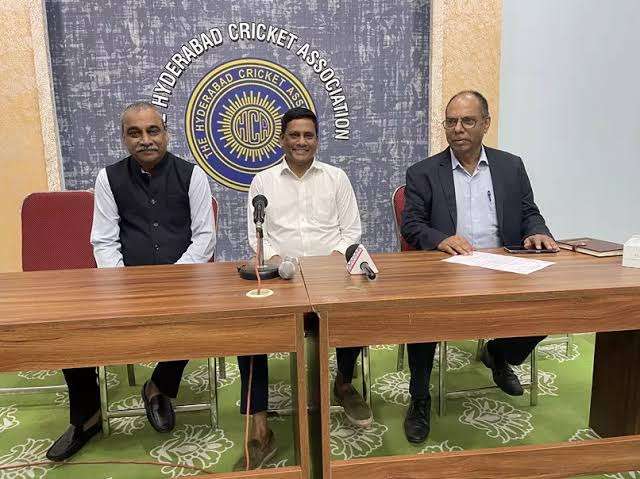


My cricketing career may not have been a long one, but it gave me the rare privilege of meeting, watching and playing alongside some of the finest cricketers India has produced. Looking back, I owe a big thank you to M.L. Jaisimha and, above all, the Almighty for giving me those unforgettable experiences.
Cricket is a game of long spells, and that is perhaps what makes it such a wonderful teacher. The longer you stay around the game, the more you observe, learn and imbibe from those who have mastered it. I was never part of the Hyderabad Gold Cup team initially. The established Ranji Trophy players – M.L. Jaisimha, Jayantilal, Krishnamurthy and Govindraj – represented different teams, while Abbas Ali Baig turned out whenever his English county commitments permitted.
Then, quite unexpectedly, came a call from M.L. Jaisimha. “You are playing tomorrow’s game for U-Foam.” My sleep disappeared instantly. My mother, accustomed to seeing me in bed by 9 pm, found me still awake past 10. She handed me Rs 2 and suggested I go to the nearby Natraj Theatre and watch a movie. It was already past the interval, but I managed to persuade the gatekeeper to let me in!
My nervousness eventually gave way to confidence, thanks to my elder brother Manohar Singh, who offered a simple piece of advice: “Don’t worry. All bowlers bowl upfront. Just go and enjoy yourself.” The next morning, I rushed to Vijay Paul’s house to borrow a cricket bat. Thankfully, he obliged.
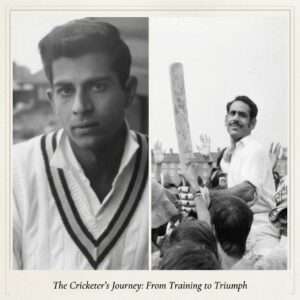
Those few days opened a window into a different world of cricket. I not only met several current and former Test cricketers but also got the opportunity to play against them. The Nizam’s Gold Cup, one of the most prestigious tournaments in Hyderabad, became a recurring experience. Almost every year, a call from Jai would bring me back into the U-Foam side. Unfortunately, my performances in the tournament did little to influence the state selectors.
One of my biggest surprises was opening the innings alongside Sunil Manohar Gavaskar. I had hardly exchanged a word with him before that day. Immaculately dressed, always carrying a fresh handkerchief, Gavaskar was every bit the perfectionist. Yet, he was generous with his appreciation whenever I played a good shot. For a young cricketer, that encouragement meant a great deal.
The Gold Cup also gave me lessons that no coaching manual could offer. During one of the rest-day practice sessions, Erapalli Prasanna asked me to stand as a straight umpire. I watched him bowl with extraordinary concentration. After each delivery, he would turn around and ask whether the ball had drifted after pitching. He bowled to two batsmen, put the ball away and waited for 15 to 20 minutes before repeating the exercise. The batsmen were almost incidental; his objective was to master a particular delivery.
After the second match, I asked him why he hadn’t bowled even one drifter during the game. His reply was revealing: “That is for the next series.” He explained that he needed to develop a new delivery every couple of years to retain the element of surprise. That was Prasanna – constantly experimenting, even when nobody was watching.
Then there was Amber Roy, a gentle and unassuming personality. The Gold Cup would often be his first game of the season, yet he seemed to make a habit of scoring a hundred in his opening match. I never saw him fail. He was friendly and approachable, always willing to share simple but valuable do’s and don’ts of batting.
Saleem Durani was another unforgettable character – truly a king of hearts. From junior cricketers to groundsmen, everyone addressed him affectionately as Saleem Bhai. I had heard about the late cut, but rarely seen anyone execute it quite like him. He would allow the ball to pass well beyond the batting crease, bring his bat down with a thud, and redirect it at astonishing speed.
His warmth extended beyond the cricket field. Once, while walking towards the dining area, he took me by the hand and led me down a staircase to another floor. When I asked why we were taking the detour, he replied, “Didn’t you see Dilip Doshi coming? Bahut sawaal karta yaar!” That was Saleem Durani’s humour and affection in a nutshell.
Karsan Ghavri and Dilip Doshi offered another lesson in professionalism. Even half an hour or 45 minutes after a match, they would emerge impeccably dressed, with their shoes polished to perfection. Their discipline extended well beyond their performances on the field.
My first Ranji Trophy appearance for Hyderabad was equally memorable. It was a quarter-final against Delhi. Hyderabad won the toss and elected to bat. Abbas Ali Baig scored 103, while I contributed 85, taking our total to 235. Delhi began confidently, reaching around 100 for the loss of one wicket on a good batting surface prepared by Venkatswamy at Lal Bahadur Stadium.
Then came Jai with the ball. He bowled a few looseners in my direction while I was stationed at mid-off, muttering to himself about getting a big turn off the first ball. For a moment, I wondered whether he was telling me something. He wasn’t. He was simply motivating himself. His first delivery, pitched just short of a good length outside off-stump, turned sharply. The match changed dramatically. From a comfortable 100-odd for one, Delhi were eventually bowled out for 180, with catches taken behind the wicket and in the slips. That was Jaisimha – a master who could transform a game with his bowling.
I played one more match that season but did not feature the following year. Eventually, I was recalled and played the entire Ranji season, scoring 360 runs and taking seven catches. That, however, was the end of my appearances for Hyderabad.
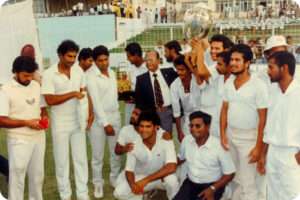
My association with cricket did not end there. I later served as a selector and was part of the setup when Hyderabad won the Ranji Trophy under M.V. Narasimha Rao. I continue to coach boys and girls, hoping to pass on some of the lessons I learnt from the game.
I have also witnessed the less glamorous side of cricket administration. There were occasions when a goonda, known for his muscle power, would turn up late at night with men carrying lathis, intimidating and threatening those involved in selection to push his preferred list of players. Such experiences remind us that cricket is not always played within the boundary ropes.
But when I look back, it is the Gold Cup memories, the generosity of great players, the lessons in discipline and the sheer joy of sharing the field with legends that remain closest to my heart.
My playing career may have been brief, but the memories are priceless. For that, I will always remain grateful to M.L. Jaisimha and to the Almighty.