Lakshmanrao Upadhyulu
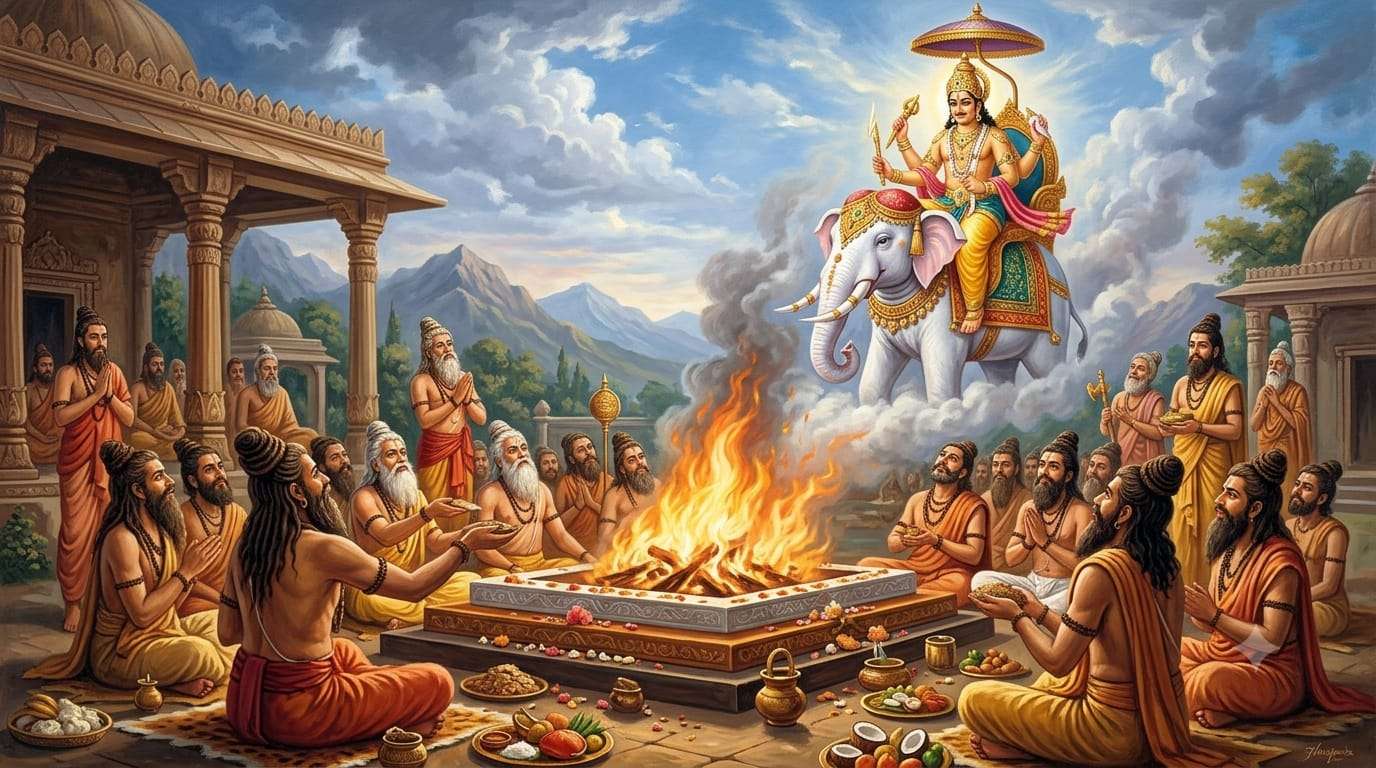
In the sacred tradition of the Ṛgveda, the revered sage Vishwamitra invokes the mighty Indra through hymns composed in the exalted Bṛhatī chandas, a meter distinguished by its majesty and expansive spiritual vision. These hymns are not merely poetic praises but profound revelations of cosmic principles, where divine forces are understood as active powers sustaining both the visible and invisible dimensions of existence. Vishwamitra calls upon Indra, the lord of divine strength and awakened consciousness, inviting him to partake of the sanctified Soma, the sacred essence celebrated as a source of vitality, inspiration, healing, and spiritual illumination.
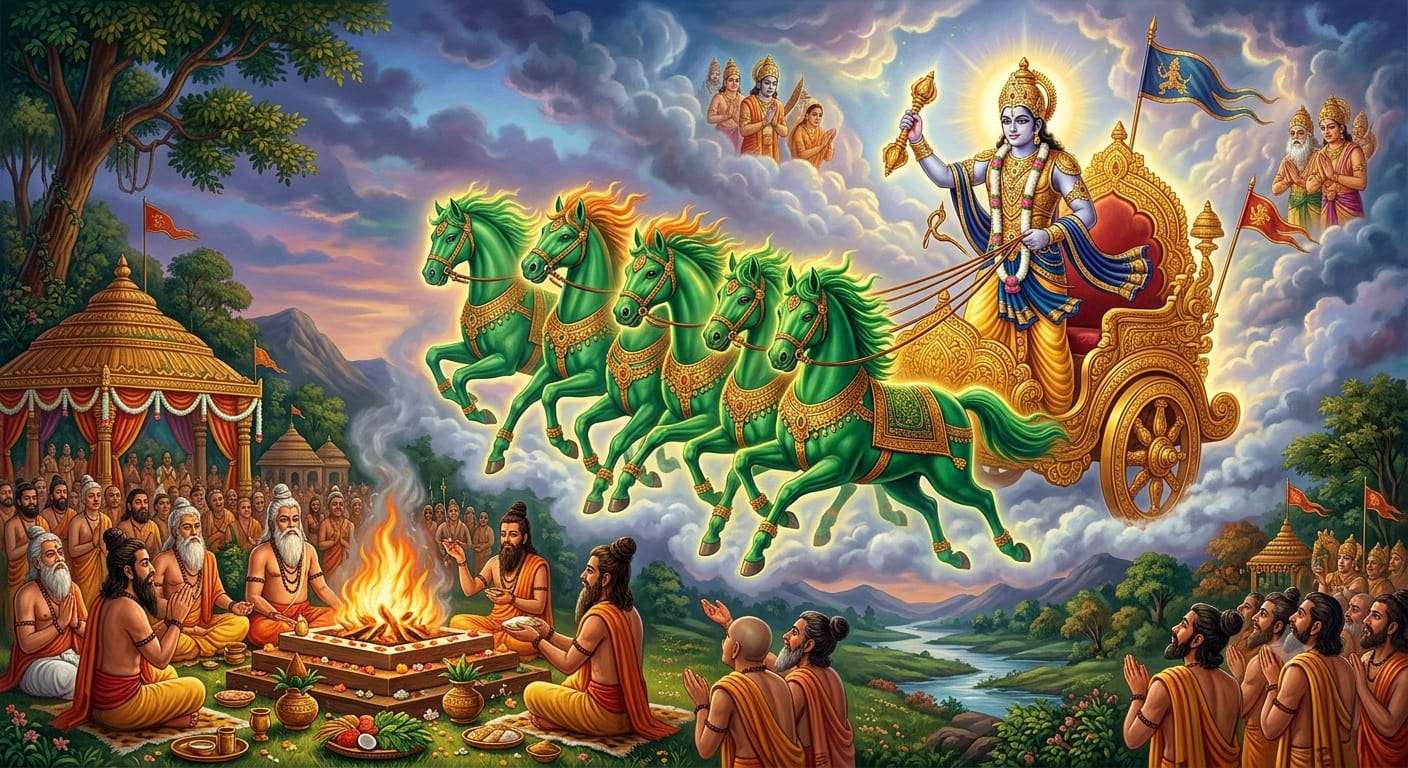
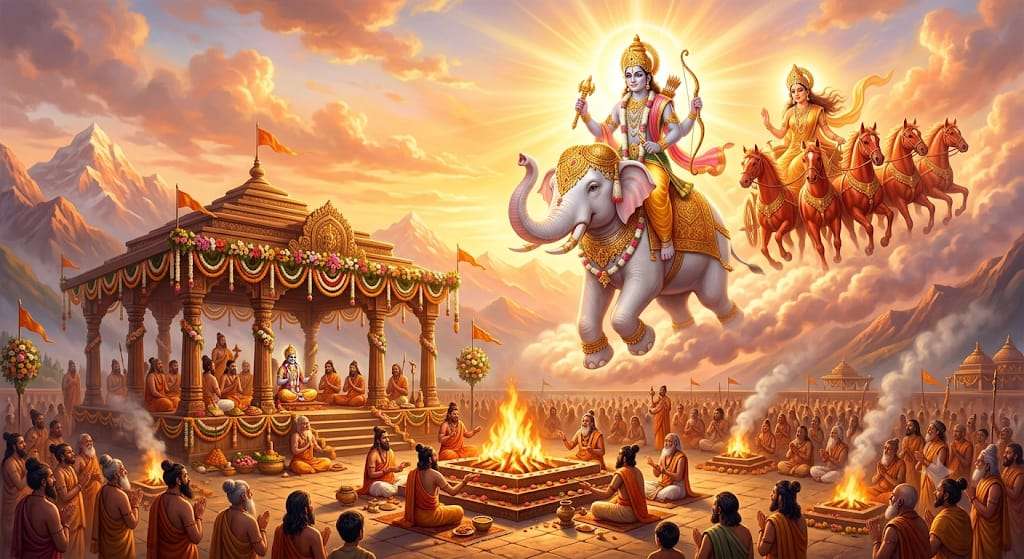
The Soma described in the Vedic hymns is portrayed as possessing hundreds of healing powers, fostering affection, harmony, and inner delight. Beyond its ritual significance, Soma symbolizes the refined essence of life itself, representing elevated consciousness and the bliss that arises from harmony with cosmic order. The sage lovingly prepares this offering exclusively for the divine guest, beseeching Indra to arrive upon his celestial chariot yoked with the Hari horses, whose green and golden radiance reflects the vibrant energies permeating nature. The imagery conveys not merely a physical arrival but the descent of divine awareness into the sacred space of worship.
As Indra approaches the sacrificial ground, he is associated with the awakening of Usha, the radiant dawn, and the illumination of Surya, the resplendent sun. This sequence reflects a profound spiritual symbolism. Dawn represents the awakening of wisdom, while the rising sun signifies the full manifestation of knowledge. Indra thus becomes the divine force that transforms latent understanding into radiant realization. The hymns praise him as the possessor of the Hari steeds and as a knower of the hearts of beings, one who understands the unspoken aspirations of the mind. Therefore, the worshipper seeks not merely material prosperity but the fulfillment of righteous desires aligned with cosmic harmony and spiritual growth.
The green and golden hues repeatedly associated with Indra reveal a remarkable Vedic sensitivity toward the natural world. These colors are seen spreading across the heavens, the medicinal herbs, and the fertile earth. Such imagery reflects an early recognition of the interconnectedness of cosmic, terrestrial, and biological processes. The green radiance symbolizes vitality, renewal, and life-sustaining energy. Indra’s movement between heaven and earth illustrates the continuous exchange between celestial influences and earthly existence, suggesting a worldview in which the universe functions as an integrated and living system governed by divine order.
The hymns further declare that at his very birth, the green-hued Indra illuminated the shining worlds. Spiritually, this signifies the emergence of consciousness that dispels ignorance and reveals truth. Scientifically considered, light has always been fundamental to life, growth, and perception. The Vedic seers, through symbolic language, perceived illumination as the foundation of both physical and spiritual existence. Indra’s radiant presence thus embodies the principle through which order emerges from darkness and understanding arises from uncertainty.
Indra is also celebrated as the wielder of the Vajra, the thunderbolt of divine power. In the Vedic vision, the Vajra is not merely a weapon of destruction but an instrument of cosmic protection. It represents decisive wisdom that removes obstacles, falsehood, and forces hostile to righteousness. The green-hued weapon symbolizes the constructive use of power, preserving life while eliminating that which obstructs growth and harmony. Through the Vajra, Indra becomes the guardian of truth and the defender of cosmic balance.
The hymns beautifully affirm that Indra manifests through auspicious conditions, pure cow’s milk, and a pleasant environment. Such expressions reveal the Vedic appreciation for purity, nourishment, and ecological harmony. Cow’s milk, regarded as sacred, symbolizes sustenance and abundance, while a serene environment reflects the importance of balance between humanity and nature. The divine presence is thus experienced not only in ritual but also in wholesome living, ethical conduct, and reverence for the natural world.
The sanctified Soma, carefully prepared and ritually established, becomes the focal point of divine communion. Through Soma, the worshipper seeks elevation of consciousness and participation in the cosmic rhythm upheld by the gods. The act of offering and receiving creates a sacred reciprocity, affirming the Vedic understanding that harmony between the human and divine realms sustains prosperity, wisdom, and well-being.
One of the most celebrated deeds of Indra is his pursuit of the Panis, the beings who concealed the cows within the depths of dark caverns. In Vedic symbolism, the cows represent rays of light, knowledge, abundance, and spiritual treasures hidden by ignorance and selfishness. Mounted upon his swift Hari horses, Indra overcomes these obstructing forces and releases the imprisoned wealth. This narrative reflects the eternal triumph of enlightenment over darkness and truth over concealment. It portrays the divine quest to recover the hidden riches of wisdom for the benefit of all creation.
Thus, Vishwamitra’s hymn stands as a magnificent synthesis of spirituality, natural observation, and profound insight into the interconnected fabric of existence. Indra emerges not merely as a deity of power but as the embodiment of illumination, protection, fulfillment, and cosmic order. Through the sacred imagery of Soma, Hari horses, radiant colors, nourishing milk, and liberated cows, the hymn reveals a vision in which divine wisdom permeates nature, guides human aspiration, and continually renews the harmony of the universe.