Cleanse First, Then Vote
Special Correspondent
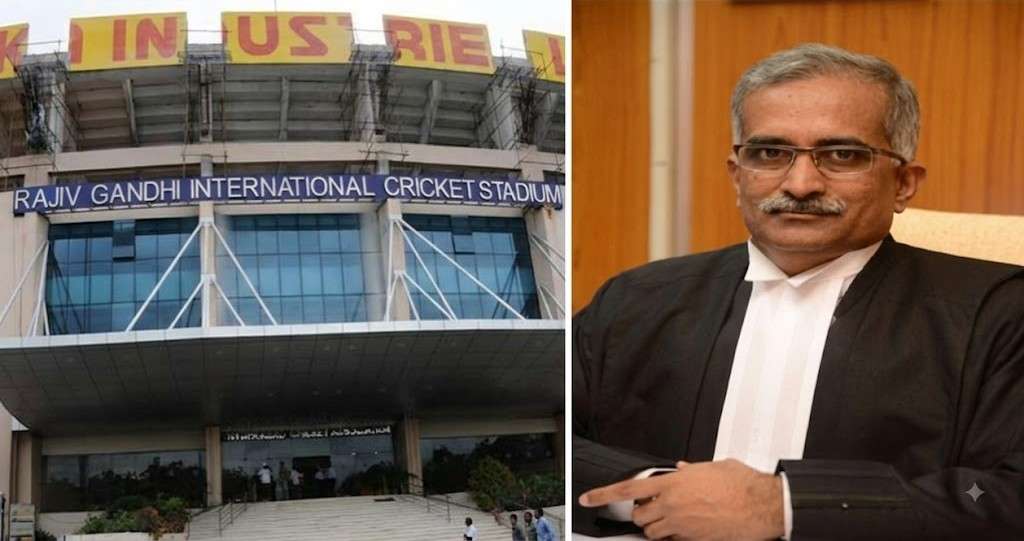
In Part I of this series, the central question was simple but uncomfortable: why has justice and meaningful reform moved so slowly in Hyderabad cricket despite years of litigation, judicial interventions, committees and repeated assurances?
Part II must confront the more difficult question: what should happen now?
The answer cannot merely be another election.
Elections are indispensable to any democratic sporting institution. But an election is a means of restoring representative governance; it is not, by itself, a cure for a system whose electoral roll, finances, club structure and internal accountability remain under serious scrutiny.
If the same disputed electoral architecture is retained, the same networks remain eligible to vote and contest, and unresolved financial and administrative questions are simply carried into a new term, an election could change office-bearers without necessarily changing the system.
That is why Hyderabad cricket needs a different sequence:
Cleanse first. Then vote.
The issue is particularly important now because the present Apex Council’s term ends on October 21, while the High Court has posted the matter for November 2. Whatever the eventual judicial directions, the intervening period cannot be allowed to become either a constitutional vacuum or an opportunity for unilateral action.
The 12-day question
The obvious question is: who runs the Hyderabad Cricket Association between October 21 and November 2?
That question cannot be answered casually.
The judicial record makes clear that HCA’s administration has been subject to extraordinary supervisory arrangements for years. The Supreme Court had earlier appointed Justice L. Nageswara Rao as a Single Member Committee, and subsequently the Telangana High Court appointed Justice P. Naveen Rao to supervise HCA functioning. The courts have repeatedly emphasised that the Association must function within the framework of the reforms and directions flowing from these interventions.
Therefore, the expiry of an elected body’s tenure should not automatically be interpreted as permission for anyone to treat the Association as an unsupervised playground.
There must be continuity of lawful administration.
The crucial principle should be that the calendar cannot override the court’s supervisory framework.
There should be no unilateral appointments, no hurried alteration of membership or voting rights, no last-minute manipulation of club representation and, above all, no attempt to manufacture an electoral process before the conditions for a credible election are settled.
The gap between October 21 and November 2 must therefore be treated as a period requiring clarity, not opportunism.
Delay can become an opportunity
Another hearing and another date on the court calendar may understandably frustrate stakeholders who have waited for years.
But time, in the present circumstances, need not necessarily be wasted time.
It can be used to do what HCA has repeatedly failed to complete: clean the electoral roll, settle club eligibility, resolve conflict-of-interest questions, bring accounts up to date and establish transparent eligibility criteria before the next vote.
The Supreme Court’s record itself reflects the extraordinary history of judicial intervention in HCA. A Supervisory Committee was constituted in 2022; subsequently, a Single Member Committee was appointed to conduct elections; recommendations concerning HCA’s functioning were thereafter considered by the Supreme Court, which described those recommendations as salutary while directing their implementation on an interim basis.
That history cannot simply be erased because another election is due.
The question should not be:
“How quickly can we hold an election?”
It should first be:
“How do we ensure that the next election is genuinely representative?”
The electoral roll is at the heart of the problem
An election is only as credible as the electoral roll on which it is conducted.
The Justice L. Nageswara Rao Committee examined the structure and functioning of HCA and made recommendations concerning clubs, leagues and administration. Its recommendations were subsequently accepted by the Supreme Court as salutary, and HCA gave an undertaking to implement them. The judicial record also records the Committee’s approach to maintaining competitive standards, including the structure of the three-day league.
The present controversy therefore cannot be reduced to a quarrel between rival groups.
There is a structural question:
Who is entitled to vote?
If a club is genuine, independently functioning and actively contributing to cricket, it deserves representation.
If a club exists primarily to create an additional vote, that is an entirely different proposition.
If the same individuals repeatedly appear as representatives of different clubs, that too deserves scrutiny—not because changing representation is automatically illegal, but because repeated patterns can legitimately raise questions about the genuineness of membership, independence and control.
The solution is not arbitrary exclusion.
The solution is club-by-club verification, natural justice and publication of the reasons.
Every voter should know why he or she is eligible to vote.
Every club should know why it is eligible.
And every stakeholder should have an opportunity to challenge an incorrect determination before polling.
The financial books cannot remain unfinished
The second major issue is financial accountability.
Recent reporting on the High Court’s proceedings has highlighted concerns over HCA’s unfinished accounts and alleged financial irregularities. The court has directed an investigation by a Special Investigation Team, while Justice P. Naveen Rao has been assigned supervisory responsibilities during the investigation. Reports have also referred to the need for forensic examination of transactions and earlier investigative proceedings.
Against such a background, handing over the entire institution through an election without completing the necessary financial scrutiny would raise an obvious question:
Who is accountable for the unresolved past?
The issue is not about declaring anyone guilty before the investigation or adjudication is complete.
It is precisely the opposite.
Accountability requires facts.
Audits must be completed.
Transactions must be examined.
Irregularities, if established, must be acted upon.
And those who are cleared must have their reputations restored.
That is how an institution cleanses itself without converting reform into revenge.
The danger of an election becoming the prize
There is another uncomfortable reality.
In any sporting association where voting rights are concentrated in a relatively small number of clubs, elections can become less about cricket and more about the ability to assemble a voting bloc.
Once that happens, the office becomes the prize.
The player becomes secondary.
Club development becomes secondary.
District cricket becomes secondary.
The interests of thousands of young cricketers become secondary.
That is precisely what Hyderabad cricket cannot afford any longer.
The purpose of an HCA election should be to determine who is best equipped to administer cricket—not who has perfected the mathematics of securing votes.
What cleansing should actually mean
“Cleansing” should not become a euphemism for removing opponents.
It must mean objective rules applied equally to friends and adversaries.
- People must be assessed fairly
Anyone facing a criminal allegation must not automatically be declared guilty. At the same time, the institution is entitled to establish appropriate safeguards where an individual is facing serious proceedings concerning Association finances or administration, particularly where the person continues to exercise control over money, records or selection-related functions.
A transparent rule can provide for temporary recusal or suspension from specified institutional responsibilities pending adjudication, subject to due process.
If cleared, the person’s institutional rights and reputation should be restored.
That is protection for both the institution and the individual.
- Examine repeat representatives
If a small group of individuals repeatedly represents different clubs in successive electoral cycles, their credentials deserve verification.
That does not mean that every such representative is a proxy.
But neither should the Association pretend that recurring patterns are irrelevant.
Membership records, club participation, nomination documents, tenure and actual association with the club should be examined.
The identity of every representative should be known before the electoral roll is frozen.
If a person is ultimately found, after due process, to be acting merely as a proxy contrary to the rules, appropriate action should follow.
- Examine every club independently
A club must not be condemned merely because somebody associated with it is controversial.
Nor should a club receive protection merely because its representative is influential.
Each club should stand on its own record.
Does it have genuine members?
Does it field teams?
Does it conduct or participate in cricket?
Does it possess legitimate infrastructure or a valid arrangement for using facilities?
Is its administration independent?
Does it meet HCA and BCCI requirements?
Is there a conflict of interest involving those controlling it?
These questions should be answered with documentary evidence.
The same standards must apply to clubs referred to in the Justice Nageswara Rao Committee’s findings, clubs involved in ownership or membership disputes and clubs linked to institutional or municipal arrangements.
The club cannot be punished for an individual’s alleged conduct
This distinction is essential.
The club is not the individual.
If a representative faces an investigation, the club should not automatically lose its legitimate cricketing identity.
If necessary, the club should be permitted to nominate another eligible representative.
Young cricketers should never be made to suffer because of an allegation against an office-bearer.
But if a club itself is established, after a fair hearing, to be a sham created principally for multiplying voting rights, then its recognition must be examined under the applicable rules.
If de-recognition ultimately follows, any cricketing facility or allocation attached to it should be dealt with transparently, not transferred behind closed doors.
Open the gates to genuine cricket
Perhaps the most important reform is also the simplest:
HCA must stop behaving like a closed electoral club.
Genuine new clubs and genuine cricketing institutions should have a pathway to affiliation, subject to objective sporting and administrative criteria.
A healthy Association should continuously widen the base of cricket.
A narrow voting structure creates the possibility of entrenched blocs.
A broad and genuinely cricket-oriented membership base makes manipulation considerably harder.
The objective should therefore be to create more cricket, more players, more genuine clubs and more transparent representation—not merely more votes.
Cricket must finally come first
This is where every argument should ultimately converge.
The courts have repeatedly emphasised cricketing performance and standards. The Justice L. Nageswara Rao Committee’s recommendations, for example, dealt with league structures and selection based on performance. The High Court’s recent orders have likewise examined disputes involving league divisions, promotion, relegation and the application of performance criteria.
That is the yardstick.
Every proposed reform should answer one question:
Does it improve cricket?
Does it make selection more transparent?
Does it reward performance?
Does it provide opportunities to talented players outside established circles?
Does it strengthen district cricket?
Does it ensure that league competitions are meaningful?
Does it prevent administrative influence from determining a player’s future?
Does it make the system understandable to a teenager who simply wants to play cricket?
If the answer is no, then the reform is probably about administration rather than cricket.
And HCA has had enough administration.
It needs cricket.
What has judicial supervision achieved?
There is an important point that should not be lost amid the institutional battles.
Judicial supervision is not intended to become a permanent substitute for democratic governance.
The Supreme Court itself had earlier observed the importance of fair and proper elections and appointed a Single Member Committee for that purpose.
The objective, therefore, cannot be endless judicial management.
The objective must be to create conditions under which judicial supervision becomes unnecessary.
That requires the Association to become capable of governing itself.
But self-governance without accountability is not autonomy.
It is merely freedom from scrutiny.
And that is precisely what HCA cannot return to.
The real disagreement is about sequence
Stakeholders may legitimately disagree over whether elections should be held immediately or after further institutional cleansing.
But beneath that disagreement lies a common recognition:
the status quo cannot continue indefinitely.
Those demanding immediate elections are entitled to make their case.
Those seeking continued supervision are equally entitled to argue that the electoral foundation must first be corrected.
But there is a fundamental distinction between delaying democracy and preparing democracy.
If the electoral roll is disputed, clubs are under examination, accounts remain incomplete and judicial supervision is still necessary, then correcting those deficiencies before polling is not necessarily an attack on democracy.
It can be understood as protecting the credibility of democracy.
The political question must also be separated from the cricket question
There have been allegations and public discussions about individuals with political connections entering the HCA’s club and office structure, including claims about last-minute changes in club representation and alleged links between office-bearers and political interests.
Such claims require evidence and, where appropriate, formal examination. Political affiliation by itself cannot be treated as proof of wrongdoing.
But neither should political connections become a shield against scrutiny.
The same principle must apply to everybody.
Whether an office-bearer is politically connected, commercially influential, socially prominent or completely unknown, the test should remain identical:
Is the person eligible? Is the club genuine? Is the representation valid? Are the accounts clean? Is the conduct compliant with the rules?
That is the only sustainable way forward.
A practical road map
The way forward need not be complicated.
First: publish a clear timetable and the conditions that must be fulfilled before elections.
Second: complete club-by-club verification, including examination of repeat representatives, membership records and conflict-of-interest issues.
Third: publish the provisional electoral roll and invite objections.
Fourth: conduct hearings and publish the final electoral roll, along with reasons for inclusion or exclusion.
Fifth: require appropriate declarations from candidates concerning conflicts of interest, tenure and eligibility, consistent with applicable rules and judicial directions.
Sixth: ensure that persons facing serious institutional or financial proceedings are subject to transparent, rule-based recusal arrangements wherever necessary, without prejudging their guilt or innocence.
Seventh: clear the audit backlog and complete forensic examination of transactions wherever the competent authorities consider it necessary.
Eighth: establish clear selection and league criteria and ensure that they are applied uniformly.
Ninth: ensure that genuine clubs and players are not punished for disputes involving individual office-bearers.
Tenth: seek clear, time-bound judicial directions so that supervision does not become indefinite and the Association has a defined route back to full democratic governance.
The power exists. The will is what matters.
HCA has already passed through too many committees, too many courtrooms and too many cycles of accusation and counter-accusation.
The answer cannot be another temporary arrangement followed by another election conducted on unresolved foundations.
Nor can the answer be permanent judicial supervision.
The real objective must be to make HCA capable of governing itself honestly, transparently and democratically.
The judicial interventions have already provided an extraordinary opportunity to rebuild the institution. The Supreme Court has considered the recommendations of the Justice L. Nageswara Rao Committee; the High Court has continued to supervise aspects of HCA’s functioning; and recent proceedings have again brought financial and administrative questions into focus.
The opportunity should not be wasted.
The next election must not merely decide who occupies the chairs.
It must establish whether the chairs are occupied through a credible system.
That is why the demand is neither anti-election nor anti-democratic.
It is a demand for an election whose foundation cannot subsequently be challenged for the very defects that existed before polling day.
Clean the roll.
Clean the books.
Clean the club structure.
Protect genuine players.
Apply the same rules to everyone.
Then let the members vote.
Hyderabad cricket has waited long enough for fair play.
Now, fair play must begin not merely on the field, but in the institution that controls the field.
Cleanse first. Then vote.
That is not the postponement of democracy.
It is the preparation of democracy for Hyderabad cricket. (To be continued…)